Origin: The Wedding Moment That Creates a Wife
Of the many rituals at a Hindu wedding, the moment that legally and spiritually transforms a woman from bride-to-be into wife is the tying of the mangalsutra. The priest places a gold thread (or sometimes a yellow turmeric-dipped cotton thread) with the central tali/mangalsutra pendant. The groom, standing behind or beside the bride, ties three knots in this thread around her neck. The first knot signifies obedience to the husband, the second to his family, the third to god - but more meaningfully in modern interpretation, the three knots represent the three lifetimes (past, present, future) for which the bond is being sealed.
The Sanskrit name 'mangala-sutra' means literally 'auspicious thread'. 'Sutra' is the same word used for sacred texts - Yoga Sutra, Brahma Sutra, Kama Sutra - a thread that binds multiple ideas into one continuous teaching. The mangalsutra is, in this sense, a wearable sutra binding two souls into a single dharmic continuity.
The tradition is mentioned in Adi Shankara's Soundarya Lahari (verse 26) and finds reference in the Rig Veda's wedding verses. Anthropologically, the practice exists in some form across all major Hindu communities: the Marathi mangalsutra (long with two gold-cup pendants), the Tamil thali (a small pendant on yellow turmeric thread, no black beads), the Bengali shakha-pola (red coral and conch bangles, the functional equivalent), the Malayali minnu (cross-marked pendant for Christian variant, gold pendant for Hindu), the Telugu pustelu (two gold disks on a black-bead thread), the Punjabi chooda (red bangles for one year - equivalent role).
The ritual moment is so powerful that in some traditions, if a bride faints or has any other interruption right at the mangalsutra-tying instant, an alternate auspicious muhurta must be calculated and the ceremony repeated - the binding is not considered complete until the thread is fully knotted with the bride's consciousness present.
Reasons 1-4: Protection, Bond, Energetic Shield, Shiva-Parvati
Reason 1: Protection from Evil Eye (Drishti Dosha)
The black beads (kala mani) on the mangalsutra are not decorative - they are deliberately black to absorb negative energy directed at the wife and indirectly at her husband. Hindu folk medicine traditions hold that black absorbs the 'evil eye', 'jealous glances', and ambient negativity. By wearing black beads around her neck, the wife continuously deflects negativity that would otherwise harm her husband's prosperity, health and luck.
This is why mangalsutras have always been long enough to keep the black beads visible above the neckline - hiding them inside the blouse defeats the purpose. Modern fashion-wear mangalsutras that are barely visible or that omit the black beads weaken this protective function. Traditional astrology recommends that the wife at minimum keep two black-bead clusters of 11 beads each at the throat-chakra level (where the husband's life-prana flows energetically into the wife's care).
Reason 2: Symbol of the Unbreakable Bond
A mangalsutra is symbolically inseparable from the wife's body during the husband's lifetime. Even when removed for cleaning, it should not be left visible to others; even when changed for a new one, the old beads are kept in a sacred storage, never thrown. The shastra rule is: a married woman is dressed if she has only her mangalsutra and bindi; she is undressed (in the spiritual sense) if she has all jewellery except mangalsutra. The single ornament represents the entire status.
This is why during festivals where women dress elaborately - Karwa Chauth, Vat Savitri, Teej, Hartalika - the mangalsutra is the FIRST thing put on, before any other jewellery. It is the foundation; everything else is decoration.
Reason 3: Energetic Shield for Husband's Life
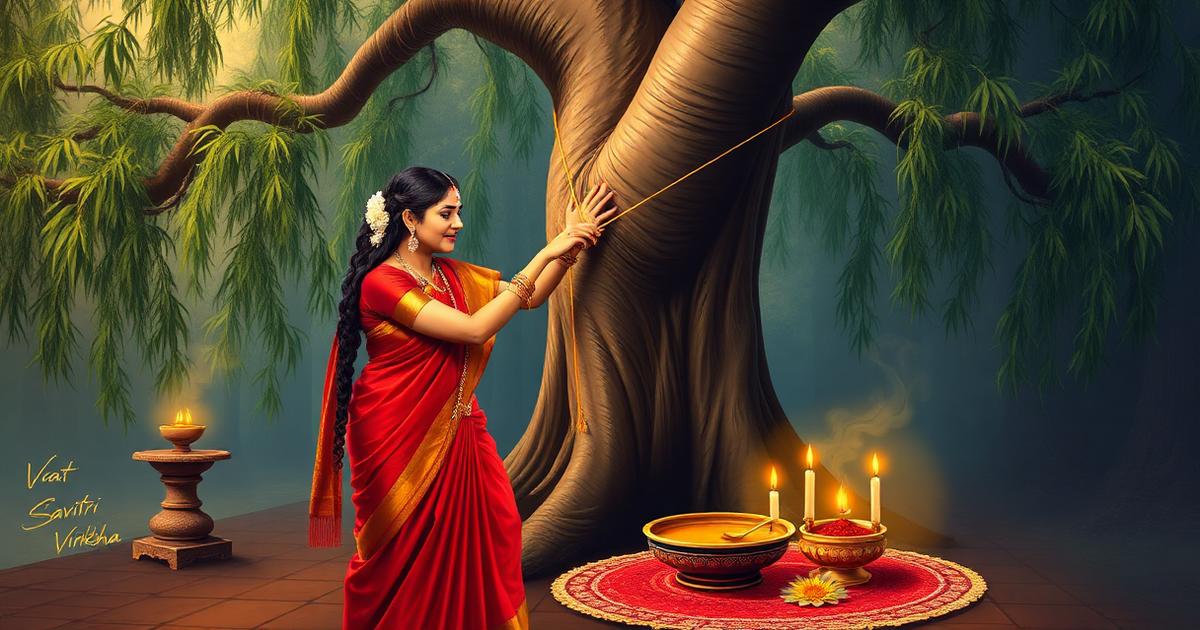
In the subtle anatomy of Hindu spirituality, the wife's throat-chakra connects to the husband's heart-chakra after marriage. This is taught in Tantric texts and explained in the Vat Savitri vrat - Savitri's prayers worked because her own life-force was channelled toward Satyavan's protection. The mangalsutra, sitting at the wife's throat-chakra, becomes the literal anchor of this protective channel.
Many experienced astrologers report that men whose wives wear properly-energised mangalsutras experience fewer health crises, fewer financial frauds, less workplace politics, and longer life expectancies than men whose wives have abandoned the tradition. This is not superstition but a subtle energetic mechanism the West has yet to study scientifically.
Reason 4: Echo of Shiva-Parvati's Marriage
When Parvati married Shiva, the wedding gift Shiva offered her was a black-and-gold thread - black for his neeli-kanth (blue throat from drinking the world's poison at Samudra Manthan), and gold for the eternal light of her devotion that pulled him out of his ascetic retreat. Every mangalsutra, in this view, is a miniature replica of Shiva-Parvati's wedding thread.
This is why mangalsutras are explicitly recommended to be gold (Parvati's eternal devotion) with black beads (Shiva's poison-absorbing throat). Silver or rose-gold mangalsutras are accepted in modern times but lack this symbolic resonance. Some traditional families re-energise the mangalsutra each Maha Shivratri by placing it on a Shivling overnight - refreshing the Shiva-Parvati connection.
Reasons 5-7: Public Status, Self-Identity, Spiritual Discipline
Reason 5: Public Marker of Status (and Boundaries)
In an era before social media and dating apps, the mangalsutra served as a clear public marker that the woman wearing it is married, committed and unavailable for romantic approach. This is not patriarchal control but a functional social signal that protects the woman from unwanted advances and protects the marriage from misunderstanding.
In modern India, this function has somewhat weakened - professional settings, gym, foreign travel often see women removing the mangalsutra for practical reasons. But for traditional women, the marker remains important. Even abroad, many Indian-origin married women wear thin under-shirt mangalsutras as a private commitment-symbol even when no one will see it.
The marker works both ways: it tells the world the woman is married, AND it reminds the woman herself, every time she looks in the mirror, that she has chosen a path. This daily reminder strengthens the marriage by keeping the commitment top-of-mind through life's small everyday choices.
Reason 6: Self-Identity - From Daughter to Wife to Mother
A Hindu woman traditionally undergoes three identity shifts in her life: maiden, wife, mother. The mangalsutra marks the second transition, just as the bindi marks womanhood, and the kumkum on the forehead's parting (sindoor) marks ongoing marital status. Together, these three small markers - bindi, sindoor, mangalsutra - signify the complete identity of a Hindu wife.
Many women report that wearing the mangalsutra subtly shifts their daily mood - they feel 'held', 'partnered', 'no longer alone in the world'. This is the psychological effect of carrying a constant reminder of one's most important relationship. Removing it temporarily (for medical procedures, certain spas) creates a brief sense of identity loss, which many women describe as surprising.
The pendant in the centre of the mangalsutra is also where the wife's personal aesthetics enter the symbol: she chooses the design, the gold weight, the number of beads, the gemstones if any. So the mangalsutra both expresses 'I am married' (universal) and 'this is who I am as a married woman' (individual).
Reason 7: Spiritual Discipline - A Daily Sankalpa
The mangalsutra is the only ornament that is touched, kissed or briefly held by the wife during her daily puja. Many traditional women take the pendant in their right hand and offer it briefly to the deity along with the family puja, mentally renewing the vow: 'O Lord, may my husband's life be long, may our home be peaceful, may we walk dharma together for all 100 years and more.' This daily micro-ritual takes only 10 seconds but, repeated over decades, creates an unbroken thread of intention that itself becomes a yoga-like discipline.
In this sense, the mangalsutra is the only piece of jewellery that doubles as a meditation object. The black beads can be moved between fingers like a mini-mala while one waits in traffic or sits in meetings; each bead becomes one silent prayer for the family. Wives who develop this habit report a deepening of marriage that no relationship therapy could match - because the intention to bless one's husband is being renewed thousands of times per year, subliminally.
This is also why the mangalsutra cannot be 'replaced' by anything else. Lockets, name necklaces, fashion chains - none carry the millennia of spiritual programming the mangalsutra carries. When a wife wears a mangalsutra, she joins a community of millions of women across 3000+ years, all of whom held this same thread in this same way, for the same blessing of long marriage.
Modern Dilemmas: When to Wear, How to Adapt
Many modern Hindu women face genuine questions: 'Do I have to wear it 24/7?', 'Can I take it off for the gym?', 'Is a thin chain version acceptable?', 'What about international travel where it gets noticed awkwardly?'. Here is the contemporary practical guidance from traditional priests and progressive astrologers.
The 24/7 rule - relaxed version: The traditional rule is to never remove the mangalsutra except for cleaning and at certain specific death/pollution rituals. The modern practical version: keep it on at home, in family gatherings, at temples, and during travel involving Indian destinations. You may remove it for:
- Gym, swimming, contact sports where it could break or hurt you
- Medical procedures, MRI scans, surgical operations
- A spa where heavy oil/heat treatment could damage gold
- Professional environments where it might catch on equipment
The rule is: never sleep without it, and never go a full 24 hours without putting it back. The relationship is the wearing; the brief practical removal is the exception, not the new norm.
The 'fashion mangalsutra' question: Many jewellers now sell short, fashionable mangalsutras with minimal black beads or a single tiny black-bead accent. These are aesthetic compromises but lose the protective function. The recommended balance: keep one traditional mangalsutra at home, wear it for all major occasions, religious events, and family gatherings; keep one practical daily-wear version (still gold + black beads + central pendant, just smaller) for office and travel; keep the spiritual essence even when the visual form is reduced.
For working women, doctors, athletes: Wear the mangalsutra at the throat-chakra under your professional clothes. The black beads can be inside the blouse if the workplace requires; the energy flows through skin contact regardless of visibility. For doctors who must remove all jewellery for hygiene, place the mangalsutra in your personal kit, touch it briefly during a private moment, and put it back the moment you leave the sterile area. The brief disconnection is acceptable; total abandonment is not.
For abroad / Western contexts: A mangalsutra under the shirt with the chain visible above the neckline reads as a 'cultural ornament' even in Western contexts; this is the most common approach for diaspora women. For very conservative work environments (international banking, formal Western corporate), some women wear a delicate thin gold chain with just two micro-black-bead accents - discreet enough to pass unnoticed, complete enough to retain spiritual function.
What to do if it breaks: If the chain breaks while you are wearing it, immediately tie the loose ends in a knot and keep wearing it temporarily. Within 24-48 hours, get it repaired by a goldsmith. The broken mangalsutra is not 'inauspicious' the way a broken Shivling is - it is simply a thing that needs repair. The old beads must be reused in the new chain; do not let the goldsmith melt them down for the gold value. If a black bead falls off and is lost, replace it immediately - empty space in the bead-cluster is what is considered inauspicious, not the breaking itself.
For widowed women: The traditional custom is to remove the mangalsutra at the husband's funeral, as the protective bond it represented has been transformed by death into a different relationship. Many modern widows keep the old mangalsutra in their puja altar as a memorial, not on the body. Some progressive Hindu communities now allow widows to keep wearing a simpler version as a memory-token, particularly in cases of young widowhood. There is no spiritual fault in wearing it as memory; the original protective function ends with the husband's life on earth.
Frequently Asked Questions
What if I do not want to wear a mangalsutra - am I not properly married?+
Your marriage is legally and spiritually valid regardless - the saat phere are what completes the marriage, not the ornament. Choosing not to wear the mangalsutra is a personal decision that some modern women make for practical or aesthetic reasons. The trade-off: you lose the daily ritual reminder and the energetic protective function the symbol carries. Many women in this situation compensate by wearing a discreet alternate symbol (a thin gold chain, a pendant with the husband's initial, a tattoo) - the key is having SOMETHING that anchors the daily intention of marriage. Pure absence of any commitment-symbol is what spiritually weakens the bond over years.
My mangalsutra broke during a fight with my husband - is this a bad omen?+
Concerning but not catastrophic. Mangalsutra breaking during emotional intensity is read as the universe asking both partners to slow down and recalibrate the relationship. Immediate response: stop the fight, both apologise to whatever is feeling unheard, sit silently for 5 minutes together, and then together visit a temple within 7 days to do a Lakshmi-Vishnu puja for marriage harmony. Get the mangalsutra repaired and re-energise it on a Friday morning by placing it before Devi for one full puja. The break itself does not cause misfortune; ignoring the warning the break represents may.
Can the husband touch the mangalsutra during regular days, not just the wedding?+
Yes - and this is encouraged. A husband touching his wife's mangalsutra in moments of affection (gently fingering it during conversation, holding it briefly when she is in his arms) is considered a small act of marriage-renewal. Some traditional couples have a ritual on every anniversary where the husband re-ties one symbolic knot in the mangalsutra. Touching is fine; pulling or tugging hard is disrespectful. The mangalsutra is sacred TO the marriage, not OFF-LIMITS within it.
Some Christian and inter-faith Hindu couples - what do they do?+
Christian-Hindu inter-faith couples often combine traditions: a Christian ring exchange + a Hindu mangalsutra-tying. Some Christian Hindu couples wear modified mangalsutras with a cross pendant (popular in Kerala). Muslim-Hindu inter-faith marriages typically retain the mangalsutra for the Hindu partner if both agree, with the understanding it represents marriage rather than Hindu identity specifically. Inter-caste Hindu marriages have no issue. The mangalsutra adapts to whatever the couple's combined spiritual life looks like; it is not about religious orthodoxy but about marking the marriage bond visibly.
About the author
Anjali Mehta · Editor, M.A. Religious Studies
Anjali is the managing editor for Vandnaa and oversees the festival and vrat coverage. She holds an M.A. in Religious Studies and reviews every published article for accuracy, accessibility, and tradition-fidelity.
Meet the Vandnaa editorial team →