Reason 1: The Parvati Origin (Skanda Purana)
The Skanda Purana tells the story of Parvati's tapas to win Shiva. After years of meditation, she takes a small handful of red earth from a sacred mountain, mixes it with cow milk and a drop of her own blood, and applies it to her maang as a vow: 'Until Shiva accepts me, this red line will mark my devotion.' When Shiva finally accepts her and they marry, that same red line becomes her permanent marker of suhag (married status).
From this origin, sindoor becomes the singular visual sign that 'this woman is bonded to her husband by sacred vow.' Every Hindu wedding includes the ritual moment when the groom applies sindoor in the bride's parting - that single act is what legally and spiritually transforms her from bride to wife in many traditions, even more so than the saat phere in some communities. The Manusmriti specifies sindoor along with mangalsutra and bichuwa as the three essential markers of a married Hindu woman.
When Shiva-Parvati are worshipped together, married women specifically apply fresh sindoor at the puja - not as routine cosmetic but as a re-enactment of Parvati's original vow. The Sundarkand mentions Sita continuing to wear sindoor through her 14-year exile and through her captivity in Lanka; in the famous moment when Hanuman applies sindoor to himself to honour Rama, he is symbolically marrying himself to Rama's service - the same vow-energy expressed in masculine devotion.
Reason 2: The Brahmarandhra Activation
Yogic anatomy places a critical energy point at the exact location of the hair-parting (maang): the brahmarandhra, the 'crown opening'. In Vedic and Tantric tradition this is the meeting point of the three main nadis (ida, pingala, sushumna) where prana exits the body at death and where prana enters during initiation. It is considered the most sensitive energy point in the body - more important than the third eye (ajna chakra), which sits below it.
A married Hindu woman's life involves continuous flow of household responsibility, intuition, decision-making, and protection of family - all functions that yogic tradition attributes to the activated brahmarandhra. The daily application of sindoor on this exact spot is believed to keep this energy point gently stimulated. Traditional households teach the young bride a specific finger-pressing technique: dip the right ring finger into the sindoor, lift, and press firmly along the maang from the hairline back about 2 inches. The pressure itself activates the point; the colour holds the activation visible.
This is also why widowed women in classical tradition stopped wearing sindoor: not because they are 'less' than married women, but because the husband's life-energy that was being channelled into and through the brahmarandhra is gone. With no husband-energy to anchor, the open brahmarandhra would scatter the widow's prana. The practice is being reinterpreted in modern times - many widows now wear pale or even ordinary tilak as a soft anchor - but the underlying logic is energetic, not punitive.
Reason 3-4: The Science (Pituitary, Mercury Avoidance)
Reason 3: Traditional sindoor compositions and the pituitary connection. Authentic (non-commercial) sindoor is made from turmeric, lime (chuna), and a small amount of mercury or hingul (cinnabar) - the last ingredient is what gives it the deep red colour. Daily application on the maang means daily skin contact with these compounds at exactly the spot that corresponds to the pituitary gland in cranial anatomy. The pituitary is the master endocrine gland; it regulates stress hormones, growth, fertility, and emotional balance.
Ayurvedic texts describe an indirect-but-real effect: small trace amounts of mercury-bearing sindoor over years gently regulate pituitary function in married women, with documented effects on libido, fertility, and stress response. Modern pharmacology raises legitimate concerns about heavy-metal accumulation - which is why authentic mercury-based sindoor is increasingly rare and most commercial brands now use synthetic dyes. The traditional health benefit is real but only with real ingredients; the cosmetic-only modern version is just colour.
Reason 4: WARNING - the commercial dye danger. Most commercial sindoor sold in shops today is synthetic dye (often Rhodamine B, a known carcinogen if absorbed long-term) coloured with lead-based pigments. Many women apply this daily for decades. Recent studies in Mumbai and Delhi found unsafe lead and rhodamine levels in 65% of commercial sindoors tested. The remedy: buy ONLY from temple shops, traditional ayurvedic stores, or families that make their own sindoor at home using turmeric + lime + saffron. The bright orange-red of traditional sindoor is slightly different from the harsh red of commercial dye - learn to distinguish.
Many modern brides choose to wear sindoor on special occasions only (puja days, festivals, anniversaries) and skip the daily commercial dye - a perfectly legitimate compromise that honours the tradition without poisoning the practitioner.
Reason 5: Sindoor as Social and Self-Identity Marker
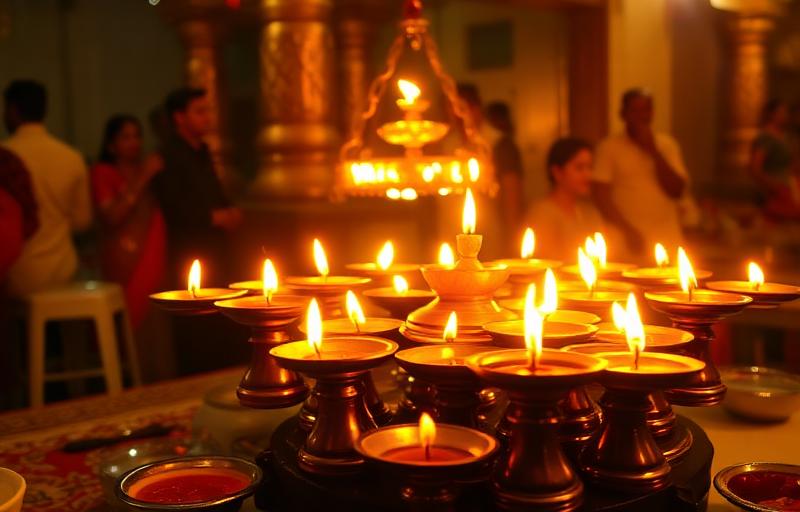
The fifth reason is sociological rather than spiritual, but no less important: sindoor is a visible, immediate, public statement of married status. In a culture where this status carries deep social meaning - it changes how you are addressed (didi vs bhabhi), how others approach you, the kind of conversations strangers initiate, the kind of help offered when you are in public - the visible marker matters.
For the woman herself, the daily application becomes a small ritual of self-identity. She begins each day by visibly affirming 'I am married, this is my role, this is my path.' Many modern women describe a strange sense of emptiness on a day they forgot to apply sindoor - not because anyone called them out but because the daily reaffirmation was missing. The marker, like the mangalsutra, becomes the visible anchor of an invisible commitment.
In contemporary India there is a healthy debate about whether to wear sindoor daily, only on special days, or at all. The right answer depends entirely on the individual woman and her relationship with the tradition. Working professionals who find daily sindoor incompatible with office context often wear it on weekends and at family gatherings; this is a perfectly traditional adaptation - many older Vedic women similarly wore sindoor only at puja, not daily.
What is NOT recommended: forcing sindoor on a woman who doesn't want it (the tradition is meaningful only when chosen), or using unsafe commercial dyes daily because of pressure (better to wear less but wear safe). The deity-level meaning of sindoor is the woman's vow - and a vow taken under coercion is no vow at all.
Frequently Asked Questions
How should I apply sindoor correctly?+
Use the right hand ring finger (or a small silver/gold stick). Dip into the sindoor, apply at the start of the hairline, and draw a firm line back along the parting - traditionally about 1.5 to 2 inches. The line should be visible but not gaudy. For daily use, a thin clean line is more elegant than a heavy block. For festivals/puja, a fuller line is appropriate. Always apply after bath, never on unwashed scalp - the cleansed skin absorbs better and the application stays clean longer.
Can unmarried girls wear sindoor?+
Traditionally no - sindoor is specifically a suhag marker. Unmarried girls and women wear a bindi (forehead dot) which is decorative + spiritual but not marriage-specific. The exception: on certain temple visits (especially Devi temples), unmarried girls apply a small sindoor tilak at the temple as a goddess offering, not a personal marker. Some Bengali traditions also let unmarried girls wear sindoor during Durga Puja's Sindoor Khela on Vijayadashami as community celebration, but this is festival-only, not daily.
What sindoor brand is safe?+
Look for: 'natural sindoor' or 'herbal sindoor' labels, with ingredients listed as turmeric + lime + saffron (kesar) ONLY. Avoid anything with 'colour added', 'rhodamine', or unspecified red dyes. Trusted sources: Patanjali's herbal sindoor, Khadi Naturals, brands sold inside temple complexes (especially at Kamakhya, Vaishno Devi, Tirupati - these are tested), or buy raw turmeric + lime + saffron from a quality ayurvedic store and mix at home. Home-made sindoor is a 30-minute kitchen task and lasts months.
Is liquid sindoor OK or must it be powder?+
Powder is preferred for daily use and especially for the wedding muhurta application by the groom (powder is what scripture mentions). Liquid sindoor is acceptable for daily convenience - some women find it neater and longer-lasting through the work day. The safety concern is the same for both forms: avoid synthetic dyes regardless of liquid/powder. Many liquid sindoors are heavier in chemical content than powders; always check the label.
About the author
Anjali Mehta · Editor, M.A. Religious Studies
Anjali is the managing editor for Vandnaa and oversees the festival and vrat coverage. She holds an M.A. in Religious Studies and reviews every published article for accuracy, accessibility, and tradition-fidelity.
Meet the Vandnaa editorial team →Explore on Vandnaa
Related Articles
Why Do We Wear Mangalsutra? 7 Spiritual & Cultural Reasons
8 min read
Why Do We Apply Mehndi? Cultural & Spiritual Significance
8 min read
Hindu Wedding Saat Phere: 7 Vows - Meaning & Significance
10 min read
Tilak Meaning: Red, White, Yellow, Sandalwood - What Each Tilak Symbolizes & When to Wear
8 min read