
What Namaste Actually Means + How to Say It
Etymology. Namaste = nama (bow) + te (to you) = 'I bow to you'. The fuller form Namaskar = nama (bow) + skar (do/make) = 'I make a bow to you'. The spiritual interpretation, popularised in modern yoga: 'The divine in me bows to the divine in you' - acknowledging that the atman (soul) in both people is the same Brahman.
The gesture is called Anjali Mudra - palms pressed together, fingers pointing up, thumbs gently touching the heart-chakra area (Anahata, mid-chest). The slight bow of the head accompanies the gesture. The mouth says 'namaste' (or 'namaskar', or in South India 'vanakkam').
The correct posture: 1. Stand or sit upright. 2. Bring palms together at heart level (not below waist, not above forehead for ordinary greeting). 3. Press palms together evenly - not loosely, not crushed. 4. Fingers point straight up. 5. Slight bow of the head + slight closing of the eyes for half-second. 6. Say 'namaste' or 'pranam' depending on tradition. 7. Eye contact returns as you straighten - this is the 'soul-to-soul recognition' moment.
Variations by who you're greeting:
- Equal/younger: hands at chest height, mild head bow.
- Elders: hands raised to face/forehead level, deeper head bow ('Pranam').
- Saints/gurus: hands raised above head ('Sashtanga pranam' if doing full ground-prostration).
- Deity in temple: hands raised above head + full closed eyes + several seconds of stillness.
Distance. Always done at a respectful distance - no need to be within arm's reach. This is the genius of the gesture: it works from across a room, across a hall, between two people on opposite sides of a busy street. The handshake requires physical proximity and one-on-one attention; namaste does not.
Reasons 1-2: Zero Contact + Fingertip Acupressure
Reason 1: Zero physical contact. This was the unspoken Indian advantage that became global wisdom in 2020. The handshake transfers everything the other person has touched recently - door handles, money, their own face, sneeze residue. Average hand carries 3,000+ bacteria including potentially harmful E. coli, Streptococcus, and various viruses. The namaste transfers nothing.
In 2020, the WHO formally recommended namaste-style greetings worldwide. Multiple Western leaders (UK's Prince Charles, French president Macron, Israeli PM Netanyahu) publicly switched to namaste during the early pandemic. The Indian tradition was 5,000 years ahead.
Beyond pandemics, ordinary daily life: a single doctor sees 30+ patients a day; a politician shakes 100+ hands at a rally; a teacher meets hundreds of students. Each handshake is a small infection-risk. The cumulative protection over decades is significant - and Indian elders who lived their whole lives in namaste-only societies historically had lower transmission rates for skin/respiratory infections than handshake-cultures.
Reason 2: Fingertip acupressure activation. When you press your two palms together with even pressure, you activate every fingertip's primary acupressure point simultaneously. According to Ayurvedic acupressure mapping:
- Thumb tip = brain/pituitary point
- Index finger tip = colon/large intestine point
- Middle finger tip = circulation/pericardium point
- Ring finger tip = endocrine/triple-warmer point
- Little finger tip = heart point
The brief firm contact of all 10 fingertips when doing namaste provides a small daily 'reset' to these meridians. Yoga practitioners who do namaste repeatedly throughout the day (greeting students, opening/closing classes) often report better fingertip blood circulation than non-practitioners. It is a small effect but consistent.
Additionally, the position itself - hands at heart - activates the Anahata (heart) chakra. Many spiritual traditions use this gesture for prayer (Christian prayer hands, Buddhist anjali, Hindu pranam) precisely because it focuses energy at the heart centre.
Reason 6: Spiritual Significance + How to Bring It Into Modern Life
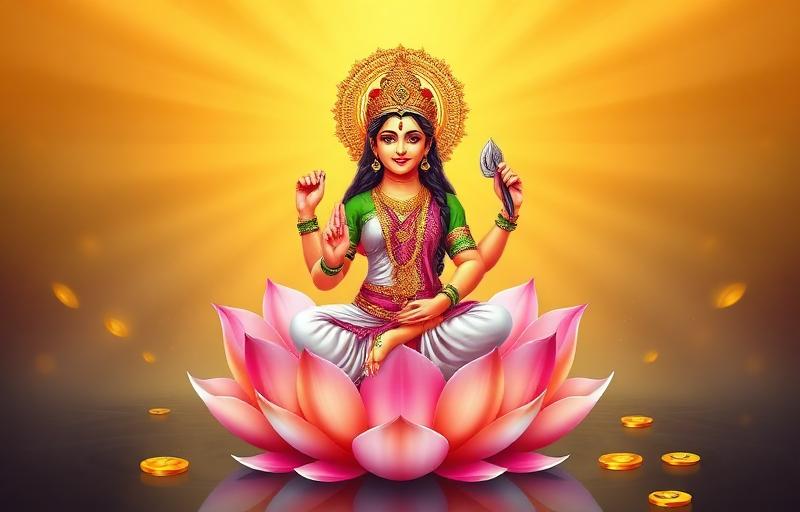
Reason 6: The 'soul-to-soul' acknowledgement. At its deepest level, namaste is a brief spiritual practice disguised as a greeting. Every time you say 'namaste' to another person, you are implicitly affirming: there is a divine consciousness in this body in front of me, and I am bowing to it. This is a daily reminder of Hindu philosophy's core teaching: tat tvam asi (you are that), the same Brahman in both of us.
When done with even partial mindfulness, namaste becomes a small grounding moment in a busy day. The gesture (hands together at heart) + the brief eye-closing + the breath out = a 3-second meditation. Multiply this by 20-50 greetings per day, and you have 1-3 minutes of cumulative micro-meditation built into normal social interaction.
This is why traditional Indian society - despite all its problems - has historically had lower rates of certain mental health issues than greeting-by-handshake cultures. The small daily mindfulness of namaste accumulates. Modern meditation apps invented 'micro-mindfulness' as a feature; Hindu greeting has had it for 5,000 years.
How to bring namaste back into modern life:
1. At home with family. Start the day with namaste to elders, even your own parents. Touch their feet only on special occasions (birthdays, festivals); namaste daily. Children learn this fastest. 2. At work. When greeting clients or colleagues, especially in India, lead with namaste. Handshake only when the other person extends their hand first, and you don't want to refuse. Many Indian executives now namaste internationally - it has become a confident professional choice. 3. At temples and any spiritual setting. Default to namaste/pranam always. Reserve any other physical greeting (handshake, hug) for after the spiritual context concludes. 4. At restaurants, shops, hotels. Indian staff have always responded better to namaste than Western greetings. Hotel staff feel respected; restaurant servers feel acknowledged. A small daily kindness with zero cost. 5. When meeting foreigners. Lead with namaste and gently explain. Most respond positively. Some will namaste back; some will offer handshake anyway - take their cue but lead with namaste first.
The biggest mistake: doing namaste sloppily, with no eye contact, no slight bow, half-rushed hands. A 1-second mumbled namaste has no spiritual or social value - it just looks dismissive. Do it properly, with the 3-second pause, the eye contact, the gentle smile. That is what makes it the perfect greeting.
Frequently Asked Questions
Should I touch elders' feet or just namaste?+
Both - for different occasions. Daily greeting elders at home: namaste/pranam is enough. Special occasions (birthdays, festivals, leaving home, returning from long travel, after major achievements): touch their feet (charan sparsh). Some families touch feet every morning - that's a deeper tradition still maintained in conservative homes. The hierarchy: daily namaste + occasional charan sparsh + always namaste at first meeting of the day.
Is namaste only for Hindus or can anyone use it?+
Anyone can use it - namaste is not religious-restricted. Indian Muslims also commonly use it alongside Salam; Indian Christians use it especially with Hindu friends. Worldwide yoga practitioners use it. The gesture is cultural-Hindu in origin but universal in application. The Sanskrit word may have religious roots but the gesture itself works for everyone without conversion.
Is it rude to refuse a handshake in favour of namaste?+
Done correctly, no - it's actually elegant. Lead with namaste before they extend their hand and most people simply mirror you. If they've already extended, you can say 'I usually do namaste, but it's nice to meet you' while offering namaste back - keeps the warmth without the touch. In post-2020 world, most international professionals understand and respect this. The only times to consider handshake: very formal Western corporate settings where it's culturally expected and refusing might be misread.
What's the difference between namaste, namaskar, and pranam?+
All three mean similar respect but with intensity gradient. Namaste = informal/everyday/peer greeting (hands at chest). Namaskar = slightly more formal/respectful (hands a little higher, used in business or with non-relatives). Pranam = deepest respect, used specifically with elders/gurus/deities (hands at face or higher, deeper bow). South Indian equivalents: Vanakkam (Tamil), Namaskaram (Malayalam), Namaskaragalu (Kannada). All work; pick whatever feels right for the relationship.
About the author
Anjali Mehta · Editor, M.A. Religious Studies
Anjali is the managing editor for Vandnaa and oversees the festival and vrat coverage. She holds an M.A. in Religious Studies and reviews every published article for accuracy, accessibility, and tradition-fidelity.
Meet the Vandnaa editorial team →
Reasons 3-4: Ego-Neutral + Status-Equal Greeting
Reason 3: Ego-neutral encounter. A handshake is an immediate ego transaction - firmness becomes 'strength', limpness becomes 'weakness', the dominant person grips harder. Western corporate culture has entire articles about 'how to give the perfect handshake' precisely because the gesture itself is a power-play. Some people deliberately crush the other person's hand to assert dominance.
Namaste removes this entirely. There is no force calibration, no dominance display, no 'reading' the other person's hand-strength. Both parties simply place their own palms together at their own chest. The gesture is identical for the powerful and the powerless. There is no way to namaste 'aggressively' or 'weakly' - it just is.
This matters more in spiritual contexts. When you bow at a temple, you don't want to be in 'ego-asserting' mode; you want to be in 'surrender' mode. Namaste is built for surrender; handshake is built for assertion. The gestures encode their respective cultural priorities perfectly.
Reason 4: Status-equal across class lines. A king and a beggar can both namaste each other. In fact, kings in classical India did namaste their gurus, their parents, and even ordinary devotees during darshan. The gesture is universal - no one is too low, no one too high.
The Western handshake, in contrast, has class-dependent rules:
Namaste sidesteps all of this. A CEO and a sweeper can mutually namaste without anyone feeling awkward. The CEO doesn't have to decide whether to extend his hand to the sweeper; he just folds his hands. The sweeper doesn't have to wait for the CEO's initiation; he just folds his hands first.
This is why namaste persisted through millennia in India - it works socially in every direction. Other Indian gestures (touching feet for elders, salam for Muslims, kicking off shoes at thresholds) are specific to relationships or contexts; namaste is the universal default that always fits.
Reason 5: No language required. Namaste's gesture is internationally readable now. Anyone who has done yoga, watched Bollywood, or visited India recognises it. The visual gesture itself communicates respect without needing to share a language. Tourists in India who don't speak Hindi naturally start namaste-greeting locals after a few days - it's that intuitive.