The Practice: Always to the Right
Watch devotees circle the sanctum of any Hindu temple, or walk around a tulsi plant, a peepal tree or a sacred fire, and the direction never changes, they move with the deity or object kept to their right hand, moving clockwise. This circling is called parikrama or pradakshina, and the clockwise rule is followed without exception across regions and traditions.
Even children are gently corrected if they start walking the wrong way, showing how deeply ingrained this small rule of direction really is.
The Traditional Reasoning
The right hand, or dakshina, is traditionally considered the hand of respect and auspiciousness in Hindu custom, used for giving, receiving and greeting elders and the divine alike. Keeping the deity to one's right throughout the parikrama is a way of offering that same continuous respect through the entire circling.
Hindu tradition also draws a parallel with the sun's apparent path across the sky and the movement of celestial bodies, seen as moving in this same direction, linking the human act of circling to a much larger, cosmic order.
What the Clockwise Direction Symbolises
Beyond etiquette, the clockwise circle is read as keeping oneself centred on the divine while moving through life's cycles, the deity remains the fixed point around which the devotee's whole journey turns. This mirrors a wider Hindu idea that worldly life should orbit around dharma and devotion rather than the self.
The unbroken circle itself, with no sharp turns or reversals, is also seen as a symbol of wholeness and continuity, reflecting the eternal, unbroken nature of the divine being honoured.
How Parikrama Is Practiced Today
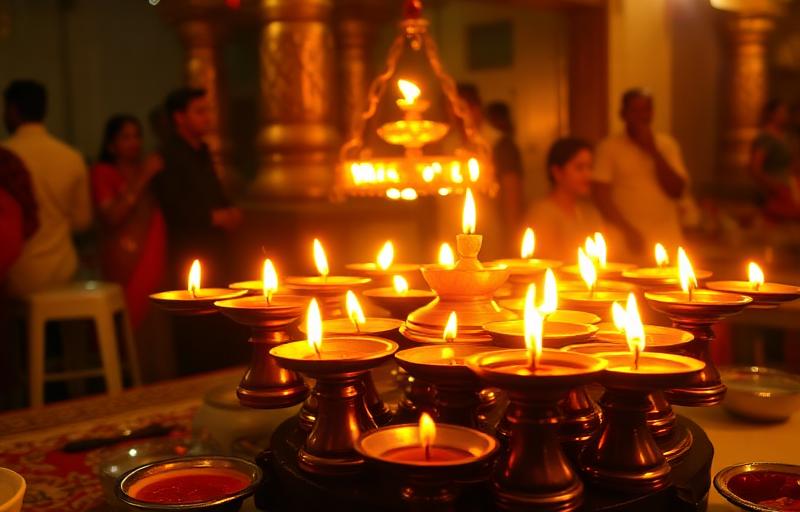
Parikrama remains part of nearly every temple visit, home puja and festival observance across Hindu practice today.
- Devotees circle the temple sanctum, often multiple times, before or after darshan
- A daily parikrama of the tulsi plant is common in many Hindu homes, especially in the morning
- Large pilgrimage circuits, such as the parikrama of a sacred hill or river, follow the same clockwise principle over many kilometres
- During wedding rituals, the phere around the sacred fire also follow this same directional logic
A Circle That Centres the Heart
Parikrama takes only a few minutes, yet each step is a quiet reaffirmation of where the centre of one's life truly lies. Walking that same clockwise circle, generation after generation, is itself an act of faith and devotion, a small physical habit carrying a very large spiritual intention.
Reader Questions Answered
Why is parikrama always done clockwise?+
The right hand is traditionally considered the hand of respect in Hindu custom, so keeping the deity to one's right throughout the circle is a way of continuously honouring it, alongside a symbolic link to the sun's path across the sky.
Is the clockwise rule followed at every temple?+
It is followed almost universally, with one well-known exception at many Shiva temples, where devotees walk only a half circle out of respect for the water channel from the Shivling, which is traditionally not crossed.
Is parikrama only done around temples?+
No, the same clockwise practice extends to the tulsi plant, sacred trees, the fire in a havan or wedding ceremony, and even large pilgrimage circuits around sacred hills or rivers.
About the author
Dr. Suresh Iyer · Vastu Shastra & Jyotish, 18+ years
Dr. Suresh has practiced traditional Vastu and basic Vedic Jyotish for over 18 years across South India. He contributes the Vastu, direction, and home-puja layout guides on Vandnaa.
Meet the Vandnaa editorial team →