Why Specifically at Sunset (Pradosh Kaal)?
Sunset (Pradosh kaal) is one of the 4 most spiritually charged times of day - the others being Brahma Muhurat, sunrise, and noon. Sunset is unique because it is the transition between day and night - the cosmic threshold time. The atmosphere shifts from rajasic (active) to tamasic (passive). Lighting a diya at this exact moment 'holds' the sattvic balance between the two - preventing tamas from overwhelming the home for the night.
The 6 reasons we light evening diyas:
1. Spiritual: Welcomes Lakshmi, deters her opposite (Alakshmi). Goddess Lakshmi enters homes after sunset only if a diya is lit. A dark home at sunset is said to welcome Alakshmi (poverty, discord). This is documented in the Lakshmi Tantra.
2. Cosmic-energetic: Pradosh kaal is Shiva's hour. Lord Shiva is said to perform his cosmic dance at twilight. A lit diya joins your home to that cosmic dance. Lighting a diya during Pradosh kaal automatically counts as a brief Shiva worship.
3. Atmospheric science: Sunset air has highest microbial concentration. Studies show that as the sun sets and temperature drops, airborne bacteria/fungi spike. The smoke from a ghee/oil diya releases natural antimicrobial compounds that purify household air for the night.
4. Psychological: signals the brain to transition. The visual of a flame at dusk activates the parasympathetic nervous system. People who light a daily evening diya report better sleep, lower bedtime anxiety, and more peaceful family dinners.
5. Ancestral: Pitru blessing time. Per Garuda Purana, ancestors visit their descendants' homes around sunset (the gates between Pitru Lok and Earth open at this time). A lit diya guides them in and makes them comfortable. Without a diya, ancestors are said to leave 'unhappy', causing minor pitru-related disturbances.
6. Practical: rhythm of the day. Lighting the diya signals 'workday is over, family time begins'. It is the original 'transition ritual' - separating professional life from family life. Modern stress research repeatedly emphasizes the importance of such transition rituals.
The Right Way to Light Evening Diya
Right time: Lighting should happen between 15 minutes before sunset and 15 minutes after - the actual Pradosh kaal window. Use a sunrise/sunset app for your location. Lighting before this window 'wastes' the cosmic alignment; after this window misses it.
Right oil:
- Pure cow ghee - best (Lakshmi's preferred fuel; produces sattvic smoke; antibacterial)
- Sesame oil (til oil) - second best, especially for Saturn-related concerns
- Mustard oil - third, for Hanuman/Saturn worship
- Coconut oil - for Vishnu/Krishna worship (South Indian tradition)
- AVOID: vegetable oils (sunflower, refined oil) - produce harsh smoke; mustard works only for specific deities
Right placement:
- Primary diya: in the home mandir, lit first
- Secondary diya: at the front door entrance (welcomes Lakshmi)
- Tertiary (special days): under the tulsi plant
- NEVER place diya on the floor - always on a clean surface (chowki, plate, raised platform)
Right wick:
- Cotton wicks (vatti/baati) are mandatory - synthetic wicks are inappropriate
- Number of wicks: 1 (daily), 5 (panch-batti for Pradosh, festivals), 11 (special prayers), 21 (Mahashivratri/major events)
- The wick should be twisted clockwise - anticlockwise twist 'reverses' the cosmic alignment
Right method (3-minute vidhi): 1. Wash hands. Approach the puja altar with clean intent. 2. Place the diya, add ghee, place a fresh cotton wick, soak the wick tip in the ghee 3. Light a match - but do not touch the match flame to the wick. Instead, transfer the flame using a smaller stick or a pre-lit small candle (matches contain sulfur which is considered impure) 4. Once lit, fold hands and chant: 'Subham karoti kalyaanam, aarogyam dhana sampadaam, shatru-buddhi vinaashaaya, deepa-jyotir namo-stu te.' (I bow to the lamp's flame which gives auspiciousness, well-being, health, wealth, and destroys negative-thinking enemies.) 5. Sit before the diya for at least 1-2 minutes silently. Look at the flame. Let your evening tension dissolve. 6. After your prayer or aarti, do NOT blow the diya out - let it burn naturally OR cover with a small lid only after it burns 30+ minutes
What NOT to do:
- NEVER blow a diya out with breath - breath is impure for sacred fire; cover or let burn out
- NEVER use a previously-burnt-out wick for relighting - fresh wick each time
- NEVER let the diya go out with no replacement - relight immediately, even with a different diya
- NEVER move a lit diya from its place - it is 'fixed' once placed
Special Diya Configurations for Different Occasions
Daily evening: 1 ghee diya in puja room + 1 small diya at front door = sufficient.
Tuesday & Saturday (Hanuman days): Add 1 mustard-oil diya beneath a Hanuman image. Helps with Saturn-related issues and provides extra protection.
Friday (Lakshmi day): Add a 5-wick (panch-batti) ghee diya in the puja room. Place fresh red flowers around it.
Pradosh tithi (every Trayodashi): Light a 5-wick ghee diya in the puja room + a sesame oil diya outside the home (specifically for Shiva). Maintains for the full 2-hour Pradosh window.
Diwali (5 days): All entrances + all rooms should have a diya. Most powerful: 21 diyas around the Lakshmi puja altar on the main night.
Mahashivratri: A continuous 24-hour ghee diya from sunset to next sunset - refilled with ghee throughout the night.
During illness in family: Place a small diya near the patient's bed (safely on a stand, not touching anything flammable). Light at sunset. Many devotees report measurably faster healing.
Pitru Paksha (16 days): Place a diya specifically in the south of the puja room (Pitru direction) - invokes pitru blessings.
During exams (children): Light a yellow turmeric-tinted diya in the study room facing east - Saraswati's stimulating energy on the studying child.
During court cases / legal trouble: Light a sesame oil + mustard oil diya specifically at the southwest corner of the puja altar - calms karmic energy and Hanuman's protective force.
Continuous Akhand Jyoti: A diya kept burning continuously for 9 days, a year, or longer - the most powerful sustained sacred energy. Common during Navratri (9 days). Requires careful refilling and absolutely safe placement (away from drafts, children, pets).
Which Oil to Use in Your Evening Diya - and Why It Matters
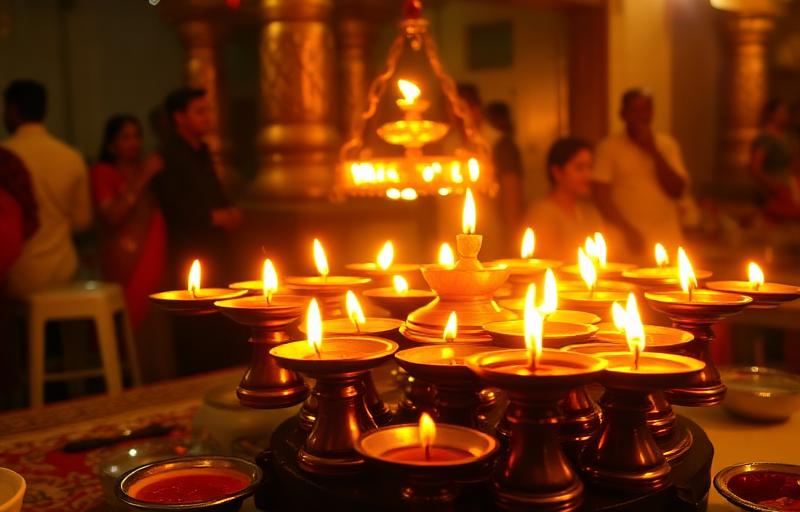
Not all oils are equal in the diya tradition. Different oils are used for different deities, purposes, and intentions. Here is the complete guide.
Ghee (Clarified Butter) - The Universal Sacred Oil:
Ghee is the most sacred of all lamp fuels in Hinduism. It is the offering most directly connected to the Vedic yajna tradition - the fire sacrifice. When ghee burns, it releases specific molecular compounds (like propionic acid and butyric acid) that the Vedic tradition recognized as pleasing to the divine.
- For: All deities, all pujas, all special occasions, weddings, havans
- Best for: Lakshmi puja (ghee is her preferred offering), Deva-related pujas
- Avoid: Do not use ghee for Shani (Saturn) puja - Shani prefers sesame oil
Sesame Oil (Til ka Tel) - For Shani and Ancestors:
Sesame oil is the oil of Saturn (Shani) and of the ancestors (Pitru). It is the prescribed oil for:
- Shani puja lamps (every Saturday)
- Pitru Paksha lamps (for ancestors)
- Yama Deepam on Dhanteras
- Lighting lamps for deceased family members
Mustard Oil (Sarson ka Tel) - For Sheetala and Regional Traditions:
In North India (UP, Bihar, Rajasthan), mustard oil is the traditional household lamp oil. It is associated with Sheetala Devi (goddess of cooling diseases, smallpox) and is used in regional traditions where ghee is expensive.
Castor Oil (Arandi ka Tel) - For Shani and Hanuman:
Castor oil is specifically mentioned in the Shani puja tradition. Hanuman puja in some traditions uses castor oil for the lamp (Hanuman Chalisa recitation on Tuesdays).
Coconut Oil - South Indian Tradition:
In South India (Tamil Nadu, Kerala, Karnataka), coconut oil is the traditional lamp oil. It is associated with all South Indian deity traditions. The Nandadeepa (eternal lamp) in many South Indian temples burns with coconut oil.
Which Oil for Which Day:
- Sunday: Ghee (Surya's day)
- Monday: Ghee or coconut oil (Shiva's day)
- Tuesday: Sesame oil or castor oil (Hanuman/Mars)
- Wednesday: Ghee (Mercury/Vishnu)
- Thursday: Ghee (Jupiter/Guru's day - most auspicious for ghee lamps)
- Friday: Ghee or coconut oil (Venus/Lakshmi)
- Saturday: Sesame oil (Shani's day - do NOT use ghee on Saturday for Shani)
Vandnaa App's Diya Planner reminds you which oil to use on each day's evening puja, along with the correct deity to face and mantra to chant.
Evening Diya Mantras: What to Chant When You Light Your Lamp
The lamp-lighting itself is a complete puja when accompanied by the right mantra. These mantras transform a 30-second act into a genuine devotional offering.
1. The Universal Lamp Mantra (for all occasions):
दीपं ज्योति परब्रह्म दीपं ज्योतिर्जनार्दनः। दीपो हरतु मे पापं संध्यादीप नमोऽस्तु ते॥
(Deepam Jyoti Parabrahma, Deepam Jyotir Janardanah. Deempo Haratu Me Paapam, Sandhya-Deepa Namostu Te.)
Meaning: "This lamp is the Supreme Brahman. This lamp is Vishnu (Janardana). May this lamp remove my sins. O lamp of the evening twilight, I bow to you."
Chant this once while holding the match before lighting.
2. Lakshmi Lamp Mantra (for prosperity):
ॐ श्री लक्ष्म्यै नमः। दीपं समर्पयामि।
This is the abbreviated Lakshmi offering - chant while lighting the lamp in the puja area (not just the general evening lamp).
3. Sandhya (Evening Prayer) from Rig Veda:
ॐ भूर्भुवस्सुवः तत्सवितुर्वरेण्यम्। भर्गो देवस्य धीमहि धियो यो नः प्रचोदयात्॥
The Gayatri Mantra. Traditionally chanted at three sandhyas (dawn, noon, dusk). The evening Gayatri is considered particularly powerful for removing the day's accumulated negative karma.
4. Shiva Lamp Mantra (for Monday evenings):
ॐ नमः शिवाय। ज्योतिर्लिङ्गाय नमः।
"Jyotirlinga" - the light-lingam - is Shiva's ultimate form. The lamp represents the jyotirlinga; chanting this mantra makes the evening diya a Shiva offering.
5. A Simple Original Prayer (for those who prefer their own words):
Many devotees find that their own heartfelt words in their own language are the most powerful prayer. After lighting the lamp, stand for 30 seconds and say: "I light this lamp to acknowledge the divine light in this home, in my family, and in myself. May this day end with gratitude, and may tomorrow begin with clarity."
When to Chant What:
- Every evening: Deepam Jyoti mantra (#1) - universal
- Friday evenings: Lakshmi mantra (#2) - for prosperity
- Morning and evening: Gayatri (#3) - full Sandhya practice
- Monday evenings: Shiva lamp mantra (#4)
- Any evening: Your own words (#5) - whenever you want personal connection
Vandnaa App's Evening Puja Mode plays the correct mantra automatically based on the day of the week - just press play and light your diya.
Akhand Diya: The Continuous Lamp Tradition & How to Keep One at Home
An Akhand Diya (unbroken lamp) is a lamp that burns continuously - for days, weeks, or even years without extinguishing. It is one of the most powerful ongoing devotional practices in the Hindu home tradition.
Why an Akhand Diya?
In temples, the akhand diya (also called Nanda Deepa - the "joyful lamp") burns eternally, 24 hours a day. It represents the eternal presence of the divine - God who never sleeps, never rests, is always present. When you maintain an akhand diya at home, you are saying: "This home is always in the presence of the divine."
When Are Akhand Diyas Traditionally Kept:
1. During Navratri (9 days) - the most common household akhand diya period 2. During Shravan (entire month of Sawan) 3. Diwali to Bhai Dooj (5 days) 4. Satyanarayan Katha and major puja occasions 5. When a family member is seriously ill - continuous lamp for protection 6. Continuously (year-round) - in especially devoted households
How to Keep an Akhand Diya at Home:
Setup:
- Use a large clay diya (big enough to hold enough oil for 8–12 hours)
- OR use a metal diya with a lid (protects from wind)
- Place on a raised platform (minimum 1 foot off the ground) in the puja corner
- Never place directly on the floor
Oil and Wick:
- Use pure ghee or sesame oil (whichever your tradition)
- Use a thick cotton wick (5 strands twisted together for an akhand diya)
- Keep extra oil and wicks nearby for refilling
Maintaining the Akhand Flame:
The most important rule: the flame must never be extinguished by you. If it goes out due to wind, it can be re-lit. But you should never blow it out, put it out with water, or snuff it.
To refill without extinguishing: 1. Wait until the oil is very low (flame getting smaller) 2. Bring the new oil pot and pour very slowly along the side of the diya - not directly on the flame 3. The flame may flicker but should not go out 4. Alternatively, light a small secondary diya from the akhand flame FIRST, then refill the main diya and relight from the secondary
If the Flame Goes Out:
If the flame accidentally goes out (wind, inadvertent snuff), don't panic. Relight it immediately. Say the deepam mantra. In the context of an auspicious occasion (Navratri, etc.), consider doing a small re-puja when you relight.
Vandnaa App's Akhand Diya Tracker lets you set up a continuous lamp reminder - it will notify you every 8 hours to check and refill the diya, so the flame never goes out.
Diya in Festivals and Seasonal Rituals Throughout the Year
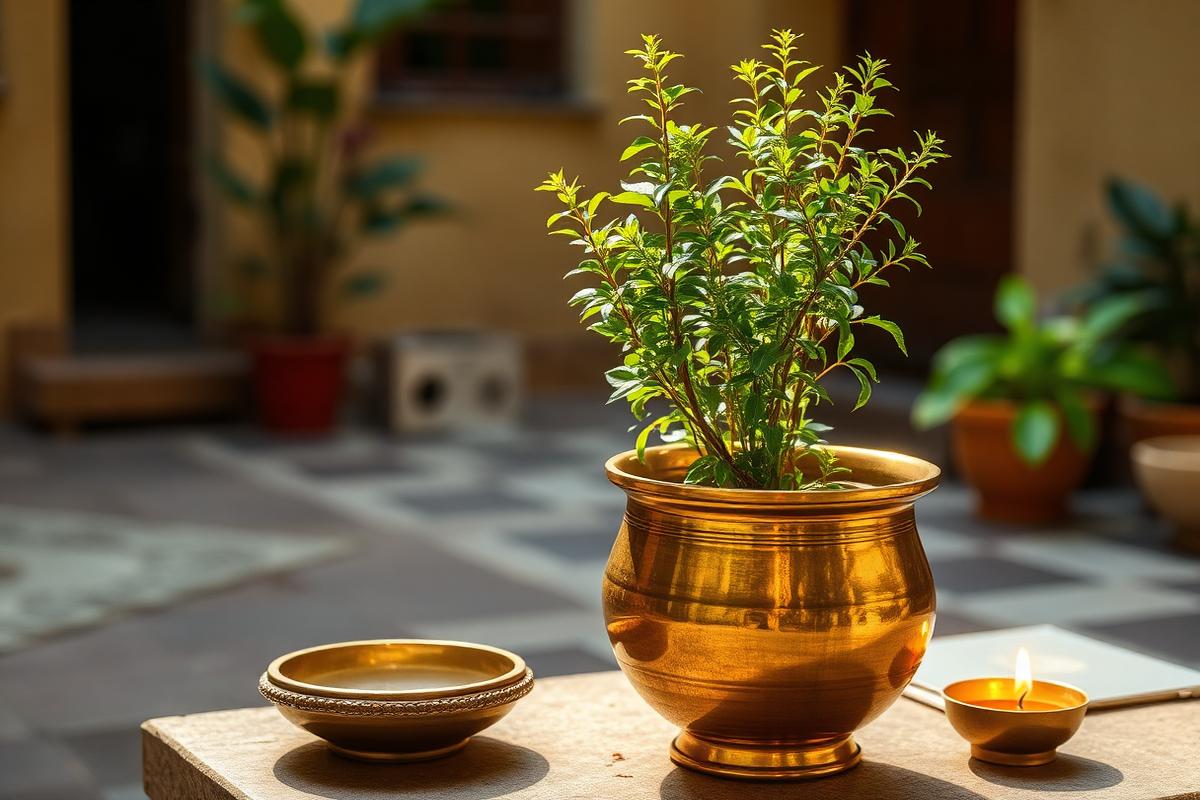
The evening diya transcends daily worship to become the luminous centerpiece of India's most beloved festivals. Understanding the diya's role across the annual cycle deepens both practice and meaning, revealing how ancient sages aligned light-offering with cosmic rhythms and agricultural seasons.
Diwali - the apex of diya culture: The Festival of Lights spans five days, each with its own diya tradition. On Dhanteras (Day 1), a diya is kept burning all night to honor Yama (death) and ward off untimely death - this "Yama diya" faces south, the direction of the departed. On the main Diwali night (Day 3), the entire home is illuminated with rows of clay diyas (pradeepa mala) representing the return of Lord Rama to Ayodhya after 14 years. Lakshmi is believed to enter only homes that are well-lit and clean. On Bhai Dooj (Day 5), sisters light diyas and pray for their brothers' longevity.
Karthik Purnima - the month of unbroken light: The entire month of Karthik (October–November) is sacred to diya, culminating in Dev Diwali on the full moon. Devotees float lit diyas on rivers - particularly the Ganges - as offerings to Vishnu and Shiva. This practice (akash diya) symbolizes illuminating the path for ancestral souls. Sky lanterns represent the same offering in elevated form.
Navratri - the nine-night flame: During both Chaitra and Sharad Navratri, an akhanda jyoti (unbroken flame) burns continuously for nine days in Devi temples and many homes. This requires special vigil and is considered among the highest offerings to the goddess. The flame must not extinguish - its steadiness is taken as an auspicious sign.
Purnima (every full moon): The full moon itself is considered a cosmic diya - the reflector of divine light. Offering diyas to tulsi, Shiva lingas, or rivers on purnima nights connects the devotee to this monthly cycle of illumination.
Angarki Chaturthi and Sankashti: On these Ganesha-dedicated days, diyas with sesame oil are offered specifically to remove obstacles. The number four (corresponding to Chaturthi) is considered auspicious - four diyas arranged in a square.
Seasonal timing wisdom: Ancient puja systems recognized that the quality of fire (and thus the diya) changes with seasons. In winter, ghee and sesame oil are preferred for their warming properties. In monsoon, mustard oil is used as it is believed to repel insects and negative energies. In summer, coconut oil offers cooling energetic qualities. These aren't arbitrary - they reflect Ayurvedic understanding of seasonal elemental dominance.
The Vandnaa app provides festival-specific diya guidance, including which oils, colors, and mantras to use for each occasion, with daily reminders aligned to the Hindu calendar.
From the small earthen lamp lit each evening to the million-diya celebrations of Diwali, the practice of light-offering is India's most universal spiritual language. Every diya you light adds your small flame to an unbroken tradition stretching back thousands of years.
Common Questions From Devotees
Can I use an electric/LED diya instead of an oil diya?+
Acceptable as supplement, NOT as replacement. The actual fire-element is essential - fire is one of the 5 cosmic elements (Pancha Mahabhuta) and electric LEDs do not contain it. The smoke from ghee/oil diya carries antimicrobial compounds, the heat creates micro-circulation in the surrounding air, and the flickering flame activates specific brain wave patterns (research at NIMHANS Bangalore confirms this). Electric diyas have NONE of these benefits. Use real ghee/oil diya as primary; electric diya can supplement (e.g., overnight as a 'symbol' when real diya extinguishes naturally). For elderly or immobility-issues, electric diya at least preserves intent, but the spiritual benefit is reduced significantly.
What if I forget to light the evening diya?+
Light it as soon as you remember - even up to 1 hour after Pradosh kaal ends, the energy partial. After that, skip for the day; do not rush a 'late' diya at 9 PM (energy is lost). Compensate the next day by lighting an EXTRA diya - 2 diyas the next evening makes up. If you forget for 3+ consecutive days, do a Pradosh-fixing ritual: on the next Pradosh tithi (Trayodashi), light 5 diyas instead of 1, recite the Shiva Tandava Stotra or any Pradosh prayer, and apologize mentally for the missed days. The Vandnaa App has automatic sunset reminders to prevent forgetting.
Should the entire family gather for the evening diya?+
Ideally yes, even briefly. Family unity at the diya-lighting moment carries powerful spiritual energy - collective prayer is many times more potent than individual prayer. Even 2-3 minutes together is sufficient. The eldest member of the family lights the diya; younger members fold hands and observe. If geographic separation prevents physical gathering (NRI families, college students), do a brief video-call diya-lighting once a week - the energy of family unity reaches across distance. Many traditional families have a strict rule: 'No phones, no TV, no other activities during evening diya' - full family attention for those 2-3 minutes. This single practice over years creates the strongest family-spiritual bond possible.
Why specifically ghee - what's wrong with regular oil?+
Three differences. (1) Source - ghee is from cow's milk (sacred mother substance); regular oils are from seeds (less subtle energy). (2) Smoke - ghee burns clean with sweet, antimicrobial smoke; vegetable oils burn with harsh, sometimes toxic smoke (especially low-quality refined oils). (3) Energy frequency - ghee carries 'sattvic' energy that elevates the consciousness; regular oils are 'rajasic' or 'tamasic'. For DAILY use, pure cow ghee is mandated. For SPECIAL purposes (Saturn-Hanuman worship), sesame oil or mustard oil are acceptable substitutes. Coconut oil works for Vishnu/Krishna worship in South India. NEVER use highly refined vegetable oils, palm oil, or low-quality 'cooking ghee' - these have poor energy and often toxic compounds when burned. Buy genuine cow ghee (₹500-800/kg) and reserve it for daily diya use - a single kg lasts months.
About the author
Dr. Suresh Iyer · Vastu Shastra & Jyotish, 18+ years
Dr. Suresh has practiced traditional Vastu and basic Vedic Jyotish for over 18 years across South India. He contributes the Vastu, direction, and home-puja layout guides on Vandnaa.
Meet the Vandnaa editorial team →Explore on Vandnaa
Related Articles
Diya Jalane Ke Niyam: Right Direction, Best Oil, Number of Wicks & What Every Flame Means
8 min read

Puja Room Vastu – How to Set Up a Mandir at Home
10 min read
Lakshmi Puja at Home Step by Step (घर पर लक्ष्मी पूजा कैसे करें)
9 min read

Why We Ring the Temple Bell: 7 Spiritual Reasons & 3 Scientific Findings (Complete Guide)
8 min read