What '16 Shringar' Means + Why Exactly Sixteen?
16 shringar (Sanskrit: shodasha shringar, Hindi: solah shringar) literally means 'sixteen adornments'. It is the complete set of sacred body decorations worn by Hindu married women on auspicious occasions - weddings, festivals (Karwa Chauth, Teej), pujas, and after the birth of a child.
The word shringar comes from the Sanskrit root 'sring' meaning to adorn or beautify - but it carries deeper meaning than just 'makeup'. Shringar is one of the navarasas (nine fundamental emotions in Indian art and life) - representing love, attraction, and beauty in their highest forms.
Why sixteen specifically?
Several interpretations explain the number 16:
1. The 16 phases of the moon. A married woman's beauty is compared to the full moon. Just as the moon completes 16 kalas (phases) to reach fullness, a woman's beauty reaches completeness through 16 adornments.
2. 16 chakras and gland alignments. Some yogic traditions identify 16 subtle energy points in the female body that the shringar items correspond to and activate.
3. The 16 forms of Goddess Lakshmi. Each adornment honors one form of Lakshmi (Adi Lakshmi, Dhana Lakshmi, Dhanya Lakshmi, etc.). A married Hindu woman embodies Lakshmi at home.
4. The 16 sanskaras (life sacraments). Just as a Hindu life has 16 sacred rites of passage, the body has 16 adornments to honor it as a sacred vessel.
5. 16 days of mourning vs 16 days of celebration. After someone dies, families observe 16-day mourning rituals. The opposite - 16-day celebrations or 16-fold adornments - reaffirms life and continuity.
The concept of the body as altar:
In Hindu thought, the married woman's body is sacred - she is Grihalakshmi (the Lakshmi of the home). Just as a temple deity is adorned daily with flowers, jewelry, and decorations, the married woman adorns herself as a living altar. This isn't vanity - it is ritual respect for the divine feminine that dwells within her.
This is why these adornments are typically worn after marriage (when the woman 'becomes' Lakshmi for her husband and household) and removed during widowhood (when this divine office is symbolically retired). Modern interpretations vary, but the traditional meaning is one of ritual sacredness, not external beauty alone.
Complete List of 16 Shringar Items - Names + Meaning
Here is the traditional list of 16 adornments, from head to toe:
1. Bindi (बिंदी) - The red dot between the eyebrows.
- Location: Ajna chakra (third eye).
- Meaning: Marks the seat of wisdom and intuition. Activates the spiritual third eye. Red color symbolizes shakti (feminine cosmic energy).
2. Sindoor (सिंदूर) - Vermillion in the hair parting.
- Location: Top of the head along the central parting (maang).
- Meaning: The most important symbol of marriage. Red represents Lakshmi and life-force. The parting line itself represents the woman's connection to Sumeru (cosmic axis). Applied by husband on wedding day, then daily by wife.
3. Kajal (काजल) - Black eyeliner around the eyes.
- Location: Eyelids and waterline.
- Meaning: Wards off evil eye (nazar). Cooling for eyes. Symbolizes alert wisdom. Traditionally made from cow ghee soot.
4. Nath / Nathni (नथ/नथनी) - Nose ring (left nostril).
- Location: Left nostril (connected to Ida nadi - lunar/feminine energy channel).
- Meaning: Pressure on this point traditionally believed to ease childbirth, support reproductive health, balance hormones. Mythologically, gifted to Parvati by Shiva.
5. Karna Phool (कर्ण फूल) - Ear ornaments / earrings.
- Location: Both earlobes.
- Meaning: Ear lobes have acupressure points connecting to reproductive organs and brain. Heavy earrings stretch and activate these points. Symbolizes listening to dharma.
6. Maang Tikka (मांग टीका) - Hair-parting forehead ornament.
- Location: Hangs at the top of forehead, chain across hair parting.
- Meaning: Marks the Ajna chakra zone. Symbolizes the union of male and female (the chain crosses the parting where sindoor is, joining husband-wife symbolically).
7. Mangalsutra (मंगलसूत्र) - Sacred wedding necklace with black beads.
- Location: Around the neck, resting on heart.
- Meaning: The most sacred symbol of marriage. Black beads ward off evil; gold pendant represents Lakshmi/prosperity. The husband ties this on wedding day. Worn always (never removed) by traditional wives.
8. Haar (हार) / Necklace - Additional decorative necklace.
- Location: Around neck, longer than mangalsutra.
- Meaning: Symbolizes Lakshmi's blessings. Common: rani haar (queen's necklace), satlada (7-row), choker.
9. Mehendi (मेहंदी) - Henna designs on hands and feet.
- Location: Palms, backs of hands, forearms; feet and ankles.
- Meaning: Cooling effect on body during summer wedding season. Symbolizes love (darker color = stronger husband's love, by folk belief). Has antiseptic and stress-reducing properties.
10. Choodiyan (चूड़ियाँ) / Bangles - Bangles on both wrists.
- Location: Forearms, both hands.
- Meaning: Wrist pulse points are stimulated by bangle pressure - believed to balance cardiovascular and hormonal health. Sound of bangles announces a woman's presence (auspicious sound). Glass bangles for daily wear; gold for festivals.
11. Baajuband (बाजूबंद) / Armlet - Upper arm ornament.
- Location: Above elbow, around bicep.
- Meaning: Activates pressure points on the arm. Symbolizes strength. Worn by goddesses in their iconography.
12. Aarsi (आरसी) / Thumb Ring with Mirror - Small mirror on thumb ring.
- Location: Right hand thumb.
- Meaning: Traditionally used by bride to see her husband for first time during wedding (when both were veiled). Symbolizes self-reflection. Modern: ornamental.
13. Kamarband (कमरबंद) / Waist Belt - Decorative belt around the waist.
- Location: Over the saree at waist.
- Meaning: Defines the waist (the seat of life-energy - the umbilical center). Symbolizes Lakshmi's protection of fertility and home prosperity. Often holds the saree pleats in place.
14. Bichhua (बिछुआ) / Toe Rings - Silver rings on second toes of both feet.
- Location: Second toe of each foot.
- Meaning: Always silver (not gold - gold not worn below waist as Lakshmi resides there). The second toe has a nerve connecting to the uterus - believed to support reproductive health. Important marriage symbol along with sindoor and mangalsutra.
15. Payal (पायल) / Anklets - Anklets with small bells.
- Location: Both ankles.
- Meaning: The sound announces the woman's movements. Considered auspicious - drives away negative energies in the home. Ankle bones get gentle massage from the anklets.
16. Alta (आलता) - Red dye on hands and feet edges.
- Location: Edges of palms, soles, and toes.
- Meaning: Common in Bengali, Odia, Maharashtrian traditions. Red color symbolizes auspicious bride/Lakshmi. Applied during weddings, Karwa Chauth, important festivals. Some traditions count alta as the 16th and replace it with 'gajra' (flower garland in hair) in others.
Regional variations:
- North India: typically includes bindi, sindoor, mangalsutra, choodiyan, bichhua as the 'must-have' five.
- South India: includes flower garland (gajra) for hair, gold thali (mangalsutra), mukkupudaka (nose ring on right side).
- Bengal: alta on feet is essential.
- Maharashtra: nath (nose ring) is uniquely large and prominent.
- Punjab: chuda (red bangles) replaces gold bangles for first year of marriage.
Common Questions From Devotees
Is it mandatory for married Hindu women to wear all 16 shringar daily?+
No, all 16 are worn together only on major occasions - weddings, Karwa Chauth, Teej, Diwali, child's first birthday, important festivals. For daily wear, women typically wear 5-6 'core' items: bindi, sindoor, mangalsutra, bangles, bichhua. Working women often simplify further - just mangalsutra and small bindi. The full 16 is ceremonial, not mandatory. Modern Hindu women adapt based on profession, comfort, and personal belief - but most retain mangalsutra and sindoor as marriage identity markers.
Why are toe rings (bichhua) always silver, never gold?+
Goddess Lakshmi is said to reside in gold - so gold is worn above the waist (head, neck, hands) to honor her. Wearing gold below the waist (feet, toes) would symbolically place Lakshmi at the feet, which is considered disrespectful. Silver is associated with the moon (Chandra) and cooling lunar energy - appropriate for the feet which are 'grounding' parts of the body. Also, silver toe rings have a believed acupressure benefit on the reproductive system via nerve points on the second toe.
Can unmarried women or widows wear shringar items?+
Unmarried women: yes, but typically skip the marriage-specific items - sindoor, mangalsutra, bichhua. They can wear bindi (any color, often non-red), bangles, earrings, anklets, mehendi. The 'kanya shringar' (maiden's adornment) is a recognized subset. Widows: traditionally avoided shringar items as they represented the husband's life and prosperity. Modern practice varies widely - many widows continue wearing some items as personal choice, and Indian society increasingly supports this. There is no religious prohibition - traditional norms were social, and they're now in healthy transition.
Why is mehendi considered shringar - it's temporary, isn't it?+
Mehendi is included precisely because of its temporary, ritual nature. It is applied for specific occasions (wedding, festivals) and gradually fades, representing the cyclical nature of celebrations. Beyond aesthetics: mehendi has real cooling effect on the body (important for summer weddings), antiseptic properties (helped wedding feast hygiene), and stress-reducing effect (calmed nervous brides). Folk belief: darker the mehendi color, more love husband has - so brides often pray for dark color, making it a ritual itself. Many South Indian and Maharashtrian shringar lists count mehendi only on special days, not daily.
About the author
Anjali Mehta · Editor, M.A. Religious Studies
Anjali is the managing editor for Vandnaa and oversees the festival and vrat coverage. She holds an M.A. in Religious Studies and reviews every published article for accuracy, accessibility, and tradition-fidelity.
Meet the Vandnaa editorial team →Explore on Vandnaa
Related Articles
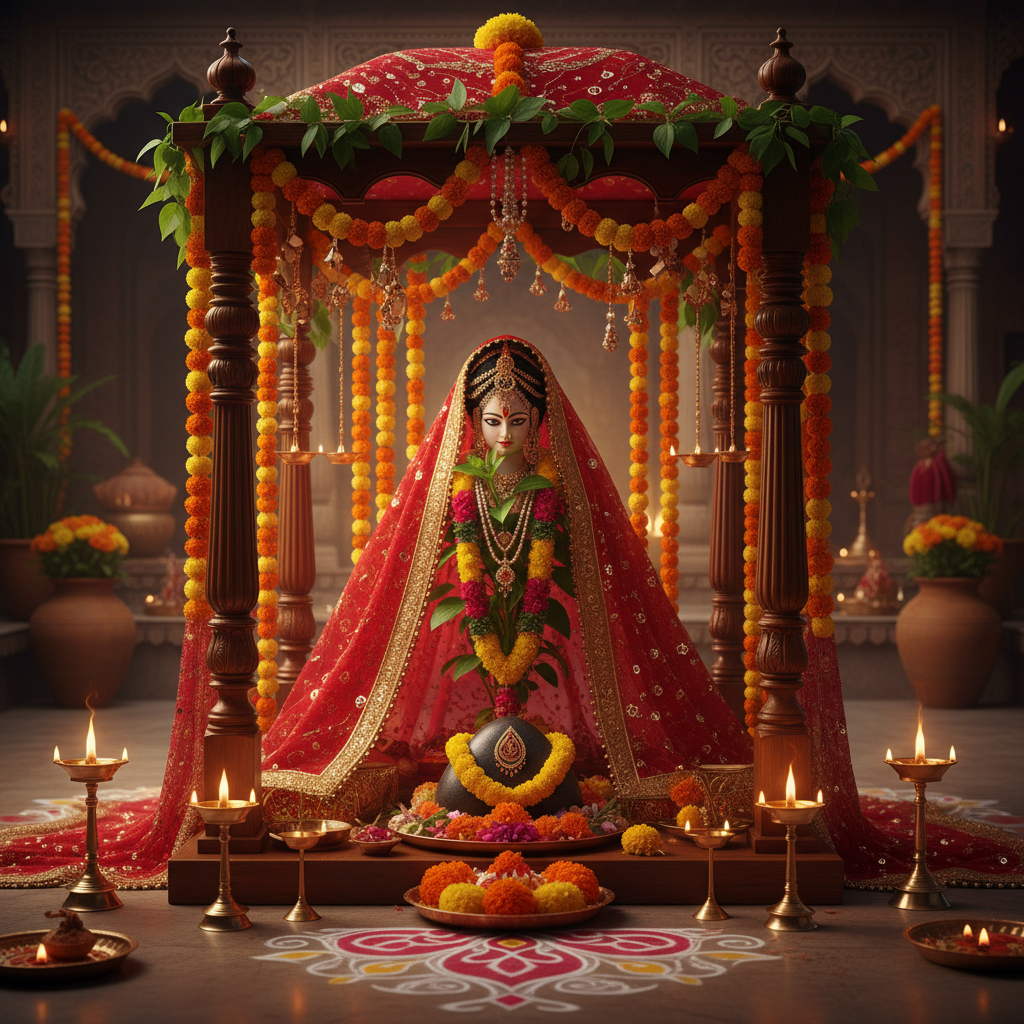
16 Shringar (Solah Shringar): Bridal Significance of Each Item
9 min read
Why Hindu Women Wear Bangles: 16 Shringar Significance
7 min read
Solah Shringar for Modern Married Women - 16 Adornments, Modern Relevance
8 min read
Karwa Chauth 2026: Date, Vrat Vidhi, Moon Timing & Complete Katha for Husband's Long Life
10 min read