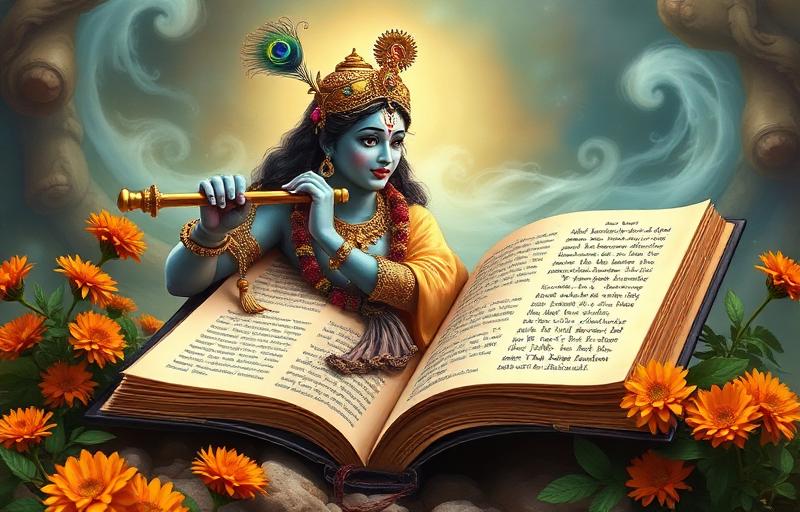
Who Was Abhimanyu - Son of Arjuna and Subhadra
Abhimanyu was the son of Arjuna and Subhadra, Krishna's sister - which made him Krishna's beloved nephew. Born while his father was the greatest warrior alive and raised in Dwarka among the Yadavas during the Pandavas' exile, he absorbed the science of weapons from Arjuna, Krishna and the finest teachers of the age. By sixteen he was counted among the deadliest fighters on the field, married to Uttara, princess of Virata, and the hope of the next generation - his unborn son Parikshit would one day carry the entire Kuru line forward. The Mahabharata describes him as Arjuna's equal in archery, with a lion's fearlessness and a boy's open heart. Yet for all his gifts, one gap in his education - half a lesson, left unfinished before his birth - would decide his destiny on the thirteenth day of the great war.
The Lesson in the Womb - Half a Secret
The most famous detail of Abhimanyu's life comes from before his birth. The chakravyuh - the rotating, multi-ringed wheel formation - was the deadliest battle array known, and only a handful of warriors could break it. One day, the tradition tells, Arjuna was describing to Subhadra how to pierce the chakravyuh's entrance, ring by ring. The child in her womb listened, absorbing every word. But before Arjuna reached the second half - how to come out - Subhadra drifted into sleep, and the narration stopped. So Abhimanyu was born knowing the way in but not the way back. Devotional tradition reads this garbha-samskara both literally and as a teaching: what surrounds a mother shapes the child within, and knowledge received incomplete is a door that opens only one way. That unfinished sentence hung over Abhimanyu's life like a quiet prophecy.
The Thirteenth Day - Drona's Trap
By the thirteenth day of the Kurukshetra war, the Kaurava commander Dronacharya had a plan: capture Yudhishthira alive and end the war at a stroke. To do it, he arranged his army in the chakravyuh - and first made sure its only true counter was absent. The Samsaptakas, an oath-bound legion sworn to fight to the death, challenged Arjuna and drew him to a distant corner of the battlefield. With Arjuna gone, only one person on the Pandava side knew even half the formation's secret - a sixteen-year-old boy. Yudhishthira, facing catastrophe as the wheel ground forward, turned to Abhimanyu. The boy answered without hesitation: he could break open the entrance; the elders - Bhima, Yudhishthira, Satyaki, Drupada and the rest - need only follow him through the breach and bring him home. It was a sound plan. It would shatter within minutes.
Entering Alone at Sixteen - Jayadratha's Wall
Abhimanyu drove his chariot at the wheel's entrance and split it open exactly as his father's voice had taught him in the womb. He plunged through. But as the Pandava elders surged in behind him, Jayadratha, king of Sindhu, slammed the breach shut. Jayadratha carried a boon from Lord Shiva: for one day, he could hold back all the Pandavas except Arjuna - and Arjuna was miles away fighting the Samsaptakas. The boon held like a wall of iron. Bhima's mace, Satyaki's arrows, Yudhishthira's desperation - nothing got through. Behind them, the rings of the chakravyuh rotated and resealed, swallowing the boy whole. Abhimanyu looked back once, understood that no one was coming, and made the decision that defines him forever: he turned his chariot toward the centre of the wheel and attacked.
One Boy Against the Maharathis
What followed is described in the Drona Parva as one of the most astonishing displays of war-craft in the epic. Alone inside the wheel, Abhimanyu fought like Arjuna and Krishna fused into one body. He cut down standard-bearers and charioteers, scattered entire divisions, and held off the greatest maharathis of the Kaurava side simultaneously - Drona, Karna, Kripa, Ashwatthama, Shalya, Duryodhana and Dushasana among them. He wounded Karna, knocked Shalya unconscious, defeated Duryodhana and slew Lakshmana, Duryodhana's son, before his father's eyes - sealing his own fate, for Duryodhana now howled for the boy's death at any cost. Veterans of a hundred battles watched a sixteen-year-old outshine them all and, the epic admits, felt the battle slipping. One warrior was unravelling the unbreakable formation from within. Honest combat was failing - so the Kauravas decided to abandon it.
The Adharmic Attack - How Abhimanyu Fell
The rules of dharma-yuddha were explicit: one warrior fights one warrior; the unarmed and chariot-less are not struck. On Drona's counsel and Duryodhana's command, six maharathis attacked Abhimanyu at once - a violation the epic names plainly as adharma. Karna, on Drona's advice, cut Abhimanyu's bow from behind. His charioteer was slain, his horses killed, his chariot smashed. Weaponless, the boy fought on with a sword, then a chariot wheel lifted like Krishna's chakra - the image carved into a thousand temple walls. Finally, exhausted and bleeding, he was struck down in a mace duel by Dushasana's son, hit while rising from the ground. The epic says the field itself seemed to dim. Even Kaurava warriors wept at what they had done; the celebration in Duryodhana's camp rang hollow against it.
Why Abhimanyu's Sacrifice Is Honoured

That night, Arjuna swore to kill Jayadratha by the next sunset or enter fire himself - a vow he fulfilled on the fourteenth day with Krishna's help. But Abhimanyu's true memorial is larger than vengeance. 1. Courage that does not wait for guarantees - he entered knowing his knowledge was incomplete, because the alternative was his family's destruction. Dharma sometimes asks us to act before we feel ready. 2. The cost of war made visible - the Mahabharata places a child's body at the centre of its war story so no listener can romanticise battle. Victory at Kurukshetra is purchased with this grief. 3. Adharma defeats what it cannot match - his fall indicts the attackers, not the boy; he was never truly beaten one-to-one. 4. The light continues - his son Parikshit, born after the war, carried the whole dynasty forward. Devotees honour Abhimanyu as proof that a short life lived with full courage outweighs a long life of hesitation.
Reader Questions Answered
How did Abhimanyu learn the chakravyuh in the womb?+
Tradition tells that Arjuna was explaining to Subhadra how to pierce the chakravyuh's entrance while she was pregnant, and the child in her womb absorbed the lesson. Subhadra fell asleep before Arjuna described how to exit, so Abhimanyu was born knowing only the way in. The episode is the classic example of garbha-samskara, learning that begins in the womb.
How old was Abhimanyu when he died at Kurukshetra?+
He is traditionally said to have been sixteen years old on the thirteenth day of the war. Despite his youth he was already counted among the finest warriors of the age, trained by Arjuna and Krishna, married to princess Uttara, and the father of the unborn Parikshit who would continue the Kuru dynasty.
Why could the Pandavas not follow Abhimanyu into the chakravyuh?+
Jayadratha, king of Sindhu, sealed the breach behind Abhimanyu. He held a boon from Lord Shiva that for one day he could hold back all the Pandavas except Arjuna - and Arjuna had been deliberately drawn far away by the Samsaptakas. Bhima, Yudhishthira and Satyaki all failed to break through, leaving the boy alone inside.
Who killed Abhimanyu and how?+
No single warrior defeated him fairly. Six maharathis including Drona, Karna, Kripa, Ashwatthama and Dushasana attacked together; Karna cut his bowstring from behind, his chariot and horses were destroyed, and he fought on with a sword and then a chariot wheel. Finally Dushasana's son struck him down in a mace duel as he rose from the ground.
Why is Abhimanyu's death called adharma?+
The rules of dharma-yuddha forbade many warriors attacking one, striking from behind, and attacking a fighter who had lost his weapons and chariot. Every one of these rules was broken against Abhimanyu. The Mahabharata itself calls the act adharmic, and it marks the moral turning point after which both sides increasingly abandoned the rules of war.
What happened after Abhimanyu's death?+
Arjuna vowed to kill Jayadratha before the next sunset or enter fire, and fulfilled it on the fourteenth day with Krishna's guidance. Abhimanyu's widow Uttara later gave birth to Parikshit, who was revived by Krishna and became the king who continued the Kuru line - so Abhimanyu's sacrifice literally carried the dynasty's future.
About the author
Anjali Mehta · Editor, M.A. Religious Studies
Anjali is the managing editor for Vandnaa and oversees the festival and vrat coverage. She holds an M.A. in Religious Studies and reviews every published article for accuracy, accessibility, and tradition-fidelity.
Meet the Vandnaa editorial team →