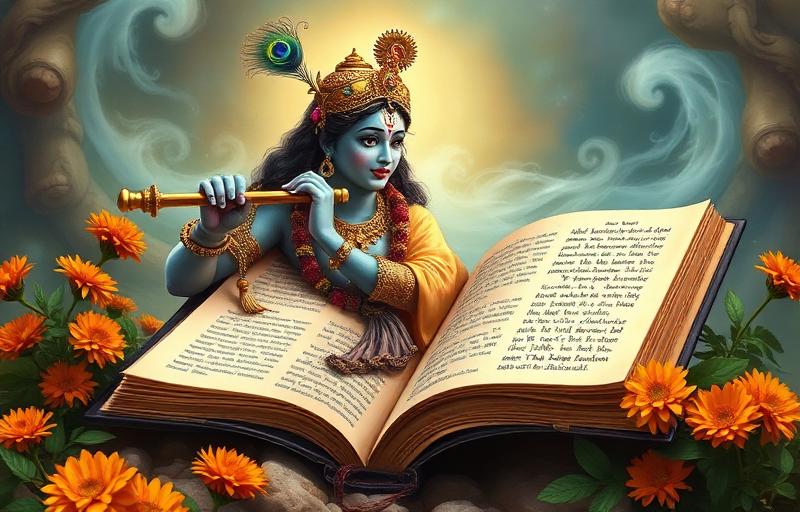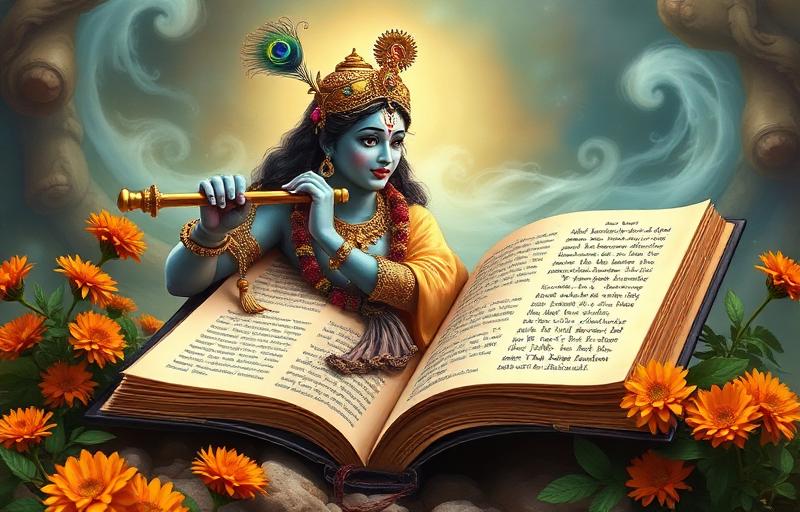
The Scale of the Mahabharata - 18 Parvas, 100,000 Shlokas
Composed by Maharishi Ved Vyasa and, by tradition, written down by Lord Ganesha, the Mahabharata contains roughly 100,000 shlokas, making it about four times the Ramayana and roughly ten times the Iliad and Odyssey combined. Its eighteen books are called parvas, a word meaning 'joint' or 'knot', like the nodes of a sugarcane stalk. The number eighteen echoes through the epic: 18 parvas, 18 chapters of the Bhagavad Gita, 18 akshauhini armies at Kurukshetra, and a war of 18 days. The epic itself declares its breadth: 'Whatever is here may be found elsewhere; what is not here exists nowhere.' Within it sit complete teachings on dharma, statecraft, family, grief and liberation, which is why it is honoured as the 'fifth Veda'.
Parvas 1 to 5 - From the Adi Parva to the Failure of Peace
1. Adi Parva (the Beginning): the origins of the Kuru dynasty, the births of the Pandavas and Kauravas, their education under Drona, the house of lac conspiracy, and Draupadi's swayamvara and marriage. 2. Sabha Parva (the Assembly): Yudhishthira's Rajasuya yajna, Duryodhana's envy, the rigged game of dice, Draupadi's humiliation in the court, and the Pandavas' exile of thirteen years. 3. Vana Parva (the Forest): twelve years in the forest, filled with teaching stories like Nala-Damayanti and Savitri-Satyavan, and the Yaksha's riddles answered by Yudhishthira. 4. Virata Parva (the Kingdom of Virata): the thirteenth year in disguise at King Virata's court, ending with Arjuna's victory over the Kaurava cattle raid. 5. Udyoga Parva (the Effort): negotiations for peace, Krishna's embassy to Hastinapura, and its rejection, making war inevitable.
Bhishma Parva - Where the Bhagavad Gita Sits
The sixth book, Bhishma Parva, opens the eighteen-day war of Kurukshetra under the command of grandsire Bhishma, and it holds the Mahabharata's crown jewel. As the armies face each other, Arjuna asks Krishna to place his chariot between them; seeing teachers, elders and kinsmen on both sides, he collapses in despair and refuses to fight. Krishna's response, spanning chapters 25 to 42 of this parva, is the Bhagavad Gita: eighteen chapters and about 700 shlokas teaching karma yoga (selfless action), bhakti yoga (devotion) and jnana yoga (knowledge), crowned by the vision of the Lord's universal form (Vishvarupa). That the Gita arises in the middle of a battlefield, not a quiet hermitage, is its enduring message: spiritual wisdom is meant for the struggles of real life. The parva ends with Bhishma falling on the tenth day, resting on a bed of arrows.
Parvas 7 to 11 - The War Books and the Aftermath of Grief
1. Drona Parva: Drona commands the Kaurava army; the young Abhimanyu is trapped and slain inside the chakravyuha; Drona falls when he hears of Ashwatthama's reported death. 2. Karna Parva: the generous yet fate-bound Karna leads for two days, and falls to Arjuna as his chariot wheel sinks into the earth. 3. Shalya Parva: Shalya commands on the final day; Yudhishthira slays him, and Bhima defeats Duryodhana in the mace duel that ends the war. 4. Sauptika Parva (the Night Massacre): Ashwatthama attacks the Pandava camp by night, killing Draupadi's sons and Dhrishtadyumna in their sleep. 5. Stri Parva (the Book of Women): the widows of both armies mourn on the field; Gandhari, mother of a hundred slain sons, utters her sorrowful words to Krishna. These books refuse to glamourize war; victory arrives soaked in tears.
Parvas 12 to 18 - From Shanti Parva to Swargarohana
1. Shanti Parva: the longest book; the dying Bhishma teaches Yudhishthira dharma, kingship and moksha from his bed of arrows. 2. Anushasana Parva: Bhishma's further teachings on charity, conduct and duties; it contains the beloved Vishnu Sahasranama. 3. Ashvamedhika Parva: Yudhishthira's Ashvamedha yajna; Krishna recites the Anu Gita to Arjuna. 4. Ashramavasika Parva: Dhritarashtra, Gandhari and Kunti retire to the forest and pass away. 5. Mausala Parva: the Yadava clan perishes in a fratricidal brawl; Krishna departs the earth. 6. Mahaprasthanika Parva: the Pandavas renounce the kingdom and walk toward the Himalayas; one by one they fall, leaving Yudhishthira and a faithful dog. 7. Swargarohana Parva: Yudhishthira refuses heaven without the dog, who is Dharma himself; after a final test, all are united beyond sorrow.
Itihasa Status and Traditions of Reading the Mahabharata
The Mahabharata is classed not as myth but as itihasa, literally 'thus indeed it happened': sacred history that carries the teachings of the Vedas in story form, accessible to everyone. Alongside the Ramayana, it is one of the two itihasas of Hindu tradition, and the Bhagavad Gita drawn from it is studied as scripture in its own right. Reading customs differ from the Ramayana's. A well-known folk belief cautions against keeping or reading the complete epic at home, associating it with conflict; many traditional families therefore read the Gita, Vishnu Sahasranama or selected parvas instead. Other traditions disagree and hold full parayanas in temples, often over 18 days. Listening to katha discourses by learned narrators remains the most cherished way to receive it, just as it was first heard: recited by Vaishampayana to King Janamejaya, and retold by Suta to the sages of Naimisharanya.
What People Ask Most
How many parvas are there in the Mahabharata?+
The Mahabharata has 18 major parvas, from the Adi Parva to the Swargarohana Parva. Each parva is further divided into sub-parvas and chapters, and the whole epic contains roughly 100,000 shlokas.
In which parva does the Bhagavad Gita appear?+
The Bhagavad Gita sits in the Bhishma Parva, the sixth book, in its chapters 25 to 42. It is Krishna's teaching to Arjuna on the battlefield of Kurukshetra, spanning 18 chapters and about 700 shlokas.
Who wrote the Mahabharata?+
The Mahabharata was composed by Maharishi Ved Vyasa (Krishna Dvaipayana Vyasa). According to tradition, Lord Ganesha agreed to be its scribe, writing down the verses as Vyasa dictated them without pause.
Why is the Mahabharata called an itihasa and not a purana?+
Itihasa means 'thus indeed it happened'. The Mahabharata and Ramayana are classed as itihasas because tradition regards them as sacred history witnessed by their composers, while the Puranas are encyclopedic collections of cosmology, genealogies and legends.
Which is the longest parva of the Mahabharata?+
The Shanti Parva, the twelfth book, is the longest. In it the dying Bhishma, resting on his bed of arrows, teaches Yudhishthira about dharma, the duties of kings and the path to liberation.
How long did the Kurukshetra war last?+
The Kurukshetra war lasted 18 days, described across the Bhishma, Drona, Karna, Shalya and Sauptika Parvas. The number 18 recurs throughout the epic: 18 parvas, 18 Gita chapters and 18 akshauhini armies.
About the author
Anjali Mehta · Editor, M.A. Religious Studies
Anjali is the managing editor for Vandnaa and oversees the festival and vrat coverage. She holds an M.A. in Religious Studies and reviews every published article for accuracy, accessibility, and tradition-fidelity.
Meet the Vandnaa editorial team →