Who Was Adi Shankaracharya?
Adi Shankaracharya is the philosopher-saint who, in a life traditionally counted at just thirty-two years, walked the length and breadth of India, revived sanatan dharma at a moment of confusion and fragmentation, and gave its highest philosophy - Advaita Vedanta - its definitive voice. He is commonly placed around 788-820 CE, though some traditional accounts date him centuries earlier. Born in the village of Kaladi in Kerala, he became a sannyasi as a child, a commentator on the deepest scriptures as a teenager, and the unifier of a civilization before the age at which most people today finish their studies. His teaching fits in half a verse he himself gave: 'Brahma satyam jagan mithya, jivo brahmaiva naparah' - Brahman alone is real, the world is a passing appearance, and the individual soul is none other than Brahman.
Kaladi, the Boy and the Crocodile
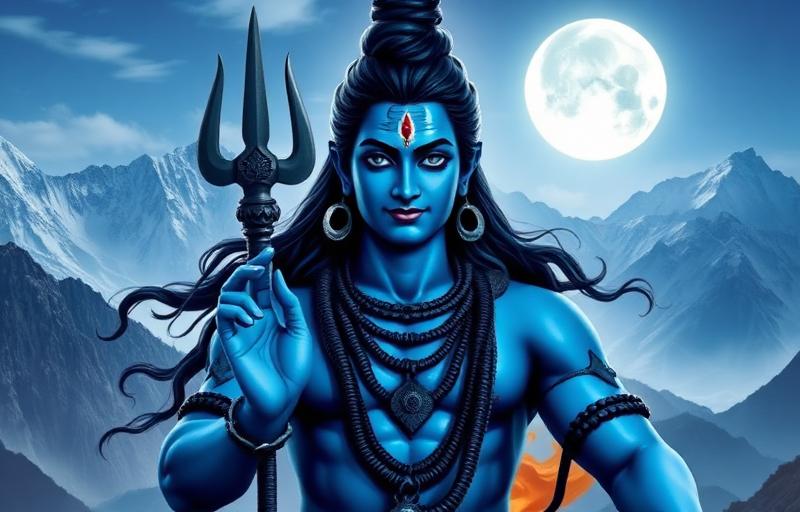
Shankara was born to Shivaguru and Aryamba, a devout couple of Kaladi, after years of prayer to Lord Shiva - which is why tradition reveres the boy as Shiva's own grace. His father died when he was young, and the child astonished teachers by mastering whatever was placed before him. By the age of eight he longed for sannyasa, but his widowed mother could not bear to give her only son to the ochre robe. Then came the famous episode: while bathing in the Purna river, a crocodile seized the boy's leg. Shankara called out that the creature would release him only if she permitted sannyasa - the apat-sannyasa, renunciation taken at the door of death. The weeping mother consented, and tradition tells the crocodile let go at once. Shankara promised he would return at her last hour - a promise he kept.
Guru Govindapada and the Commentaries on the Prasthana Trayi
The eight-year-old walked north across India until, on the banks of the Narmada, he found the cave of Govindapada, disciple of the great Gaudapada. Asked 'Who are you?', the boy is said to have answered in verses still sung as the Nirvana Shatakam: 'chidananda rupah shivoham shivoham' - 'I am of the nature of consciousness and bliss; I am Shiva, I am Shiva.' Govindapada initiated him and sent him to Kashi to write. There Shankara composed his monumental bhashyas (commentaries) on the prasthana trayi, the three pillars of Vedanta: the Brahma Sutras, the principal Upanishads and the Bhagavad Gita - by tradition, before he was sixteen. Twelve centuries later, these commentaries remain the reference point that every school of Vedanta must engage with, whether to agree or to argue.
Digvijaya and the Debate with Mandana Mishra
Shankara then began his digvijaya - 'conquest of the directions' - a conquest waged not with armies but with debate, in an age when a public philosophical contest could redirect a whole region's faith. His most celebrated encounter was at Mahishmati with Mandana Mishra, the towering householder scholar of the Mimamsa school, which held ritual action, not knowledge, to be supreme. The judge they chose was Mandana's own wife, the learned Ubhaya Bharati, with a poetic test: fresh garlands were placed around both debaters' necks, and the one whose flowers wilted first would lose. The debate ran for days. When Mandana accepted defeat, he embraced sannyasa as Sureshvaracharya and became one of Shankara's foremost disciples. Tradition adds that Bharati then questioned Shankara herself before conceding - a reminder that a woman presided over India's greatest debate.
The Four Mathas in the Four Directions
To anchor dharma for future generations, Shankara established four mathas (monastic seats) at the four corners of India, each entrusted to a chief disciple and a Veda. In the South: Sringeri Sharada Peetham on the Tunga river in Karnataka, led by Sureshvaracharya, linked to the Yajur Veda. In the West: Dwarka Sharada Peetham in Gujarat, under Hastamalaka, linked to the Sama Veda. In the East: Govardhana Matha at Puri in Odisha, under Padmapada, linked to the Rig Veda. In the North: Jyotirmath near Badrinath in Uttarakhand, under Totakacharya, linked to the Atharva Veda. He also organized renunciates into the Dashanami order of ten lineages. Twelve centuries on, these four seats still function, their successive Shankaracharyas still guide devotees, and the sacred map of India is still stitched together by his pilgrim feet.
Bhaja Govindam, Soundarya Lahari and the Devotional Hymns
Shankara the strict logician was also a torrential devotional poet. In Kashi, seeing an aged scholar drilling grammar rules, he overflowed into Bhaja Govindam: 'Bhaja Govindam bhaja Govindam, Govindam bhaja mudha-mate; samprapte sannihite kale, nahi nahi rakshati dukrin-karane' - 'Worship Govinda, worship Govinda, O deluded mind! When the appointed hour arrives, grammar rules will not save you.' We have a full verse-by-verse guide to Bhaja Govindam here on Vandnaa. To the Divine Mother he offered the hundred shimmering verses of Soundarya Lahari, and tradition tells that his Kanakadhara Stotram brought a rain of golden gooseberries to a poor woman who had given him her only amla fruit. Nirvana Shatakam, Annapurna Stotram, Ganga Stotram - his hymns prove that the highest non-dualist can also be the most melted devotee.
Thirty-Two Years That Changed India

Tradition tells that Shankara merged into the divine at thirty-two, in the Himalayas near Kedarnath, where a samadhi shrine stands behind the temple. Consider what those years held: a philosophy clarified for all time, four mathas founded, the panchayatana puja popularized - the balanced worship of Ganesha, Devi, Shiva, Vishnu and Surya - and a fractured sacred geography re-stitched from Kashmir to Kanyakumari. For today's devotee, his life leaves three instructions. Let the head and the heart work together: he wrote the sharpest philosophy and the sweetest hymns. Treat time as precious: 'nahi nahi rakshati' - no accomplishment substitutes for turning to God now. And remember his central assurance: the Self you are searching for was never lost; ignorance alone hides it, and knowledge, like sunrise, simply reveals what was always there.
Common Questions From Devotees
Who was Adi Shankaracharya?+
Adi Shankaracharya was the great philosopher-saint of Advaita Vedanta, born at Kaladi in Kerala and commonly placed around 788-820 CE. In about thirty-two years he wrote definitive commentaries on the core scriptures, won debates across India, founded four mathas and renewed sanatan dharma.
What is Advaita Vedanta in simple words?+
Advaita means 'not two'. It teaches that Brahman, the one infinite consciousness, alone is ultimately real; the changing world is a passing appearance upon it; and the individual soul is not different from Brahman. Shankara summarized it as 'Brahma satyam jagan mithya, jivo brahmaiva naparah'.
Which are the four mathas founded by Adi Shankaracharya?+
Sringeri Sharada Peetham in the South (Karnataka), Dwarka Sharada Peetham in the West (Gujarat), Govardhana Matha in the East (Puri, Odisha) and Jyotirmath in the North (near Badrinath, Uttarakhand). Each was entrusted to a chief disciple and associated with one of the four Vedas.
What is the crocodile story of Shankaracharya?+
Tradition tells that at age eight, while Shankara bathed in the Purna river, a crocodile seized his leg. He called to his mother that it would release him only if she permitted sannyasa. She consented, the crocodile let go, and the boy began his renunciate life - the apat-sannyasa.
What is Bhaja Govindam and why did Shankara compose it?+
Bhaja Govindam is Shankara's beloved devotional hymn, composed in Kashi when he saw an aged scholar memorizing grammar rules. Its refrain urges: worship Govinda, for at the hour of death no scholarship will save you. Read our full verse-by-verse Bhaja Govindam guide on Vandnaa.
How long did Adi Shankaracharya live and where did he leave his body?+
Tradition counts his life at just thirty-two years. He is widely believed to have merged into the divine in the Himalayas near Kedarnath, where a samadhi shrine stands behind the temple, though some accounts associate his final days with other sacred places like Kanchipuram.
About the author
Anjali Mehta · Editor, M.A. Religious Studies
Anjali is the managing editor for Vandnaa and oversees the festival and vrat coverage. She holds an M.A. in Religious Studies and reviews every published article for accuracy, accessibility, and tradition-fidelity.
Meet the Vandnaa editorial team →