What Does Vedanta Mean - The End and Essence of the Vedas
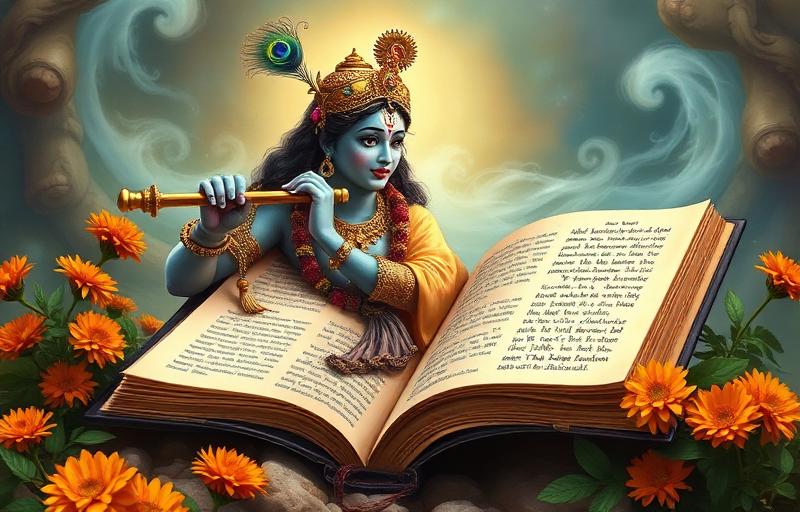
The word Vedanta is made of two parts: Veda (sacred knowledge) and anta (end or conclusion). It literally means 'the end of the Vedas', and it carries two beautiful senses. First, Vedanta refers to the Upanishads, the concluding portions of the Vedic texts. Second, it means the essence or final purpose of all Vedic knowledge: knowing who we truly are. While the earlier portions of the Vedas focus on rituals, hymns and worship, Vedanta turns inward and asks the deepest questions: What is the Self? What is God? What is this world? Vedanta is not a single book but a living tradition of inquiry that has guided seekers for thousands of years, from forest sages to modern householders.
Prasthana Trayi - The Three Foundational Texts of Vedanta
Every school of Vedanta rests on three texts together called the Prasthana Trayi, the 'three points of departure'. 1. The Upanishads (Shruti Prasthana): the revealed wisdom found at the end of the Vedas, with classics like the Isha, Kena, Katha and Chandogya Upanishads. 2. The Bhagavad Gita (Smriti Prasthana): Lord Krishna's teaching to Arjuna, which presents Upanishadic wisdom in a practical, devotional form anyone can follow. 3. The Brahma Sutras (Nyaya Prasthana): sage Badarayana's short aphorisms that organize Upanishadic teachings into a logical system. Every great acharya who founded a school of Vedanta wrote commentaries (bhashyas) on all three. This is why different schools can disagree respectfully: they study the same texts but interpret them differently.
Advaita Vedanta - Shankaracharya's Path of Non-Duality
Advaita Vedanta, systematized by Adi Shankaracharya in the 8th century CE, teaches non-duality: ultimate reality is one, without a second. In simple terms, Advaita says that Brahman (the absolute reality) and Atman (your innermost Self) are not two different things. The famous Upanishadic declaration Tat Tvam Asi ('That Thou Art') captures this truth. The world of names and forms appears separate because of Maya, a power of appearance, much like a rope seen in dim light appears to be a snake. When right knowledge dawns, the fear of the snake vanishes, though the rope was never anything else. For Advaita, liberation (moksha) is not going somewhere new; it is waking up to what you always were. Shankaracharya also established four mathas across India to preserve this teaching.
Vishishtadvaita and Dvaita - Ramanuja and Madhvacharya
Two other great schools enrich Vedanta. Vishishtadvaita ('qualified non-dualism'), taught by Ramanujacharya in the 11th to 12th century, agrees that reality is one, but says souls and the world are real parts of God, like the body of the Lord. Brahman here is Narayana (Vishnu), full of loving qualities, and the path is bhakti and sharanagati (loving surrender). Dvaita ('dualism'), founded by Madhvacharya in the 13th century, teaches that God, souls and matter are eternally distinct. The soul never becomes God; instead, it finds eternal joy in serving Lord Vishnu. These differences are not quarrels but different windows into the same sunlight. Advaita emphasizes knowledge, Vishishtadvaita devotion within unity, and Dvaita pure loving service. Together they show how generous and roomy Vedanta truly is.
The Core Questions - Brahman, Atman, Maya and Moksha
All Vedanta schools wrestle with four great ideas. 1. Brahman: the ultimate reality, described as sat-chit-ananda (existence, consciousness, bliss). It is the ground of everything that is. 2. Atman: the true Self within each being, beyond the body, mind and personality. Vedanta insists you are not merely this changing bundle of thoughts. 3. Maya: the mysterious power by which the One appears as the many. Schools debate whether the world is an appearance or a real expression of God, but all agree we misread reality until wisdom dawns. 4. Moksha: liberation from the cycle of birth and death (samsara), described variously as realizing oneness, reaching the Lord's abode, or eternal loving service. These are not abstract puzzles; they answer the questions every human heart eventually asks.
How a Regular Devotee Can Live Vedanta Every Day
You do not need to renounce the world or master Sanskrit to live Vedanta. Begin with shravana (listening): read a few verses of the Bhagavad Gita daily or listen to a trusted teacher. Add manana (reflection): pause and ask how a verse applies to your day. Practice nididhyasana (meditation): sit quietly for ten minutes and rest attention on the awareness behind your thoughts. In action, follow the Gita's karma yoga: do your duties sincerely and offer the results to the Divine, which slowly loosens anxiety and ego. Treat others with respect, remembering the same Atman shines in every being; this turns ordinary kindness into worship. Even simple daily puja, japa or aarti becomes Vedanta when done with the understanding that the Lord you worship outside also dwells within your own heart.
Where to Begin Your Vedanta Journey

A gentle starting sequence works best. 1. Start with the Bhagavad Gita, one chapter a week, using a faithful translation with commentary. 2. Move to short, accessible Upanishads like the Isha and Kena, which are only a few pages each. 3. Read introductory works such as Shankaracharya's Tattva Bodha or Atma Bodha, written for beginners. 4. Keep your existing devotional practice alive: japa, aarti and temple visits give the heart strength while the mind studies. 5. When possible, learn from a qualified teacher or satsang, since Vedanta has always flowed from teacher to student. Be patient with yourself. Vedanta is compared to a slow sunrise: light grows gradually, but it transforms everything it touches.
Quick Answers
What is the simple meaning of Vedanta?+
Vedanta literally means 'the end of the Vedas'. It refers to the Upanishads, the concluding wisdom portions of the Vedas, and to the essence of all Vedic knowledge: understanding the true nature of the Self (Atman) and ultimate reality (Brahman).
What is the Prasthana Trayi?+
The Prasthana Trayi is the set of three foundational texts of Vedanta: the Upanishads, the Bhagavad Gita and the Brahma Sutras. Every major school of Vedanta is built on commentaries written on these three texts.
What is the difference between Advaita, Vishishtadvaita and Dvaita?+
Advaita (Shankaracharya) teaches that the soul and Brahman are one. Vishishtadvaita (Ramanuja) teaches that souls and the world are real parts of one God, reached through loving surrender. Dvaita (Madhvacharya) teaches that God and souls are eternally distinct, and the soul's joy lies in serving the Lord.
Is the Bhagavad Gita part of Vedanta?+
Yes. The Bhagavad Gita is one of the three foundational texts of Vedanta (the Smriti Prasthana). It presents the wisdom of the Upanishads in a practical form, combining knowledge, devotion and selfless action for everyday life.
Can a householder practice Vedanta without renouncing the world?+
Absolutely. Vedanta can be lived through daily Gita study, reflection, short meditation, karma yoga (doing duties without attachment to results) and seeing the same divine Self in all beings. Many great Vedantins, including King Janaka, were householders.
What is Maya in Vedanta?+
Maya is the power by which the one reality appears as the many forms of the world. In Advaita it makes the world appear separate from Brahman, like a rope mistaken for a snake. Other schools see it as God's real creative power. In all schools, right knowledge frees us from its confusion.
About the author
Anjali Mehta · Editor, M.A. Religious Studies
Anjali is the managing editor for Vandnaa and oversees the festival and vrat coverage. She holds an M.A. in Religious Studies and reviews every published article for accuracy, accessibility, and tradition-fidelity.
Meet the Vandnaa editorial team →