What Is Meant by Adi Shakti
Adi Shakti, meaning the primordial or original power, refers in Hindu tradition to the fundamental divine feminine energy from which all creation, and indeed all the gods themselves, are said to draw their power. She is understood not as one goddess among many, but as the single source that takes countless forms, worshipped across India under different names, in different landscapes and through different local traditions.
This single underlying concept is what allows a devotee in Bengal worshipping Durga, a devotee in Gujarat worshipping Amba, and a devotee in Tamil Nadu worshipping Meenakshi, to all be understood, within the tradition, as approaching the very same divine power in a form shaped by their own region and language.
The Roots of Shakti Worship in Scripture
The philosophical foundation for this understanding is found in texts such as the Devi Mahatmyam, also known as the Durga Saptashati, part of the Markandeya Purana, which describes the goddess as the power behind creation, preservation and dissolution alike, greater even than the trinity of Brahma, Vishnu and Shiva in her role as their shared source of energy.
Later traditions, particularly within Shaktism, one of the major streams of Hindu worship alongside Shaivism and Vaishnavism, developed this idea further, teaching that Shakti is not separate from the divine but is the divine's own dynamic, active aspect, without which even the gods are said to remain powerless.
Adi Shakti's Many Regional Forms
Across India, Adi Shakti is honoured in forms shaped by local language, landscape and history. In Bengal and much of eastern India, she is celebrated above all as Durga during the great autumn festival, and as Kali, her fiercer aspect associated with time and transformation. In Gujarat and Rajasthan, Amba or Ambaji is widely revered, while Tamil Nadu holds deep devotion to Meenakshi of Madurai and Kamakshi of Kanchipuram.
Beyond these well-known forms, nearly every village across India has its own gram devi, a local guardian goddess worshipped for generations, understood by devotees as yet another face of the same Adi Shakti, close and personal to the community she protects.
The Shakti Peethas: A Map of Devotion
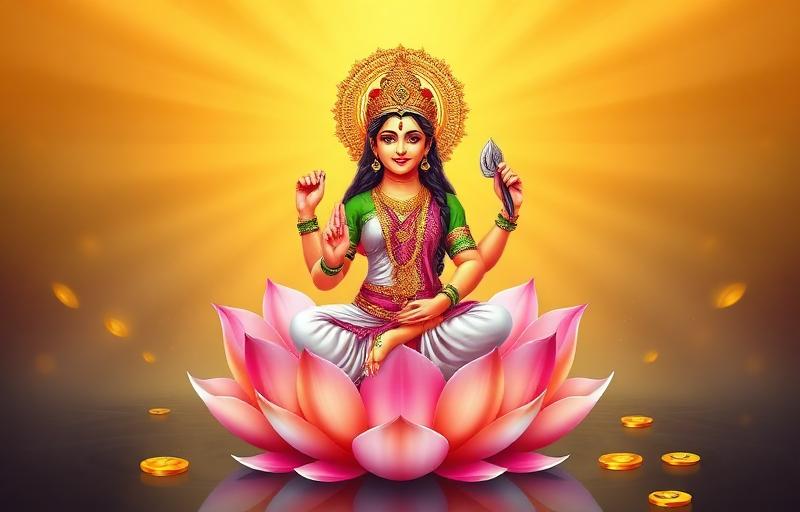
One of the most significant expressions of Adi Shakti's presence across the subcontinent is the network of Shakti Peethas, sacred sites traditionally connected to the story of Sati, and spread from Kashmir to Tamil Nadu, and from Gujarat to Assam and beyond India's present borders. Each site is regarded as a place where the goddess's presence became rooted in the local landscape, giving devotees across regions a shared, physical geography of Shakti devotion.
This network illustrates, in a very tangible way, the belief that Adi Shakti is not confined to any single place, but is woven into the sacred geography of the entire land.
How Devotees Worship Shakti in Daily Life
Beyond grand temples and festivals, Adi Shakti is honoured in countless everyday ways. Navratri, observed twice a year, and especially in its autumn form, is the most widespread occasion for Shakti worship across India, with fasting, garba and dandiya in the west, and elaborate pandal worship in the east.
Many households also keep a small shrine to their kuldevi, or family goddess, a personal thread of Shakti worship passed down through generations, showing that devotion to Adi Shakti lives not only in grand pilgrimage sites but in the quiet corners of everyday homes.
One Shakti, Many Faces: What This Means for Devotees
For devotees, understanding Adi Shakti's many regional forms is not about ranking one form above another, but about recognising a single thread of devotion running through an extraordinary diversity of language, landscape and local tradition.
Whether bowing before Durga in a Kolkata pandal, tying a thread at Mansa Devi in Haridwar, or lighting a lamp before a small gram devi shrine in a village, devotees across India are understood, within the tradition, to be reaching toward the same Mother. Worship in any of her forms remains an act of faith and love, not a transaction.
Quick Answers
What does Adi Shakti mean?+
Adi Shakti means the primordial or original power, referring to the fundamental divine feminine energy that Hindu tradition holds as the source of all creation and of the gods' own power.
Why does Adi Shakti have so many different names and forms?+
Different regions of India have honoured this same divine energy through their own language, landscape and history, giving rise to forms like Durga, Kali, Amba and Meenakshi, all understood within the tradition as expressions of one Shakti.
How are the Shakti Peethas connected to Adi Shakti?+
The Shakti Peethas are sacred sites traditionally linked to the story of Sati, spread across the subcontinent, and together they form a devotional geography showing Adi Shakti's presence rooted across many regions.
About the author
Pandit Ravindra Sharma · Vedic Rituals & Bhakti, 22+ years
Pandit Ravindra is the Vandnaa editorial team's resident specialist on aarti, chalisa, and daily devotion. He has performed home and temple pujas across Varanasi and Delhi for over two decades and contributes the bhakti-focused articles on this site.
Meet the Vandnaa editorial team →