The Hill and the Claim
Anjanadri is a hill at Anegundi, on the north bank of the Tungabhadra opposite Hampi, in Koppal district of Karnataka. A small white temple stands at the top, reached by a stone stairway of around five hundred and seventy steps.
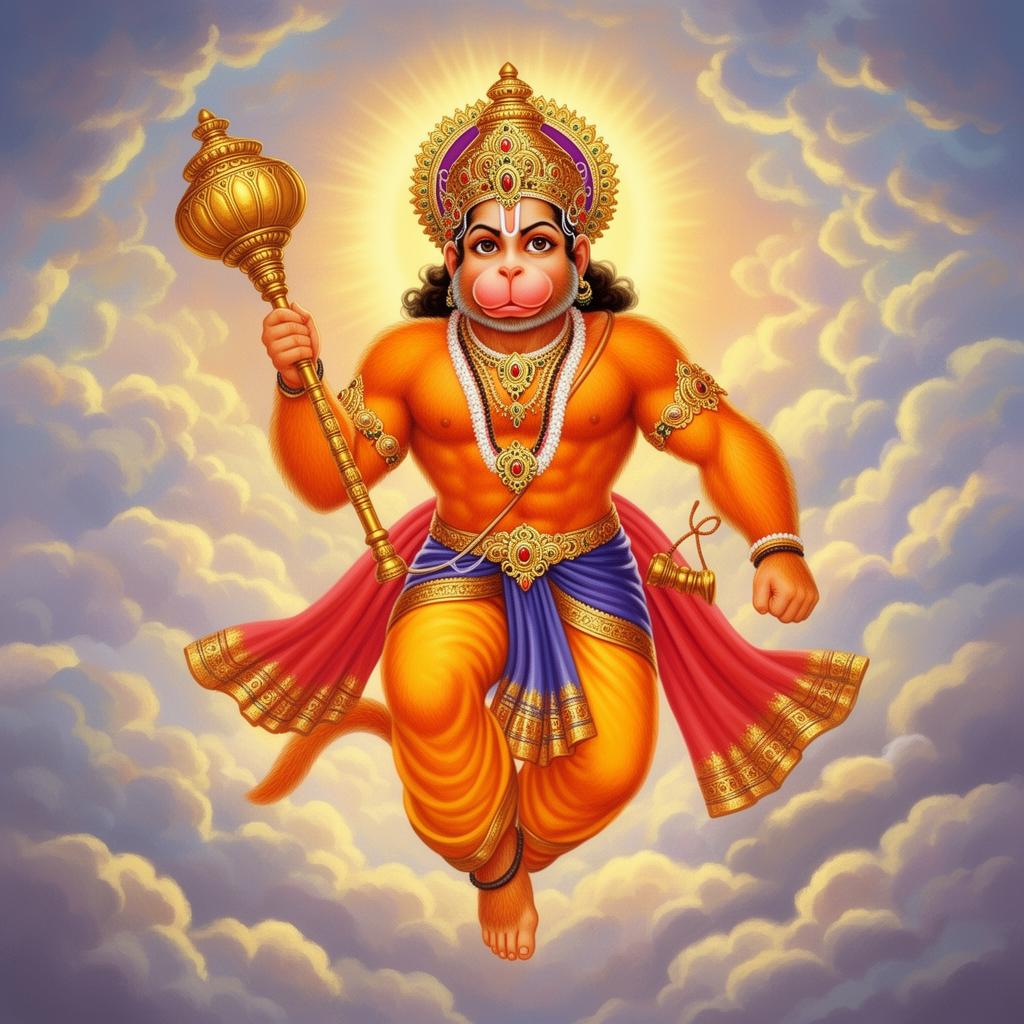
The hill takes its name from Anjana, Hanuman's mother, and devotees here hold that this is where Hanuman was born. The Karnataka tradition is specific: Anjana performed tapas in this region, received the boon, and gave birth to her son on this hill, in the heart of what the Ramayana calls Kishkindha.
The surrounding geography is what makes the claim compelling to devotees:
- The Kishkindha region of the Ramayana, the vanara kingdom, is identified with Anegundi and Hampi
- Rishyamukha hill, where Sugriva took refuge from Vali, stands nearby
- Pampa Sarovar, the lake associated with Shabari and with Parvati's tapas, is close by
- The Tungabhadra, called the Pampa in older texts, runs through the whole landscape
For devotees making the climb, the setting does much of the work. You are not looking at a temple with a story attached. You are standing in the middle of a landscape the Ramayana describes, with the hills, the river and the boulder fields around you.
The Katha of Anjana
The katha of Hanuman's birth is told in several Puranic sources with variations, and the version repeated at Anjanadri runs like this.
Anjana was an apsara who, under a curse, was born on earth. She married Kesari, and the couple had no child. Anjana undertook long and severe tapas, praying to Shiva for a son.
At the same time, King Dasharatha of Ayodhya was performing the putrakameshti yagna, and the sacred payasam produced by it was distributed among his queens. In the telling, a portion of it was carried away by a bird and dropped where Anjana was performing her tapas. Vayu, the wind, is described as delivering it to her, and she accepted it as prasad.
Hanuman was born from that, which is why he carries three parentages in tradition:
- Son of Anjana, from which he is Anjaneya
- Son of Kesari, from which he is Kesari Nandan
- Son of Vayu, from which he is Pavanputra and Marutinandan
- Regarded in Shaiva tradition as an amsha of Shiva, which links his birth to Anjana's prayers to Shiva
The connection to Dasharatha's yagna is important for devotees. It means Hanuman's birth and Ram's birth come from the same act, which is the traditional explanation for why his life is bound to Ram's from the beginning.
The Climb and What Is at the Top
The ascent is the main physical experience of a visit to Anjanadri.
- Around five hundred and seventy steps run up the hillside from the base, cut and built along the rock
- The climb takes most people thirty to forty five minutes, longer in heat
- There is little shade on the way, and the rock radiates heat through the afternoon
- Monkeys are present in numbers along the route, and food carried openly will be taken
- At the top stands a small white temple, with Hanuman worshipped on a rock relief, and a shrine to Ram alongside in most descriptions
What draws people as much as the shrine is the view. From the summit the Tungabhadra, the paddy fields of Anegundi, the boulder landscape of Hampi and the ruins across the river are all visible at once, and sunrise from the top is among the best known sights in the region.
Practical notes:
- Go at sunrise or in the last hours before sunset. Midday climbs in summer are genuinely difficult.
- Carry water, but keep food packed away because of the monkeys
- Footwear must be removed near the temple, and the rock is hot in the afternoon
- The steps are uneven in places, so those with knee trouble should assess before starting
Devotees usually recite the Hanuman Chalisa at the top, and on Hanuman Jayanti and Saturdays the summit fills with groups singing together.
The Other Claims, Stated Honestly
Anjanadri near Hampi is not the only place that identifies itself as Hanuman's birthplace, and it is better to state this plainly than to leave a devotee surprised later.
The main claims are:
- Anjanadri at Anegundi, Karnataka - the Kishkindha identification described here
- Anjaneri, near Nashik in Maharashtra - a hill associated with Anjana, with an old temple complex
- Anjanadri at Tirumala, Andhra Pradesh - a claim advanced with reference to the Tirumala hills
- Gokarna, Karnataka and other coastal claims
- Anjan Dham near Gumla, Jharkhand - where local tradition places Anjana's cave
Each has its own textual references, local traditions and devotees, and the debates between them have at times been vigorous.
What is worth saying for a devotee planning a visit:
- The Ramayana itself does not fix a modern map location, and different Puranic accounts allow different readings
- Local traditions at each site are genuinely old and are not modern inventions
- Hanuman devotion has never depended on settling this question, and the Hanuman Chalisa, which most devotees recite daily, does not mention a birthplace at all
The practical position most devotees take is straightforward: visit whichever site you can reach, offer worship there sincerely, and leave the question of geography to those who wish to argue it.
The Kishkindha Circuit Around Anjanadri
Anjanadri is best visited as part of the Ramayana landscape around Anegundi and Hampi rather than on its own.
- Pampa Sarovar - the lake associated with Shabari, who waited here for Ram, and with Parvati's tapas. A short drive from Anjanadri.
- Rishyamukha hill - where Sugriva sheltered from Vali, and where Ram and Lakshman met Hanuman
- Anegundi - the old settlement, considered older than Hampi itself, with the Ranganatha temple and the Nava Brindavana nearby on an island in the river
- Hampi across the river - the Vijayanagara capital, with the Virupaksha temple in continuous worship and the Vitthala complex with its stone chariot
- Yantrodharaka Hanuman temple, Hampi - associated with the saint Vyasaraja and holding a well known Hanuman yantra image
- Chintamani and Sugriva's cave on the Anegundi side
The crossing between Hampi and Anegundi is part of the experience, made by road bridge upstream or by the local boat crossing, depending on the season and current arrangements.
For a devotee interested in the Ramayana rather than in architecture, the Anegundi side is the more meaningful half. Hampi is where the Vijayanagara empire built. Anegundi is where the Kishkindha episodes are placed, and the landscape there has changed far less.
Worship at Anjanadri and at Home
Worship at the hill is simple, since everything has to be carried up.
- Coconut, flowers, sindoor and a lamp are the usual offerings
- Devotees offer vada mala and sweets at the temple where arrangements allow
- The Hanuman Chalisa is recited at the summit, often by whole groups together
- Saturdays and Tuesdays are the busy days, and Hanuman Jayanti is the largest occasion
- Many devotees make the climb as a vow, particularly for strength during a difficult period, for children's health and before examinations
The wider Hanuman practice that devotees keep at home applies here as well:
- Hanuman Chalisa daily, or a fixed number of paths on Tuesdays and Saturdays
- Sundarkand path, undertaken during difficulty, often as a weekly or fortnightly practice
- Bajrang Baan and Hanuman Ashtak, recited by those who keep a more intensive practice
- Oil and sindoor offerings at the local Hanuman temple on Tuesdays
What devotees say about Anjanadri specifically is that the climb changes the recitation. Reading the Chalisa at home is one thing. Reading it at the top of a hill in the middle of Kishkindha, after five hundred and seventy steps, with the Tungabhadra below, is what people come back describing.
Quick Answers
Where is Anjanadri hill?+
At Anegundi, on the north bank of the Tungabhadra opposite Hampi, in Koppal district of Karnataka. A small white temple stands at the top, reached by around five hundred and seventy steps.
Why is Anjanadri believed to be Hanuman's birthplace?+
The hill is named after Anjana, Hanuman's mother, and Karnataka tradition holds that she performed tapas here and gave birth to him on this hill, in the region the Ramayana calls Kishkindha, with Rishyamukha and Pampa Sarovar close by.
Are there other claimed birthplaces of Hanuman?+
Yes. Anjaneri near Nashik, Anjanadri at Tirumala, Gokarna and Anjan Dham near Gumla in Jharkhand all have their own traditions. The Ramayana does not fix a modern map location, and devotees generally worship at whichever site they can reach.
How difficult is the climb to Anjanadri?+
Around five hundred and seventy steps, taking most people thirty to forty five minutes. There is little shade and the rock gets very hot, so sunrise or late afternoon is best. Monkeys along the route will take any food carried openly.
What is the Kishkindha connection?+
The Anegundi and Hampi region is identified with Kishkindha, the vanara kingdom of the Ramayana. Rishyamukha hill, where Sugriva sheltered from Vali, and Pampa Sarovar, associated with Shabari, are both nearby.
What can be visited along with Anjanadri?+
Pampa Sarovar, Rishyamukha hill, the old settlement of Anegundi with its Ranganatha temple, and across the river the Virupaksha and Vitthala temples of Hampi along with the Yantrodharaka Hanuman temple.
About the author
Pandit Mahesh Trivedi · Festival Traditions & Panchang
Pandit Mahesh leads the festival-date and Panchang content on Vandnaa. He cross-references multiple regional panchangs (Drik, Vaishnava, Bengali, Marathi) for every festival date published on the site.
Meet the Vandnaa editorial team →