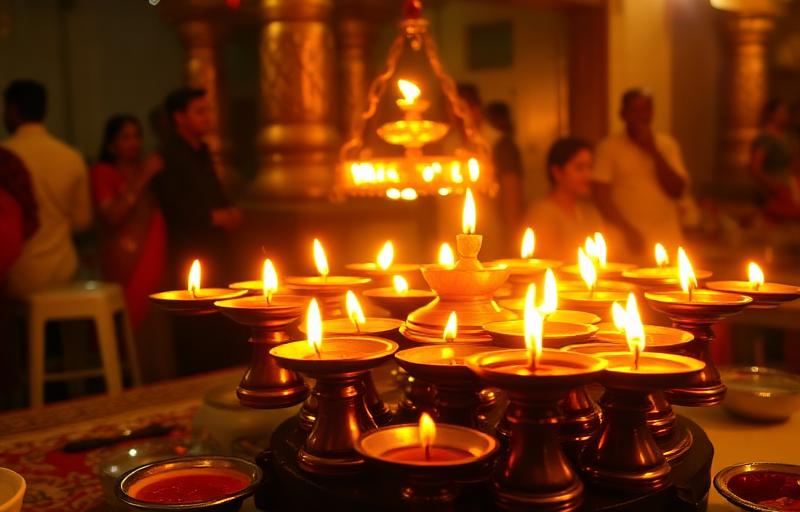
What is Sundarkand & Why It's the Most Sacred Kand
Sundarkand (Sundar = beautiful, Kand = chapter) is the 5th of 7 chapters in Tulsidas's Ramcharitmanas - the Awadhi-Hindi retelling of the Ramayana that 600+ million Hindus revere. While the other 6 kands narrate Lord Ram's journey, Sundarkand is unique: it is the only kand where Hanuman is the central hero, not Ram.
The story Sundarkand tells: After Sita is abducted by Ravana to Lanka, Hanuman volunteers for the impossible mission of crossing the ocean, finding Sita, and bringing back news. Sundarkand covers his entire journey:
- Leap across the ocean (the longest single act of devotion in scripture)
- Confrontations with Surasa and Simhika (sea-demons)
- Entry into Lanka in disguised form
- Discovery of Sita in Ashok Vatika
- Confrontation with Ravana in his court
- The burning of Lanka with his tail
- Return journey to Ram with the news
Why 'Sundar' (Beautiful): Three theories explain the name: 1. Mount Sundar - Hanuman lands on a mountain called Sundar before crossing to Lanka 2. Sundar = Hanuman himself - In Lankan Sanskrit literature, Hanuman is called 'Sundar' for his beautiful form when revealing his true cosmic size 3. Sundar = the kand's narrative beauty - Tulsidas himself is said to have considered this the most poetically perfect of all 7 kands
Why this kand is read more than the rest of Ramcharitmanas combined: It is the only kand that is said to single-handedly grant any wish when read with devotion. The other kands carry their own merit, but tradition says: 'Read the whole Ramcharitmanas if you can; if you can read only one chapter, read Sundarkand. It contains the rest.'
📿 The Vandnaa App has the full Sundarkand audio (~3 hours) in 3 different traditional styles - Tulsidas paath style, kirtan style with music, and modern devotional rendition.
11 Powerful Benefits of Reading Sundarkand
Across Hindu devotional literature, these 11 benefits are most consistently attributed to regular Sundarkand path:
1. Removes every obstacle (Vighna Nivarana) - The most universal claim. Stuck job, marriage, court case, business deal, health diagnosis - Sundarkand is the classical 'unblocking' path.
2. Defeats fear of any kind - Hanuman is the destroyer of fear. Reading Sundarkand for 21 days dissolves anxiety, panic disorders, and chronic fearfulness.
3. Restores marital harmony - The reunion of Ram and Sita through Hanuman's effort is itself the deity-pattern of marriage repair. Couples in conflict often read Sundarkand together for 11 days.
4. Cures Shani Sade-Sati & Dhaiyya - The single most prescribed remedy for Shani-related trouble. Read every Saturday, ideally with mustard oil diya.
5. Brings unmarried adults a suitable match - Particularly for those with Manglik dosha or repeated match failures. 41-day path with focused intention.
6. Heals chronic illness - The Sanjeevani-Lakshman episode is invoked. Not a substitute for medicine - a powerful healing complement.
7. Protects from negative energy & black magic - Hanuman's burning of Lanka is symbolically the burning of every negative force around the reader's home.
8. Brings business success & financial recovery - Hanuman's 'Lanka jaari' (burning of Lanka, which had infinite gold) makes him the deity of recovering lost wealth.
9. Protects children & expecting mothers - Pregnant women who read Sundarkand are said to deliver fearless, devoted children. (Hanuman blesses the unborn child.)
10. Removes legal troubles - The justice-restoring narrative is itself a court-case remedy. Read 11 times before any major hearing.
11. Direct path to Ram-bhakti - The deepest benefit. Reading Sundarkand makes you fall in love with Hanuman, and through Hanuman, with Ram. Ram bhajte Hanuman, Hanuman bhajte Ram - the cosmic loop opens.
The traditional promise: Read Sundarkand fully (cover-to-cover, 60 dohas + sortha + chaupais) for 41 consecutive days. Tradition says one impossible-seeming problem in your life will be resolved within these 41 days. Most devotees report this is true.
Step-by-Step Sundarkand Path Vidhi at Home
Before starting (Preparation):
- Bathe and wear clean clothes (saffron/red/white preferred)
- Clean the puja area; sprinkle Ganga jal or fresh water
- Place Hanuman ji's photo or murti facing east or north
- Place Ramcharitmanas (Sundarkand portion) on a clean cloth/wooden stand - NEVER on the ground
- Have ready: red flowers, mustard-oil diya, camphor, boondi laddoo or banana, sindoor
Step 1 - Sankalpa (Resolution, 2 min):
- Sit facing east or north
- Take Ganga jal in your right palm
- State your purpose: 'I am reading this Sundarkand for [your specific intention] / for the welfare of all / for Ram-bhakti'
- Pour the water on the ground
Step 2 - Diya & Tilak (3 min):
- Light the mustard-oil diya - single wick for daily, 4-5 wicks for special occasions
- Apply red sindoor or kumkum tilak to Hanuman ji's forehead
- Apply a small kumkum tilak to your own forehead
- Light an agarbatti (incense)
Step 3 - Opening Mantra (1 min): Chant 3 times before starting: 'Om Shri Hanumate Namah' (3 times) 'Shri Ramachandra ki jai' (1 time)
Then the Sundarkand opening invocation: 'Shaantam shaashvatamapprameyam' (start of Sundarkand mangalacharan)
Step 4 - The Path Itself (90–120 minutes):
- Read aloud at a steady, devotional pace - not too fast
- Sundarkand has 60 dohas, 3 sorthas, and around 520 chaupais
- Total reading time: 90–120 minutes for a single complete path
- If reading in a group, take turns at doha boundaries
- Don't take long breaks; small water sips are OK
- Maintain devotional posture - sitting cross-legged on a clean asana ideally
Step 5 - Closing Aarti (5 min):
- At completion, sing Hanuman Aarti (Aarti Kije Hanuman Lala Ki) - full 6 verses
- Light camphor on a thaali, perform aarti with clockwise circular motion
- Offer the bhog (boondi laddoo / banana)
- Take silent prayer for 1–2 minutes
Step 6 - Prasad Distribution:
- Distribute prasad to all family members and any guests
- If alone, eat a small portion yourself; never let prasad sit overnight
Total time end-to-end: 2 to 2.5 hours. Most devotees do this on a Saturday or Tuesday. Some shorten to a 'Sundarkand summary' (key dohas + chaupais) for daily reading - this takes 30 minutes.
Group path tradition: Many homes do 'Akhand Sundarkand' - uninterrupted reading by family members in turns, completing 11 paths in 24 hours. Done on Hanuman Jayanti or for major life occasions.
Best Day & Time to Read Sundarkand
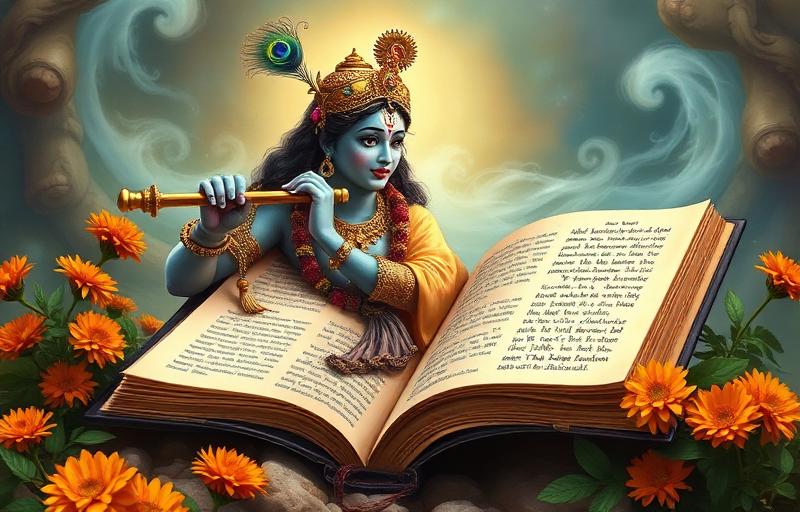
Not all days are equal for Sundarkand. Choose strategically based on your purpose:
🌟 Saturday (Shanivar) - THE BEST DAY
- Saturday is Shani's day, AND Hanuman's day for warding off Shani
- Reading Sundarkand on Saturday combines both energies
- Mandatory if you have Shani sade-sati, dhaiyya, or any Shani dosha
- Best time: 6 PM onwards (after sunset, into the night)
🌟 Tuesday (Mangalvar) - STRONG
- Hanuman's primary day
- Best for general Hanuman blessings (strength, courage, removing fear)
- Best time: Morning (5–8 AM) or evening (6–8 PM)
🌟 Hanuman Jayanti (April) - EXTRAORDINARY
- The single most powerful day to begin a 41-day Sundarkand commitment
- Akhand Sundarkand (continuous, group reading) tradition
Other auspicious days:
- Purnima (full moon) every month - full energetic light supports the path
- Ekadashi - 11th day of waxing/waning moon, good for Vishnu-related Hanuman
- First day of Chaitra Navratri - beginning of Hindu new year, ideal for new Sundarkand sankalpa
Days to AVOID Sundarkand:
- Family death period (13 days of sutak) - reading any sacred text during shoka kaal is traditionally restricted
- Eclipse day (grahan) - read before or after the eclipse, not during
- Personal menstruation period (for women, though this is a personal choice in modern times)
- Right after consuming non-veg/alcohol - wait at least 12 hours
Best time of day:
Brahma muhurat (4–6 AM) is the most spiritually potent - but few can do a 2-hour path at this time.
Morning (after sunrise, 6:30–9:30 AM) is the practical best - body is fresh, mind is clear, energy is rising.
Evening (5:30–8:30 PM) is the social-friendly time - most family Sundarkand paths happen at this hour.
Night (after 9 PM) is acceptable but not ideal - energy is descending, mind tires.
Avoid: 11 AM – 3 PM - Surya is too strong and devotional energy is suppressed by daytime activity.
The 41-day commitment plan:
- Start on a Saturday or Tuesday
- Read at the SAME time every day (consistency = grace multiplier)
- If on day 13 you absolutely cannot, do a shorter 'Sundarkand essence' path (key 11 dohas) - does not break the streak
- Day 41 - full path + Hanuman aarti + bhog distribution to at least 5 people
10 Most Powerful Dohas of Sundarkand & Their Meaning
Sundarkand has 60 dohas. These 10 are considered the most spiritually charged - read separately when you don't have time for the full path:
1. The Opening Mangalacharan: 'Shaantam shaashvatamapprameyamanagham nirvaanashaantipradam.'
'I bow to that calm, eternal, immeasurable, sinless one - the granter of peace and liberation.' - The peace-pranam to Lord Ram before the kand begins.
2. Hanuman's Leap Across the Ocean: 'Jay Hanumant gyaan gun saagar, jay kapeesh tihu lok ujaagar.'
'Glory to Hanuman, ocean of wisdom and virtue; glory to the lord of monkeys, illuminator of the three worlds.' - The single most chanted line of all Sundarkand.
3. Hanuman's Self-Identity: 'Ram doot atulit bal dhama, anjani-putra Pavan-sut nama.'
'Ram's messenger, abode of unparalleled strength, son of Anjani, named after Pavan (wind).' - Use as a meditation when needing courage.
4. The Key to All Bhakti: 'Bhajat Raam taji shoka muhaara.'
'Worshipping Ram, the deepest sorrows depart.' - When grief is overwhelming, this single line.
5. Hanuman's Vidya: 'Vidyavaan guni ati chatura, Ram kaaj karibe ko aatura.'
'Learned, virtuous, exceedingly clever, eager to do Ram's work.' - When facing intellectual challenges (exams, interviews).
6. The Removal of Demonic Forces: 'Ram kaaj sab kije, kahin ko bilamb na kije.'
'Do all of Ram's work; let there be no delay anywhere.' - When procrastinating on important duties.
7. Sita's Recognition of Hanuman's Truth: 'Aapan boodhha haar sake na, kaise paavain Ram chitha?'
Sita's profound questioning that establishes Hanuman's role as the bridge of love between separated souls.
8. The Promise to Ravana: 'Tasya yug-yug rahe na, eko bhujha jiyat na.'
'Even ages of yugas cannot keep him alive; not a single arm remains breathing.' - Said while contemplating defeat of one's enemies.
9. The Burning of Lanka (transformation chant): 'Lanka jari katar bhayoo Ravan, hridaya muhi mukha shukha veera.'
The symbolic line of inner transformation - when reading, visualize your inner negativities burning.
10. The Closing Doha (most powerful for moksha-seekers): 'Hari aur Hari ke daas pe, ko nahin ahankar.'
'On Hari and Hari's servants, who can hold any pride?' - The deepest teaching of Sundarkand: ego dissolves before pure devotion.
How to use these 10 dohas:
- When no time for full path, read these 10 in sequence (10 minutes total)
- Use individual dohas as personal mantras for specific situations
- Memorize even just the first 3 - these alone, repeated daily, transform the spiritual atmosphere of a home
Common Mistakes & What NOT to Do During Sundarkand
1. Reading silently in your head. Sundarkand is paath - meaning it MUST be read aloud (or at minimum, with moving lips). Silent mental reading reduces 80% of the spiritual benefit. The vibration of Awadhi-Hindi words is itself the medicine.
2. Rushing to finish in 45 minutes. A proper Sundarkand path is 90–120 minutes. Anything under 75 minutes means you're not pronouncing words clearly. Slow down. The path's effect is in the rhythm, not the completion.
3. Reading on an empty stomach OR right after a heavy meal. Wait 2 hours after eating; have a small bite (banana, dry fruits) before starting if very hungry.
4. Stopping mid-doha for phone calls or breaks. Once started, do not break in the middle of a doha. Complete the doha first. Long breaks (>5 minutes) restart the energetic momentum.
5. Wearing dirty clothes or not bathing. Sundarkand's energy responds to physical cleanliness. Even a quick rinse before is essential.
6. Keeping the Ramcharitmanas on the ground. The book is sacred - always on a stand or clean cloth. Touching it with feet (even by accident) requires immediate prayer of forgiveness.
7. Reading without a mustard-oil diya. The diya is not decoration - it's the energetic anchor. Without it, the path is half-effective.
8. Not completing the closing aarti. Many people finish the path and stop. WRONG. Always close with full Hanuman aarti - this 'seals' the merit.
9. Forgetting to distribute prasad. The path's blessings flow through the prasad. Eating it alone keeps the merit personal; distributing it spreads grace and multiplies benefit.
10. Reading during deep emotional states (extreme anger, grief, drunkenness). The path requires sattvic mind. If today is not the day, postpone. Better a missed day than a polluted reading.
11. Promising 41 days and breaking it. If you cannot commit to 41 unbroken days, do shorter sankalpa (11 days, 21 days) first and build up. Broken vows have spiritual cost.
12. Ignoring physical posture. Slouching, lying down, or reading while watching TV ruins the energy. Sit cross-legged on an asana, back straight, book at eye level.
The deepest mistake - reading without bhava (feeling). A mechanical recitation, even if perfectly pronounced, generates 10% of the merit of a halting recitation done with tears, surrender, and love. Hanuman responds to bhava, not to vocabulary.
Begin Your Sundarkand Journey Today

If Hanuman Aarti is the daily 3-minute anchor, Sundarkand is the weekly 2-hour deep dive. Together they form the most powerful Hanuman bhakti routine accessible to ordinary householders.
Three commitment levels - pick one:
Level 1 (Beginner - Sundarkand essence):
- 30 minutes, key 11 dohas + key 21 chaupais
- Once a week (Tuesday or Saturday)
- 4 weeks of practice before moving to Level 2
Level 2 (Regular - Weekly full path):
- Full 90-minute Sundarkand path
- Every Saturday or Tuesday
- Continue for 12 weeks (3 months) before deciding on Level 3
Level 3 (Devoted - 41-day commitment):
- Full Sundarkand path every day for 41 consecutive days
- Same time, same place, no exceptions
- Tradition's promise: One impossible problem will resolve within 41 days
For the truly serious - Akhand Sundarkand:
- 11 continuous paths in 24 hours, by family/group taking turns
- Done annually on Hanuman Jayanti or for major life occasions (childbirth, weddings, recovery from illness)
- Considered equivalent to 1,100 normal paths in merit
A final word:
Sundarkand is not just a text - it is a living force that has been activated by 600+ years of devoted recitation by millions. When you read it today, you are joining a vibrational field built by saints, ordinary devotees, mothers reading to children, and dying elders seeking peace. Your single voice merges with theirs.
The deeper you go into Sundarkand, the more you understand: this is not a story about Hanuman. This is Hanuman himself - present in word form. To read it is to host him in your home, on your tongue, in your heart. The transformation is mathematical: x days of reading = x days of Hanuman's company. After enough days, he doesn't leave.
Jai Hanuman. Jai Shri Ram. Jai Sundarkand.
📿 The Vandnaa App offers complete Sundarkand audio in Tulsidas paath style with synchronized bilingual lyrics, a 41-day tracker, and reminders matched to your chosen time of day.
Common Questions From Devotees
Can I read Sundarkand at night?+
Yes - Saturday night (after sunset) is actually the most recommended time for Sundarkand, especially for Shani-related troubles. Avoid only past midnight. The window 6 PM to 11 PM is excellent.
Can women read Sundarkand?+
Absolutely yes. There is no gender restriction. Women across India read Sundarkand for the welfare of their family, husbands' health, children's success, and their own spiritual growth. The only personal choice is around menstruation period - modern devotees handle this individually.
How long does one full Sundarkand path take?+
A complete Sundarkand path (60 dohas + 3 sorthas + ~520 chaupais) takes 90–120 minutes when read at proper devotional pace. Group readings with breaks for explanation can take 2.5–3 hours.
Can I read Sundarkand from a mobile app or do I need a physical book?+
Modern tradition accepts mobile/tablet reading if treated with reverence (no eating/dirty hands, screen at eye level, full attention). Many find audio-along apps actually improve pronunciation. A physical book is preferred when possible but not mandatory.
What if I don't understand Awadhi-Hindi?+
Read the meaning in modern Hindi or English first to understand the story, then read the original Awadhi for vibrational power. The sacred sound itself works even when meaning is unclear - but understanding multiplies the benefit. Vandnaa app has line-by-line translations.
Can children read Sundarkand?+
Yes, and it's highly encouraged. Children from age 8 can do shorter portions (10–11 chaupais). Reading Sundarkand from a young age is said to remove fear, build courage, and shape character. Many great Indian leaders attribute their early Hanuman bhakti to Sundarkand exposure as children.
What is the difference between Sundarkand and Hanuman Chalisa?+
Hanuman Chalisa is a 40-verse hymn (5 minutes to recite) - the daily 'maintenance' practice. Sundarkand is a complete chapter (90+ minutes) - the weekly/intensive 'deep cleanse'. Both are by Tulsidas. Both invoke Hanuman. Together they form complete Hanuman bhakti.
About the author
Pandit Ravindra Sharma · Vedic Rituals & Bhakti, 22+ years
Pandit Ravindra is the Vandnaa editorial team's resident specialist on aarti, chalisa, and daily devotion. He has performed home and temple pujas across Varanasi and Delhi for over two decades and contributes the bhakti-focused articles on this site.
Meet the Vandnaa editorial team →Explore on Vandnaa
Related Articles
Hanuman Chalisa Lyrics in Hindi & English (हनुमान चालीसा)
12 min read
Hanuman Aarti Lyrics in Hindi & English - Aarti Kije Hanuman Lala Ki
9 min read
Hanuman Jayanti 2026: Date, Puja Vidhi, Sundarkand & 7 Most Powerful Hanuman Mantras
9 min read
Hanuman Beej Mantra: Meaning, Benefits, Jap Vidhi & 9 Rules for Maximum Power
10 min read
Shani Sade Sati: 7½ Years of Saturn's Shadow - Symptoms, Phases, Remedies & Who's Affected in 2026
11 min read
Shani Jayanti 2026: Date, Powerful Remedies, Mantras & 7 Things You Must Do to Pacify Shani Dev
10 min read