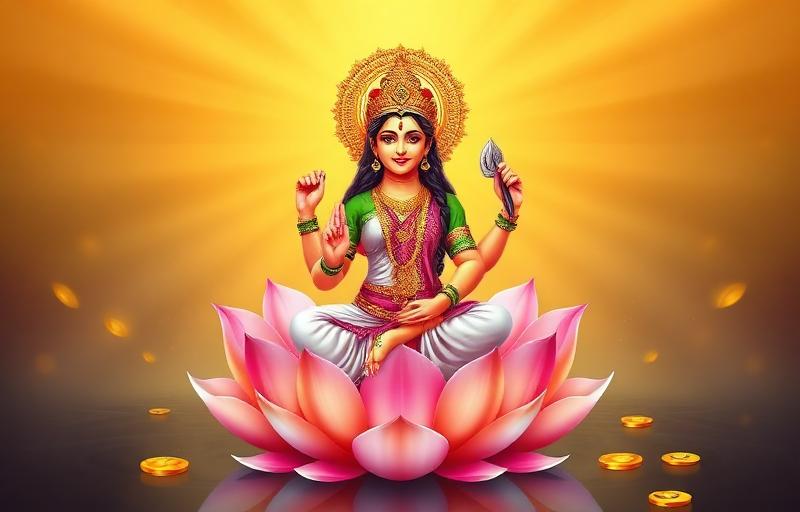
Who is Annapurna and When to Do This Puja
Annapurna is worshipped as the goddess of food, nourishment and abundance, an aspect of Parvati who ensures that no home goes hungry. Unlike many other deities, her worship is often woven quietly into daily kitchen life itself, a small vessel of grain kept respectfully, gratitude offered before cooking, rather than only a separate formal puja.
Many households also perform a fuller Annapurna puja on occasions such as Sharad Purnima and Akshaya Navami, but the daily, simple gesture of gratitude in the kitchen is just as meaningful.
Complete Samagri List for Annapurna Puja
Keep these items ready before you begin:
- Annapurna idol or photo, if you wish to keep one, placed in or near the kitchen
- A small vessel filled with rice or wheat, kept near her image or in the grain store
- Roli/kumkum and akshat
- Yellow or red flowers, and a garland
- A cloth for vastra, if using an idol
- Agarbatti and dhoop
- A deepak with ghee, and a matchbox
- Naivedya: the first portion of a freshly cooked dish, or kheer, offered before the family eats
- Panchamrit ingredients: milk, curd, honey, ghee and sugar, if doing a fuller puja
- Betel leaves, supari and a few coins
- Camphor and a small bell for aarti
- A copy of the Annapurna Stotra or Annapurna Chalisa, if you wish to recite it
Many households honour her with nothing more than a clean kitchen and a grateful pause before the first meal of the day.
Step-by-Step Annapurna Puja Vidhi at Home
Follow these steps in order:
1. Clean the kitchen and puja area - and bathe first if you are doing a fuller puja. 2. Sankalp - take a brief, quiet moment of gratitude for the food and provisions in your home. 3. Aavahan - if using an idol or photo, invite Annapurna with folded hands. 4. Snan - sprinkle a little Gangajal before the image. 5. Vastra - offer a cloth if using an idol. 6. Chandan-tilak - apply kumkum and akshat. 7. Pushpa - offer flowers and the garland. 8. Dhoop-deep - light incense and the lamp. 9. Naivedya - offer the first portion of the day's cooking, or a sweet dish, before the family eats. 10. Mantra jaap - recite "Om Annapurnayei Namah" or the Annapurna Stotra. 11. Aarti - a brief aarti, if doing a fuller puja. 12. Closing - offer pranam, then share the offered food as prasad with the family; keep the grain vessel or store area clean and reasonably stocked, out of respect for her.
Best Time and Rules to Follow
A quiet daily gesture, before or after the day's first cooking, is the most common and meaningful practice. Sharad Purnima and Akshaya Navami are considered special occasions for a fuller puja.
Morning, when the day's first cooking begins, is a natural time, though gratitude in the kitchen can genuinely be offered at any point in the day.
Common Mistakes to Avoid
- Do not waste cooked food; this runs directly against the spirit of her worship.
- Avoid cooking in a rushed or irritable mood if it can be helped; a calm kitchen is traditionally considered respectful to her.
- Do not let the grain container or store go completely empty and neglected; keep it reasonably stocked and tidy.
- Do not skip offering the first portion of food out of habit; even a silent moment of gratitude before eating carries the same spirit.
- Do not feel that an elaborate idol setup is required; many households honour her through kitchen habits alone.
A Simple Devotional Note
Annapurna's worship is a daily reminder that food itself is sacred, and gratitude for it, offered quietly in an ordinary kitchen, is worship in its truest form. A clean kitchen, a moment of thanks and a shared meal already carry her blessing.
Frequently Asked Questions
Is a separate idol needed to worship Annapurna?+
No. Many households honour her through kitchen habits alone, keeping grain respectfully, cooking with a calm mind and offering a silent moment of gratitude before meals, though a photo or idol can be kept for a fuller puja.
When is Annapurna puja considered most significant?+
Sharad Purnima and Akshaya Navami are widely observed as special occasions for her fuller worship, though daily gratitude in the kitchen is considered equally meaningful.
What is the simplest way to honour Annapurna daily?+
Offering the first portion of a freshly cooked dish with gratitude before the family eats, and keeping the kitchen and grain store clean, is a simple, complete daily practice.
About the author
Dr. Suresh Iyer · Vastu Shastra & Jyotish, 18+ years
Dr. Suresh has practiced traditional Vastu and basic Vedic Jyotish for over 18 years across South India. He contributes the Vastu, direction, and home-puja layout guides on Vandnaa.
Meet the Vandnaa editorial team →