Who Is Bagalamukhi Mata
Bagalamukhi Mata is the eighth of the Das Mahavidya and the goddess of stambhan - the power to halt, still and paralyse harmful forces. She is also called Pitambara Devi because she is dressed entirely in yellow. Her name suggests one who seizes and stills the tongue and mind of an adversary, turning hostility into silence. She represents the divine power that can stop wrong action in its tracks.
Her Iconography
Bagalamukhi is depicted with a golden-yellow complexion, seated on a golden throne, wearing yellow garments and yellow ornaments. In one hand she holds a gada (mace) raised over a demon, while with the other she grasps his tongue - the symbol of stilling speech and ill intent. Her yellow colour links her to the planet Jupiter (Brihaspati), wisdom and auspicious turning of fortune. Everything about her worship - cloth, flowers, food - is traditionally yellow.
Significance and What She Grants
Devotees worship Bagalamukhi Mata for victory over enemies, success in court cases and disputes, protection from those who wish harm, and the stilling of fear, confusion and self-doubt. The deeper teaching of stambhan is mastery over one's own restless mind. While she is famed for outward victory, the wise see her real gift as inner steadiness - the ability to remain calm and unshaken when others try to provoke or mislead.
Bagalamukhi Beej Mantra
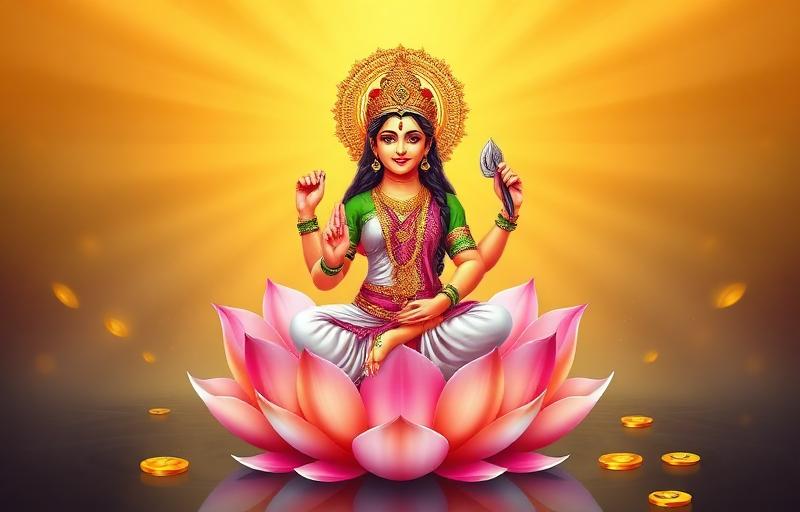
The most widely chanted Bagalamukhi mantra is:
Om Hleem Bagalamukhi Sarvadushtanam Vacham Mukham Padam Stambhaya Jihvam Keelaya Buddhim Vinashaya Hleem Om Swaha
The simple beej form is:
Om Hleem Bagalamukhi Namah (ॐ ह्लीं बगलामुखी नमः)
Hleem is her seed sound. This is a powerful tantric mantra, and the full version is traditionally taken under the guidance of a qualified guru, never to harm an innocent person.
Worship Vidhi
1. Bathe and wear yellow clean clothes; face east or north. 2. Place an image of Bagalamukhi Mata and light a ghee or turmeric-soaked lamp. 3. Offer yellow flowers, turmeric, yellow sweets (such as besan ladoo) and a yellow cloth. 4. Use a haldi (turmeric) mala to chant Om Hleem Bagalamukhi Namah 108 times. 5. Thursday is especially auspicious, as it is linked to Jupiter. 6. Pray with a calm heart for protection, justice and inner steadiness, never for revenge. Approach the fierce mantra only with pure intent and, ideally, a guru's guidance.
Benefits of Bagalamukhi Worship
Sincere worship of Bagalamukhi Mata is believed to grant victory in justified disputes and legal matters, protection from enemies and negative speech, courage under pressure, and a calm, focused mind. Above all she steadies the devotee against fear and provocation, helping them respond to challenges with quiet strength rather than anger.
Quick Answers
Who is Bagalamukhi Mata?+
Bagalamukhi Mata is the eighth Das Mahavidya, the golden goddess of stambhan who stills harmful forces. She is also called Pitambara Devi as she is dressed in yellow.
What is the Bagalamukhi beej mantra?+
The simple beej mantra is 'Om Hleem Bagalamukhi Namah'. 'Hleem' is her seed sound. The longer tantric version should be taken under a qualified guru's guidance.
Why is yellow important in Bagalamukhi worship?+
Bagalamukhi is dressed in yellow and linked to Jupiter, so devotees offer yellow flowers, turmeric and yellow sweets and wear yellow while worshipping her.
What does stambhan mean?+
Stambhan means stilling or halting. Bagalamukhi's stambhan can quiet enemies and disputes outwardly, but its deeper meaning is mastery over one's own restless mind.
Which day is best to worship Bagalamukhi Mata?+
Thursday is especially auspicious as it is linked to Jupiter. Chant 'Om Hleem Bagalamukhi Namah' on a turmeric mala while wearing yellow and offering yellow items.
Can Bagalamukhi mantra be used to harm others?+
No. The mantra should never be used to harm an innocent person. It is meant for protection, justice and inner steadiness, used with pure intent and a guru's guidance.
About the author
Acharya Vinaya Kapoor · M.A. Sanskrit, Mantra & Stotra Studies
Acharya Vinaya holds an M.A. in Sanskrit from Banaras Hindu University and writes the mantra and stotra commentary on Vandnaa. Her focus is on accurate pronunciation, traditional context, and helping modern readers connect with classical texts.
Meet the Vandnaa editorial team →Explore on Vandnaa
Related Articles
Das Mahavidya - 10 Forms, Significance & Mantras
10 min read
Dhumavati Mata - Mantra & Significance
8 min read
Tara Mahavidya - Mantra & Significance
9 min read
Bhuvaneshwari Mata - Mantra & Significance
9 min read
Durga Chalisa Lyrics in Hindi & English with Meaning
9 min read

Maha Mrityunjaya Mantra: Meaning & Benefits (महा मृत्युंजय मंत्र)
9 min read