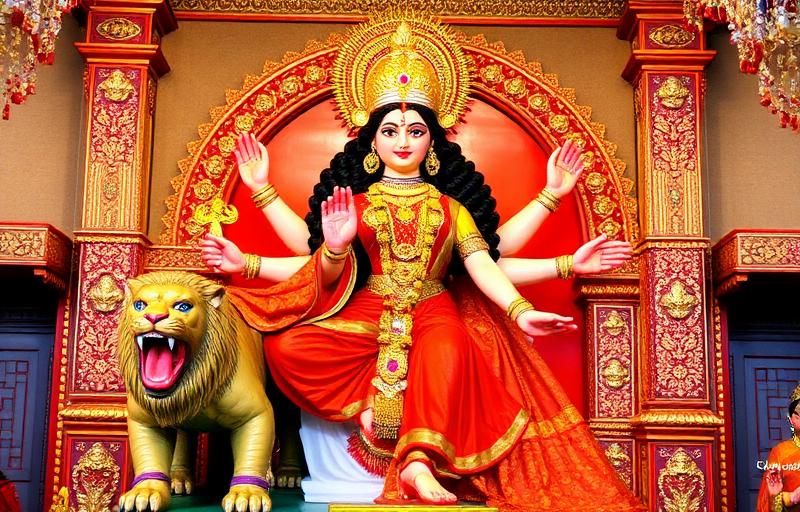
Who Are the Das Mahavidya
The Das Mahavidya (Ten Great Wisdoms) are ten cosmic forms of the one Divine Mother, Adi Shakti. According to the tradition, they emerged from Goddess Sati to reveal that the gentle and the fierce, the radiant and the dark, are all faces of a single supreme reality. They are not ten separate goddesses but ten paths of wisdom (vidya) leading to the same truth. Worship of the Mahavidya is part of the Shakta and tantric traditions and is approached with deep reverence.
The Story of Their Origin
The most loved account tells that when Lord Shiva refused to let Sati attend her father Daksha's yagna, the goddess revealed her full cosmic power. She multiplied into ten radiant forms that surrounded Shiva in every direction, showing him that she was the very ground of all existence. From this revelation arose the ten Mahavidya. The story teaches that the Mother holds within her every possibility - creation and dissolution, beauty and terror, sound and silence.
The Ten Mahavidya and What They Grant
The ten forms, in their traditional order, are:
1. Kali - the dark goddess of time, liberation and fearlessness. 2. Tara - the blue saviouress, granting guidance, speech and protection. 3. Tripura Sundari (Shodashi) - supreme beauty and the bliss of pure consciousness. 4. Bhuvaneshwari - queen of the universe, the spaciousness that holds all worlds. 5. Bhairavi - the fierce goddess of tapas, courage and transformation. 6. Chinnamasta - the self-offering goddess of self-sacrifice and vital energy. 7. Dhumavati - the smoky elder form who removes inauspiciousness and ego. 8. Bagalamukhi - the golden goddess of stambhan, stilling enemies and granting victory. 9. Matangi - the goddess of inner wisdom, art, music and refined speech. 10. Kamala - the lotus goddess of prosperity, abundance and grace.
Significance of Mahavidya Worship
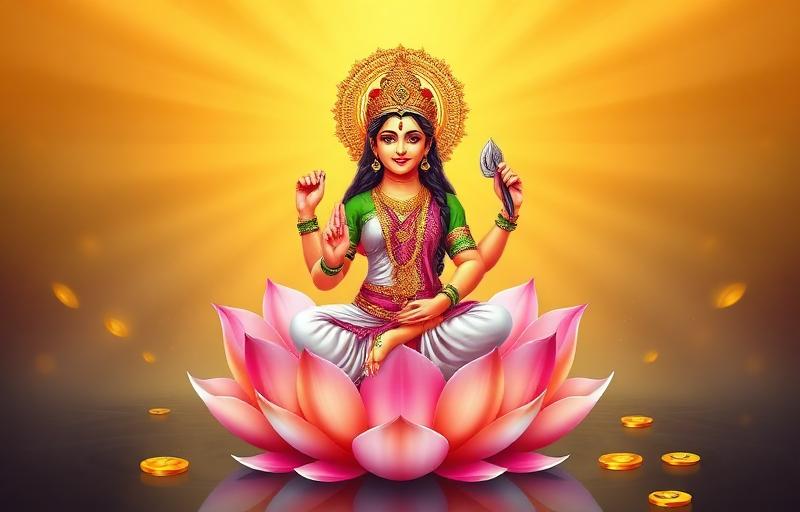
Each Mahavidya answers a different need of the soul. Some forms, like Tripura Sundari, Bhuvaneshwari and Kamala, are gentle and are worshipped widely for grace, abundance and inner peace. Others, like Kali, Dhumavati and Bagalamukhi, are fierce and are approached for protection, courage and the dissolving of ego. Together they teach that there is no part of life - not even loss, fear or darkness - that is outside the Mother's compassion.
Beej Mantras of the Mahavidya
Each Mahavidya has her own seed (beej) mantra. A few widely known ones are:
- Kali: Om Kreem Kalikayai Namah (ॐ क्रीं कालिकायै नमः)
- Tara: Om Hreem Streem Hum Phat (ॐ ह्रीं स्त्रीं हुं फट्)
- Bhuvaneshwari: Om Hreem Namah (ॐ ह्रीं नमः)
- Bagalamukhi: Om Hleem Bagalamukhi Namah (ॐ ह्लीं बगलामुखी नमः)
- Dhumavati: Om Dhoom Dhoom Dhumavati Swaha (ॐ धूं धूं धूमावती स्वाहा)
These mantras are subtle and powerful, and the fierce forms in particular should be taken up under the guidance of a qualified guru.
How to Begin with Reverence
A devotee new to the Mahavidya may begin gently with the gentle forms or with the universal Durga and Kali mantras. Keep the place of worship clean, light a lamp, offer flowers and a sincere heart. *Tantric sadhana of the fierce Mahavidya is traditionally taken only after initiation (diksha) from a realised guru*, never casually or for harming others. Approached with humility and pure intent, the Mahavidya are infinitely compassionate.
Common Questions From Devotees
What are the Das Mahavidya?+
The Das Mahavidya are ten great wisdom forms of the one Divine Mother - Kali, Tara, Tripura Sundari, Bhuvaneshwari, Bhairavi, Chinnamasta, Dhumavati, Bagalamukhi, Matangi and Kamala.
How did the Mahavidya originate?+
Tradition says Goddess Sati revealed ten cosmic forms surrounding Shiva when he tried to stop her from attending Daksha's yagna, showing she is the ground of all existence.
Which Mahavidya forms are gentle and which are fierce?+
Tripura Sundari, Bhuvaneshwari and Kamala are gentle forms. Kali, Dhumavati, Bagalamukhi, Bhairavi and Chinnamasta are fierce. All are faces of the same compassionate Mother.
Can anyone worship the Mahavidya?+
Anyone with faith may worship the gentle forms and universal mantras. The tantric sadhana of the fierce Mahavidya is traditionally taken only after initiation from a qualified guru.
What is the most basic Mahavidya mantra to begin with?+
Beginners often start with 'Om Hreem Namah' for Bhuvaneshwari or 'Om Kreem Kalikayai Namah' for Kali, recited with devotion and a clean, calm mind.
Are the Mahavidya the same as the Navadurga?+
No. The Navadurga are nine forms worshipped during Navratri, while the Das Mahavidya are ten tantric wisdom forms. Both are expressions of the one Divine Mother, Adi Shakti.
About the author
Acharya Vinaya Kapoor · M.A. Sanskrit, Mantra & Stotra Studies
Acharya Vinaya holds an M.A. in Sanskrit from Banaras Hindu University and writes the mantra and stotra commentary on Vandnaa. Her focus is on accurate pronunciation, traditional context, and helping modern readers connect with classical texts.
Meet the Vandnaa editorial team →Explore on Vandnaa
Related Articles
Bagalamukhi Mata - Mantra, Significance & Benefits
9 min read
Dhumavati Mata - Mantra & Significance
8 min read
Tara Mahavidya - Mantra & Significance
9 min read
Bhuvaneshwari Mata - Mantra & Significance
9 min read
Durga Chalisa Lyrics in Hindi & English with Meaning
9 min read
Sharad Navratri 2026: 9 Days Colors, Puja Vidhi, Vrat Rules & Kanya Pujan Guide
10 min read