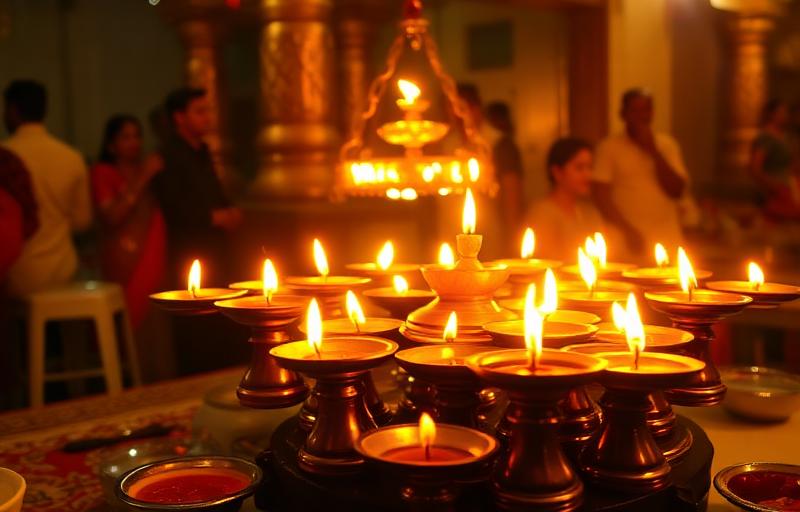
The Delta Between Two Rivers
Baneshwar Dham stands in Dungarpur district, in the far south of Rajasthan, on a delta of sand where the Som river meets the Mahi, with the Jakham joining the Som a short distance upstream.
What is there:
- A Shiva temple holding the linga that gives the place its name
- A Vishnu temple connected with the sant Mavji Maharaj and his lineage
- A small Brahma shrine, uncommon anywhere in India
- The sangam itself, used for bathing and for the immersion of ashes
- Open sand and scrub that stays almost empty for most of the year
The region is called Vagad, the belt of Dungarpur and Banswara where Rajasthan meets Gujarat and Madhya Pradesh. Its people are largely Bhil and other Adivasi communities, and Baneshwar is their principal tirth.
The name is explained locally from bane, the strip of land held between two rivers. Baneshwar is the lord of that strip.
What makes this shrine worth understanding is that it is not a temple with a fair attached. It is a river meeting with a temple attached. The sangam came first, the gathering follows the sangam, and the buildings grew up around a place people were already coming to.
The Linga in Five Pieces
The linga in the Baneshwar temple is unusual in that it is worshipped as five pieces rather than as one stone.
What is said about it:
- The linga is held to be swayambhu, self manifest, and not the work of a sculptor
- It stands in five parts, and the whole is treated as a single deity
- A common telling has it found by a herdsman when a cow stood over the spot and let down her milk, a motif that repeats at shrines across India
- Another telling attaches the finding to a Bhil devotee of the Vagad, and the tribal claim on the shrine is old and locally undisputed
Devotees explain the five parts in more than one way:
- As the five faces of Sadashiva, Sadyojata, Vamadeva, Aghora, Tatpurusha and Ishana
- As the five elements, earth, water, fire, air and space
- As the marks of an age when the shrine was broken and put back into worship
There is no need to settle which explanation is correct, and the priests at Baneshwar do not press the point. A shrine older than the records about it will collect several accounts of itself, and in a living tradition all of them stay in circulation.
What the five parts do achieve, in practice, is to make the linga unmistakably local. A devotee from the Vagad who has seen it will not confuse it with any other Shiva image in Rajasthan.
The Mela of Magh Purnima
The Baneshwar mela runs from Magh Shukla Ekadashi to Magh Purnima, the eleventh day to the full moon of the bright fortnight of Magh, which falls in late January or February. The dates move each year, so check the panchang before planning travel.
What happens over those days:
- Families arrive from Dungarpur, Banswara and Pratapgarh, and from across the borders of Gujarat and Madhya Pradesh, on foot, by tractor trolley, by jeep and by bus
- A snan at the sangam, most heavily at first light on Purnima
- Immersion of ashes of those who died during the preceding year, which for many Vagad families is the fixed occasion for it
- Darshan at the Shiva temple and at the Vishnu temple of the Mavji lineage
- A procession associated with the Mavji tradition during the fair days
- Night long bhajan singing, folk dance and the beating of drums that does not stop
The scale is what surprises visitors. Attendance is counted in lakhs across the days of the fair, on ground with no permanent town on it. People bring their own bedding, cook their own food on open fires, and sleep on the sand.
The fair is often described as the Kumbh of the tribals. The comparison is loose but the instinct behind it is sound. Like a Kumbh, this is a river gathering fixed by the calendar, attended by communities who consider attendance a duty rather than an outing, and organised far more by custom than by any authority.
Sant Mavji and the Vishnu Temple
The second temple at Baneshwar belongs to a tradition that is specific to this region, and it explains why a Shaiva sangam also draws Vaishnava devotion.
Sant Mavji, as the Vagad remembers him:
- He is placed in the seventeenth century, at Sabla near Baneshwar in Dungarpur district
- His followers hold him to be an incarnation of Vishnu in the Nishkalank form
- His verses, preserved by his lineage as the Chopda, are read by followers as prophecy as well as teaching
- He drew a large Bhil and Adivasi following in a region where formal Brahmanical worship had limited reach
- His descendants and their successors maintain the Vishnu temple at Baneshwar
Why this matters for the fair. A tribal region with a Shiva linga on a river bank could have remained a purely local shrine. The Mavji tradition gave it a second layer, an organised devotional lineage with its own texts, its own gaddi and its own annual duties, and that lineage helped turn a bathing spot into an institution with a calendar.
The two strands sit side by side at Baneshwar without friction. Devotees bathe at the sangam, offer at the linga, and then take darshan at the Vishnu temple, and would not think of the day as divided between two religions. In practice most Indian pilgrimage works this way, and the neatness of sectarian labels belongs more to books than to fairs.
What the Fair Is Actually For
It helps to know what people come to Baneshwar to do, because a fair of this kind carries a good deal of a community's yearly business.
Religious duties:
- The snan at the sangam, held to be the essential act of the visit
- Asthi visarjan, the immersion of the ashes of the year's dead
- Mundan, the first head shaving of a child, performed here by many families
- Fulfilment of manauti, vows made during the year
- Offering at the linga, and darshan at the Vishnu temple
What else the days hold:
- A market of livestock, farm tools, cloth, utensils and everything a rural household restocks once a year
- Folk performance, with drums, dance and singing that runs through the night
- Meeting of relatives from villages that are otherwise a day's travel apart
- The arranging of marriages, conducted through families over the course of the fair
This mixture is not a dilution of the religious purpose. It is the older shape of what a tirth was for. A gathering fixed by the calendar at a place everyone accepts is the only reliable way a scattered rural population ever had of doing collective business, and the sacred occasion is what makes the gathering possible.
A visitor who arrives expecting only ritual will find a great deal of commerce and music. A visitor who arrives expecting a folk festival will find, at dawn on Purnima, a very large number of people standing in cold river water with real intent.
Visiting Baneshwar Dham
Where it is
- Near Sabla, in Aspur tehsil of Dungarpur district, southern Rajasthan
- Roughly 70 km by road from Dungarpur town, and reachable from Banswara as well
- Nearest railhead Dungarpur, on the Udaipur to Ahmedabad line
- Nearest airport Udaipur, from where Dungarpur is a road journey of about two and a half hours
When to go
- The mela, Magh Shukla Ekadashi to Magh Purnima, for the gathering at its full scale
- Any winter month, October to March, if you want the sangam quiet and the temples unhurried
- Mahashivratri and Shravan bring local crowds without the fair
During the mela
- Accommodation on site is essentially camping. Most attendees sleep in the open or in the trolley they arrived in
- Stay at Dungarpur or Banswara and travel out for the day if you want a bed
- Carry drinking water, food, warm clothing for the night and a torch
- Roads and approaches are heavily congested on Purnima. Reach early or expect a long walk in
Safety at the sangam
- River bathing at a confluence carries real risk. Depth and current change with the season and the riverbed shifts
- Stay within the marked bathing area and within your depth, never bathe alone, and keep children held rather than watched
- Do not enter the water after alcohol, and do not attempt to cross the channel
Etiquette
- Ash immersion is taking place around you throughout the fair. Do not photograph families performing it
- The fair belongs to the Adivasi communities of the Vagad. A visitor from outside is a guest at someone else's most important week of the year, and should behave like one
- Ask before photographing individuals, especially women and performers
One closing observation. Most famous Indian pilgrimages have been shaped, at some stage, by kings, mahants or committees. Baneshwar has been shaped mainly by the people who walk to it, and it still looks like it.
What People Ask Most
Where is Baneshwar Dham?+
In Dungarpur district in southern Rajasthan, near Sabla in Aspur tehsil, at the confluence of the Som and Mahi rivers. It is roughly 70 km by road from Dungarpur town, and Udaipur is the nearest airport.
When is the Baneshwar mela held?+
From Magh Shukla Ekadashi to Magh Purnima, which falls in late January or February depending on the year. The dates shift annually with the lunar calendar, so check the panchang before planning travel.
Why is the linga in five pieces?+
Devotees explain it in more than one way, as the five faces of Sadashiva, as the five elements, or as the result of damage and restoration. The linga is held to be swayambhu and the five parts are worshipped as one deity.
Who was Sant Mavji?+
A seventeenth century saint of the Vagad region, based at Sabla near Baneshwar, whom his followers hold to be an incarnation of Vishnu in the Nishkalank form. His verses are preserved as the Chopda, and his lineage maintains the Vishnu temple at Baneshwar.
Why is it called the tribal Kumbh?+
Because it is a river confluence gathering fixed by the lunar calendar, attended in lakhs, involving bathing and immersion of ashes, and attended largely by Bhil and other Adivasi communities of Rajasthan, Gujarat and Madhya Pradesh. The comparison is descriptive rather than formal.
Is bathing at the sangam safe?+
It carries real risk. Depth and current change with the season, the riverbed shifts, and crowds are heavy on Purnima. Stay within the marked area and within your depth, never bathe alone or after alcohol, and keep hold of children rather than watching them.
About the author
Pandit Ravindra Sharma · Vedic Rituals & Bhakti, 22+ years
Pandit Ravindra is the Vandnaa editorial team's resident specialist on aarti, chalisa, and daily devotion. He has performed home and temple pujas across Varanasi and Delhi for over two decades and contributes the bhakti-focused articles on this site.
Meet the Vandnaa editorial team →