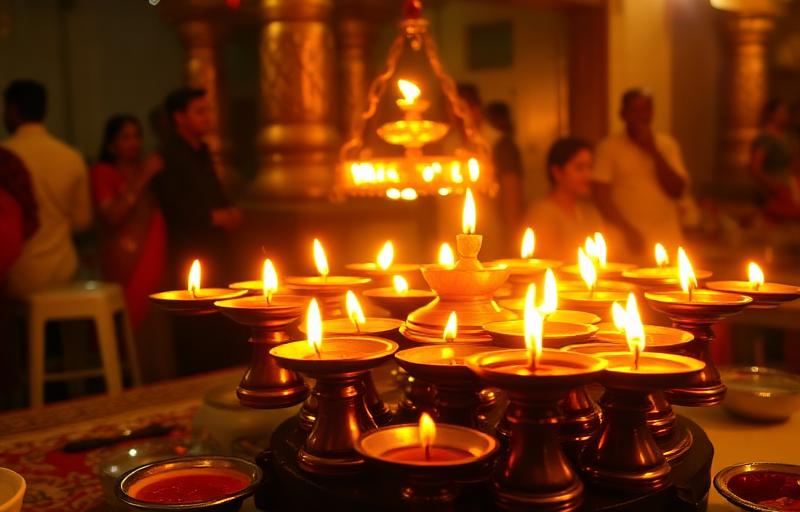
Why Pray Before Sleep?
The last thoughts before sleep sink deep into the mind and shape our rest and our dreams. Hindu tradition therefore closes the day with a gentle ratri prarthana (night prayer) - a moment to let go of the day's worries and any wrongs, and to surrender into sleep trusting the divine.
A common practice is to ask forgiveness for the day's mistakes, give thanks for the day, and chant the name of God or a calming mantra as the eyes close. This empties the heart of guilt and tension, so sleep comes more peacefully and the new day begins lighter. Ending the day in the divine's name is, in a sense, falling asleep in God's lap.
Night Prayers - Shlokas, Transliteration & Meaning
1. The forgiveness prayer (Karacharana Kritam) - asking pardon for the day's faults:
करचरणकृतं वाक्कायजं कर्मजं वा श्रवणनयनजं वा मानसं वापराधम् । विहितमविहितं वा सर्वमेतत्क्षमस्व जय जय करुणाब्धे श्रीमहादेव शम्भो ॥
Kara-charana-kritam Vak-kaya-jam Karma-jam Va Shravana-nayana-jam Va Manasam Va-aparadham, Vihitam-avihitam Va Sarvam-etat-kshamasva Jaya Jaya Karunabdhe Shri-mahadeva Shambho.
Meaning: O ocean of compassion, Lord Mahadeva Shambho, whatever wrong I have done by hands, feet, speech, body or action, by ears, eyes or mind, knowingly or unknowingly - forgive it all. Victory, victory to you.
2. The name of Rama (a soothing bedtime chant):
श्री राम जय राम जय जय राम ।
Shri Rama Jaya Rama Jaya Jaya Rama.
Meaning: Glory to Sri Rama. Softly repeating the Lord's name as you drift off fills the mind with peace.
3. Om Namah Shivaya (surrender and protection):
ॐ नमः शिवाय
Om Namah Shivaya - 'I bow to Shiva.' Chanted gently at bedtime, it brings a feeling of safety and calm surrender into sleep.
How to Pray Before Sleeping
- Settle down: Once in bed, put away the phone, dim the lights, and take a few slow breaths.
- Give thanks: Briefly thank the divine for the day - its food, safety and small blessings.
- Ask forgiveness: Chant the Karacharana Kritam shloka (or simply say it in your own words), releasing any mistakes or harsh moments of the day.
- Chant a name softly: Gently repeat 'Shri Rama Jaya Rama' or 'Om Namah Shivaya' as you relax, letting the mind rest on the sound.
- Surrender into sleep: Let the last waking thought be of God, and drift off without dwelling on worries.
- For children: A simple shared 'Hey Bhagwan, thank you, good night' with one round of Ram Naam is a beautiful family habit.
Benefits of a Bedtime Prayer
- Peaceful sleep: Releasing worries and chanting a calming name soothes the mind and helps sleep come more easily.
- A clear conscience: Asking forgiveness empties guilt and resentment, so you rest without a troubled heart.
- Gratitude: Ending the day in thanks shifts focus from what went wrong to the blessings received.
- Better dreams and mornings: A calm, divine last thought tends to bring gentler rest and a lighter start to the next day.
- A loving family ritual: A short shared prayer is a tender way to close the day together and a gift to teach children.
Like the morning prayer that opens the day, the night prayer gently closes it - turning sleep itself into an act of trust and surrender.
What People Ask Most
What mantra should I chant before sleeping?+
A soothing choice is the forgiveness shloka 'Karacharana Kritam', followed by softly repeating 'Shri Rama Jaya Rama' or 'Om Namah Shivaya' as you fall asleep. Choose whichever feels most calming to you.
What is the Karacharana Kritam shloka for?+
It is a prayer asking the Lord's forgiveness for any wrong done during the day by hand, foot, speech, body, ears, eyes or mind, knowingly or unknowingly. It is chanted at night to end the day with a clear heart.
Can I chant a bedtime prayer lying down in bed?+
Yes. While a seated posture is ideal for formal japa, the night prayer is meant to be gentle. Lying down and softly chanting or silently remembering God's name as you fall asleep is perfectly fine.
Is there a simple bedtime prayer for children?+
Yes. A short, shared 'Hey Bhagwan, thank you for today, please keep us safe, good night' along with one round of 'Shri Ram Jai Ram' is a lovely, easy family habit that teaches gratitude and calm.
About the author
Dr. Suresh Iyer · Vastu Shastra & Jyotish, 18+ years
Dr. Suresh has practiced traditional Vastu and basic Vedic Jyotish for over 18 years across South India. He contributes the Vastu, direction, and home-puja layout guides on Vandnaa.
Meet the Vandnaa editorial team →