The Island Off Okha
Beyt Dwarka, also written Bet Dwarka and known in the texts as Shankhodhar, is an island off Okha in Devbhumi Dwarka district, Gujarat, about thirty kilometres from Dwarka town.
What is there:
- The Dwarkadhish temple of the island, also called the Keshavraiji temple, the principal shrine
- A cluster of further shrines within the complex, including Rukmini, Satyabhama, Jambavati, Devaki, Radha and others
- Hanuman Dandi, a temple a few kilometres away associated with Hanuman and his son Makardhwaja
- Beaches, coral shallows and a working fishing harbour
- Shops selling the offering that pilgrims bring, which is rice
How it is reached:
- Long the only access was by ferry from Okha, a short crossing on crowded boats
- A bridge now connects Okha to the island, which has changed the character of a visit considerably
- Ferries continue to run, and many pilgrims still prefer the crossing
The distinction that matters. Dwarka on the mainland is the great pilgrimage city, one of the Char Dham, where Krishna is worshipped as Dwarkadhish, the king.
Beyt Dwarka is understood differently. Tradition holds this island was Krishna's residence, where he actually lived with his family, as opposed to the capital where he ruled. That distinction shapes everything about how the island is treated.
The Palace and the House
The separation between the capital and the residence is unusual, and it produces a shrine with a domestic character.
What follows from it:
- The temple complex contains shrines to Krishna's queens and family members, which is not how a royal temple is usually arranged
- The deity is treated with the routine of a household rather than a court, and the daily schedule reflects a resident rather than a ruler
- Offerings brought here are food staples, which is what one brings to a house
- The island is spoken of in local usage as where he was at home
Compare this to Dwarka on the mainland, where Krishna is Dwarkadhish, the lord of Dwarka, approached as a sovereign, in a temple that is one of the four dhams of India.
Why a tradition would split these. It solves a real devotional problem.
- Krishna is the most domestic of the great deities. The Bhagavata's Krishna is a child in a house, a cowherd among neighbours, a friend, a husband
- He is also, in the Dwarka phase of his life, a king with a capital and a fleet, which is a different register entirely
- Devotees who love the first find the second difficult, and vice versa
Splitting the two across two sites lets both be true without either cancelling the other. You go to Dwarka to see the king. You come out to the island to see where he lived.
The same instinct produces the pairs found elsewhere in India, where a deity has a public temple and a smaller, older, more intimate shrine nearby, and devotees will tell you which one they actually prefer.
Why Pilgrims Bring Rice
The offering at Beyt Dwarka is not flowers or sweets. It is rice, and the reason is one of the best loved stories in the tradition.
The practice:
- Pilgrims buy rice at the shops before the temple and offer it at the shrine
- Some bring it from home
- The quantity is not the point, and a handful is the customary form
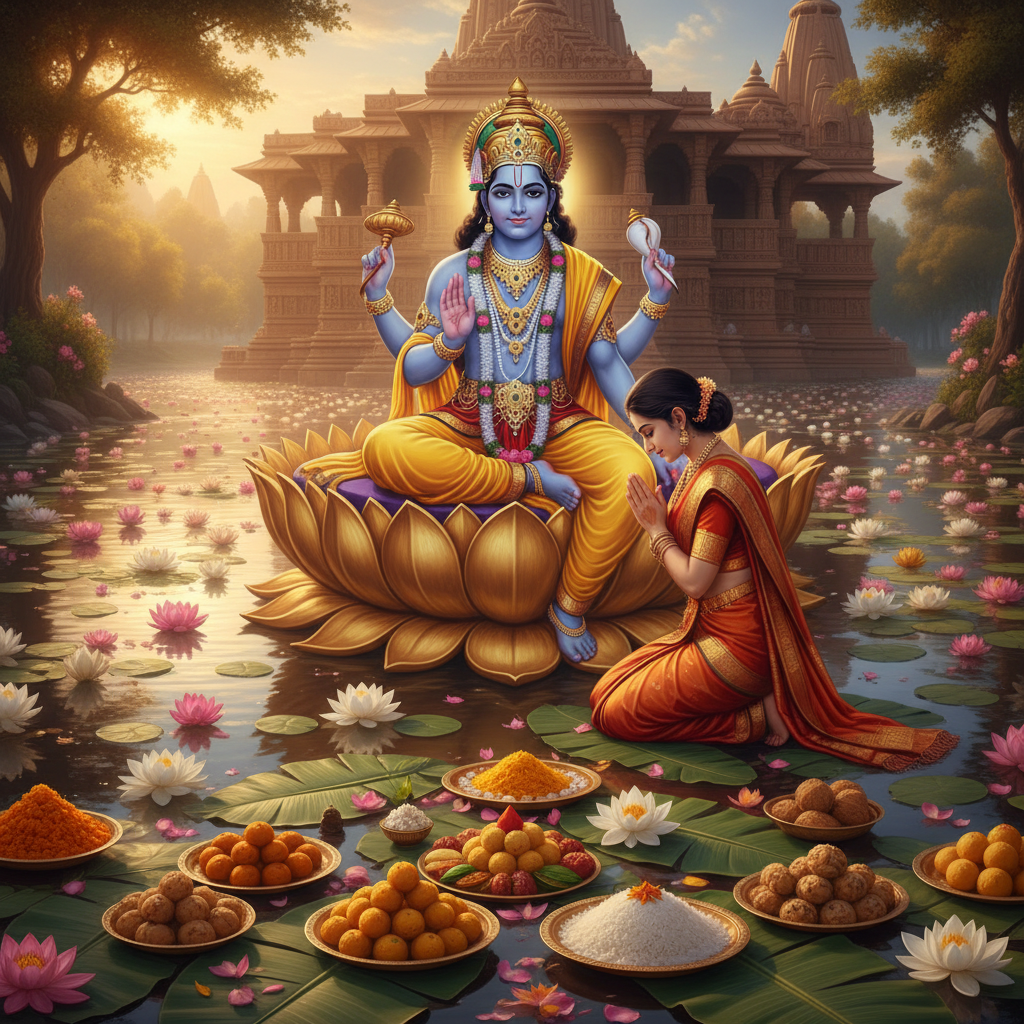
Why rice. The island is associated with the meeting of Krishna and Sudama, his poor brahmin friend from their student days.
The outline, which most devotees know:
- Sudama, in deep poverty, was pressed by his wife to go to Krishna for help
- He could not bring himself to ask, and took as a gift the only thing the house had, a small bundle of poha, beaten rice, tied in a cloth
- At Krishna's house he hid it, ashamed of it
- Krishna found it and ate it, delighted, and Sudama returned home without ever having asked for anything
- He found his poverty gone
What the offering of rice is doing. This is the point worth drawing out.
- The devotee at Beyt Dwarka is not making a rich offering. They are deliberately making a poor one
- The gesture repeats Sudama's, and its whole meaning depends on the offering being small
- A temple where the correct offering is a handful of grain is making an argument about what devotion is worth measured in
It is one of the clearest examples in Indian practice of a ritual that is a retelling rather than a transaction. Nothing is being purchased. A scene is being performed again, by whoever turns up, several thousand years later.
Shankhodhar and the Conch
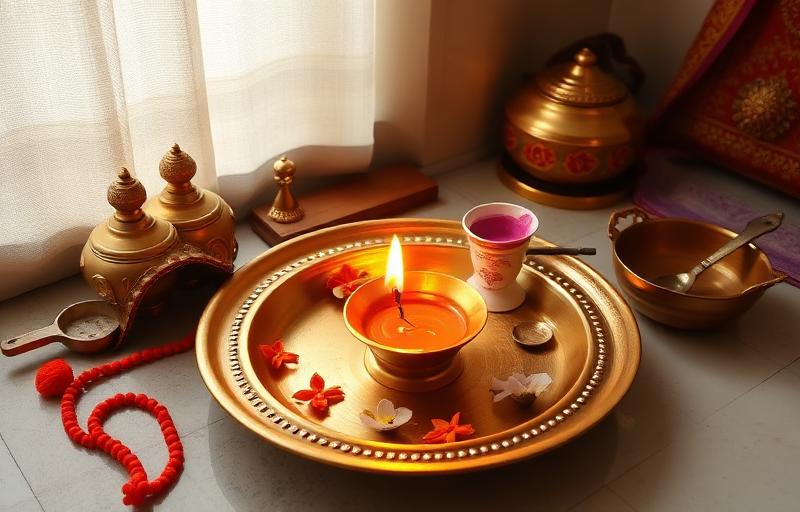
The island's older name carries its own katha, and it explains the shells you will see everywhere.
Shankhodhar and the story:
- A daitya named Shankhasura, who took the form of a conch or lived within one, is held to have troubled the region
- He is connected in the tradition with the theft of the Vedas, which he carried into the sea
- Krishna killed him here, and the recovery is what the name marks. Shankha is conch and uddhara is lifting out or rescue
- The Panchajanya, Krishna's conch, is associated with this episode in some tellings
Why conches matter in the tradition:
- The shankha is one of the four attributes of Vishnu, held in one of his four hands
- It is blown at the start of worship and at the start of battle, and its sound is treated as auspicious and purifying
- Conches are classified, and a dakshinavarti shankh, one whose spiral turns clockwise, is rare and is treated as especially significant
- Water poured from a conch is used in abhishek
The island supplies the material as well as the story. The waters around Beyt Dwarka have coral shallows and shell beds, and shells are sold everywhere on the island.
A word of caution on buying them. Some marine species are protected under Indian wildlife law, and coral collection is prohibited. Buying protected shells or coral is both illegal and damaging to a reef system that is already under pressure. If you want to take something from the island, take the rice offering receipt and a photograph.
The reef here is genuinely fragile, and it is worth remembering that Shankhasura's shell is the story, not the souvenir.
Hanuman Dandi and Makardhwaja
A few kilometres from the main temple stands Hanuman Dandi, and it holds one of the more unusual images in India.
What is there:
- A temple with Hanuman and Makardhwaja together in the sanctum
- Makardhwaja is understood as Hanuman's son, which surprises most visitors, since Hanuman is a brahmachari
- The two are shown of comparable size, facing forward
The katha:
- After burning Lanka, Hanuman went to the sea to cool himself, and a drop of his sweat fell into the water
- A makara, a large sea creature, swallowed it, and from it a son was born
- He was called Makardhwaja and became the guardian of Patala, the underworld realm ruled by Ahiravana
- Later, when Ahiravana carried Rama and Lakshmana off to Patala, Hanuman came to rescue them
- At the gate he was challenged by the guardian, and the two fought
- Only afterwards did they learn who each was. Hanuman had been fighting his own son
- Hanuman rescued Rama and Lakshmana, and installed Makardhwaja as ruler of Patala
Why the story exists. It answers a question devotees genuinely ask, which is how a celibate deity has a son in some traditions, and it answers it in a way that preserves the celibacy exactly.
But the more interesting thing is the shape of the episode. A father and son meet for the first time as opponents, each doing his duty correctly, neither in the wrong. Makardhwaja is guarding a gate he was appointed to guard. Hanuman is rescuing the one he serves.
Indian epic has a recurring interest in situations where two people are both right and must still fight, and this is one of its gentler treatments, since here it ends with recognition rather than with a death.
Visiting Beyt Dwarka
Getting there
- Beyt Dwarka, off Okha, Devbhumi Dwarka district, Gujarat, about 30 km from Dwarka town
- Okha has a railway station, and Jamnagar is the nearest airport at roughly 145 km
- A bridge now connects Okha to the island, and ferries also run the short crossing
- Buses and taxis run from Dwarka to Okha through the day
Timings
- The temple opens in morning and evening sessions with a long midday closure. Check locally
- Allow two to three hours on the island for the main temple, plus more for Hanuman Dandi
When to go
- October to March for comfortable coastal weather
- Janmashtami in Bhadrapada, the great festival, when the island is at its busiest
- Holi and Kartik Purnima also draw crowds
- Avoid the monsoon, when sea conditions can disrupt ferries
The offering
- Buy rice at the shops before the temple, or bring a small quantity from home
- A handful is the customary form. This is not an offering where quantity matters
Practical notes
- Leave footwear and, where required, phones and bags at the counters
- Dress conservatively
- Carry water. The island is exposed and can be hot even in winter
- If crossing by ferry, boats can be very crowded. Do not board an overloaded boat, and keep children held throughout the crossing
- Do not buy protected shells or coral
The wider circuit
- Dwarkadhish temple at Dwarka, one of the Char Dham
- Rukmini Devi temple, a couple of kilometres outside Dwarka town
- Nageshwar Jyotirlinga, on the road between Dwarka and Beyt
- Gopi Talav, where the yellow gopi chandan clay is taken
- Okha port and the coastline
A closing thought. Char Dham pilgrims come to Dwarka for the king. The island is where the story gets quieter, and where the offering that everybody makes is a handful of rice in memory of a man who was too embarrassed to hand over his gift.
Reader Questions Answered
How is Beyt Dwarka different from Dwarka?+
Dwarka on the mainland is the great pilgrimage city and one of the Char Dham, where Krishna is worshipped as Dwarkadhish, the king. Beyt Dwarka is held to be his residence, where he actually lived with his family, so the temple has a domestic character with shrines to his queens and family.
Why do pilgrims offer rice at Beyt Dwarka?+
Because the island is associated with the meeting of Krishna and Sudama, who came in poverty carrying only a small bundle of beaten rice as a gift and was too ashamed to hand it over. The devotee is deliberately making a poor offering, repeating Sudama's gesture, and a handful is the customary form.
How do I get to the island?+
From Okha, about 30 km from Dwarka town. A bridge now connects Okha to the island, and ferries also run the short crossing. Okha has a railway station and Jamnagar is the nearest airport at roughly 145 km, with buses and taxis running from Dwarka through the day.
Why is the island called Shankhodhar?+
From the katha of Shankhasura, a daitya who took the form of a conch or lived within one and is connected with carrying the Vedas into the sea. Krishna killed him here and the recovery gives the name, since shankha is conch and uddhara is lifting out or rescue.
Who is Makardhwaja?+
Hanuman's son, born when a drop of Hanuman's sweat fell into the sea after the burning of Lanka and was swallowed by a makara. He became guardian of Patala under Ahiravana, and fought Hanuman at the gate when Hanuman came to rescue Rama and Lakshmana, neither knowing who the other was. He is enshrined with Hanuman at Hanuman Dandi.
Can I buy shells and coral on the island?+
Shells are sold widely, but some marine species are protected under Indian wildlife law and coral collection is prohibited. Buying protected shells or coral is illegal and damages a reef system already under pressure, so it is better not to.
About the author
Pandit Ravindra Sharma · Vedic Rituals & Bhakti, 22+ years
Pandit Ravindra is the Vandnaa editorial team's resident specialist on aarti, chalisa, and daily devotion. He has performed home and temple pujas across Varanasi and Delhi for over two decades and contributes the bhakti-focused articles on this site.
Meet the Vandnaa editorial team →