The Lake at the End of the Road
Narayan Sarovar lies in Lakhpat taluka at the western end of Kutch in Gujarat, close to the Kori Creek and the coast, in some of the emptiest country in India.
What is there:
- The sarovar itself, a walled tank with steps, fed by rain and by the local water table
- A group of temples in a walled complex beside it, built in the eighteenth century
- Shrines of Trikamraiji, Laxminarayan, Govardhannathji, Dwarkanath, Adinarayan, Ranchhodraiji and Laxmiji
- Dharamshalas for pilgrims and very little else
- Koteshwar Mahadev, a Shiva temple on the creek about four kilometres away
Why the place matters. The Bhagavata Purana names five sacred lakes, the Panch Sarovar:
- Mansarovar, in Tibet, below Kailash
- Bindu Sarovar, at Siddhpur in north Gujarat
- Narayan Sarovar, here in Kutch
- Pampa Sarovar, near Hampi in Karnataka
- Pushkar Sarovar, in Rajasthan
Four of those are well known and heavily visited. This one is at the end of a long road across salt flats and scrub, near a creek that forms the international border, and it receives a fraction of the traffic.
That is the character of the place. It carries first rank status in the texts and almost no crowds, which is a combination that barely exists anywhere else in India.
How the Lake Came to Be
The katha attached to Narayan Sarovar is short and fits the landscape exactly.
As it is told:
- The region was arid, and a long drought had left the sages and people of the area without water
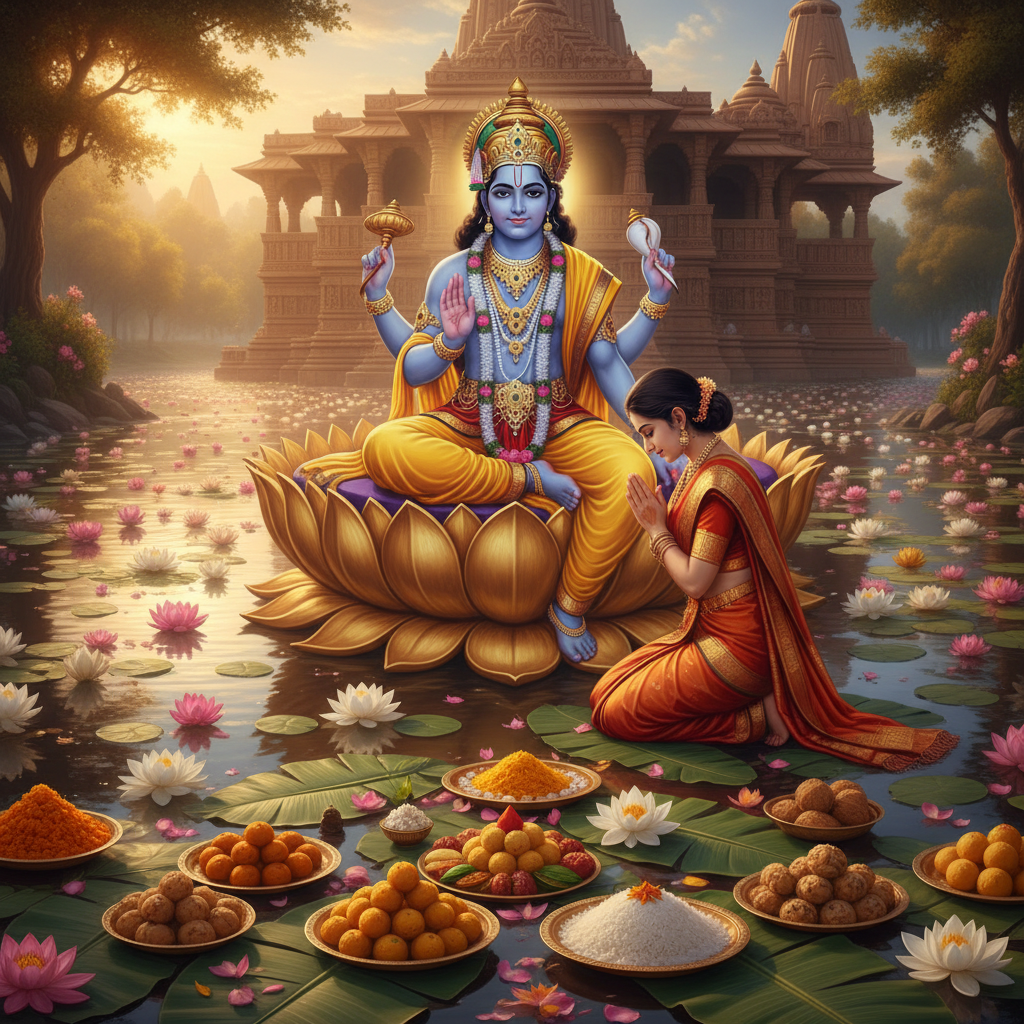
- They performed austerities and called on Vishnu as Narayana
- He appeared, and where he set his foot, or by some tellings touched the ground with his toe, water came
- The tank that formed is the sarovar, and it carries his name
Why the story fits. Kutch is one of the driest inhabited regions of India. The Rann is salt desert, the rainfall is low and unreliable, and the whole history of settlement here is a history of managing water.
A katha in which the supreme deity is asked for one thing, and that thing is water, is not a generic origin story. It is the local emergency, told at cosmic scale.
What the tradition does with lakes. The Panch Sarovar are all understood as more than reservoirs:
- Bathing in them is held to carry the merit of a major tirtha
- They are places for rites for ancestors, and Narayan Sarovar receives pilgrims for that purpose
- Their water is carried away, as Ganga water is
- Each has a katha attaching it to a specific deity or event
In a country with an enormous number of rivers, the singling out of five lakes is worth noticing. Rivers move and cleanse by carrying things away. A lake holds. The tradition gave both categories their place, and the five lakes are the standing water counterpart to the great rivers.
The Temple Group
The temples beside the lake are not ancient, and their history is a small story about who actually builds religious architecture.
What is there:
- A walled complex enclosing several shrines around a courtyard
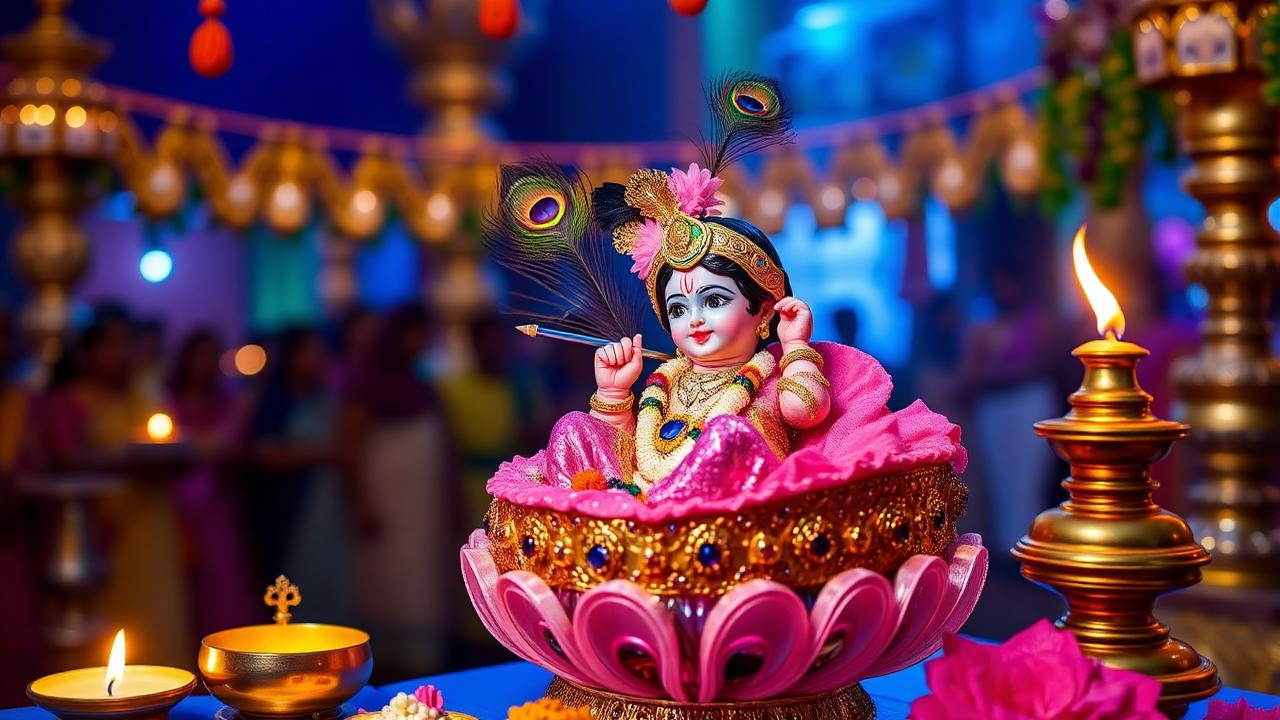
- The principal temple of Trikamraiji, a form of Krishna
- Shrines of Laxminarayan, Govardhannathji, Dwarkanath, Adinarayan, Ranchhodraiji and Laxmiji
- Stone construction in the western Indian idiom, plainer than the temple architecture of central Gujarat
- Steps from the complex down to the sarovar
Who built them. The complex in its present form is attributed to the eighteenth century and to the patronage of a queen of the Kutch ruling house, remembered locally as Maharani Rooprani or Rupaliba.
That is worth pausing on, because it is a common pattern that gets little attention. A great deal of Indian temple building, particularly the rebuilding and consolidation of older sacred sites, was done by women of ruling families:
- Ahilyabai Holkar rebuilt or restored temples and ghats across northern India, including at Kashi, Somnath, Gaya and Ujjain
- Rani Bhabani of Natore endowed temples and tanks across Bengal
- Queens and dowagers across Rajasthan, Gujarat and the Deccan built shrines, wells and dharamshalas as a recognised form of public work
The reasons were practical as much as devotional. Religious endowment was one of the few channels through which a woman with resources could commission permanent public building in her own name, and the results are all over the subcontinent.
At Narayan Sarovar the point is easy to see. The lake is ancient and the katha is ancient. The buildings that make it visitable are three hundred years old, and a woman paid for them.
Koteshwar and Ravana's Linga
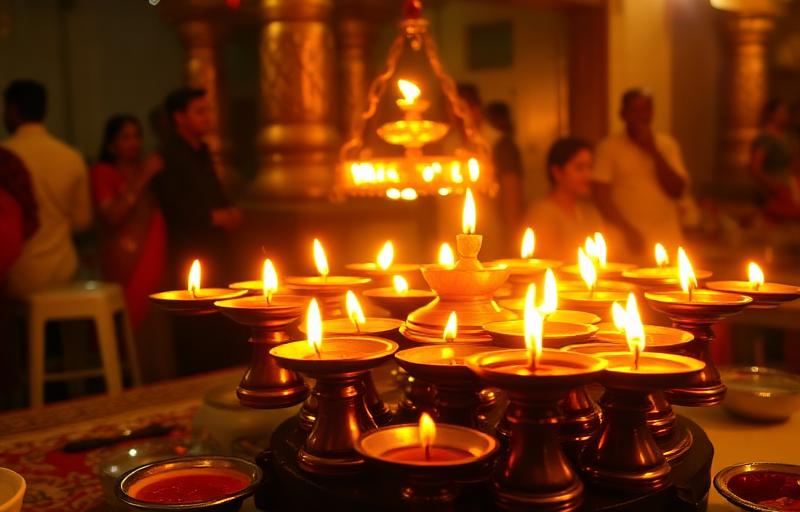
Four kilometres from the sarovar, on the Kori Creek, stands Koteshwar Mahadev, and no visit to Narayan Sarovar is complete without it.
What is there:
- A Shiva temple on a rise looking out over the creek and the mudflats toward the sea
- It is often described as the westernmost temple of India
- A tank, and steps down toward the water
- Views across an enormous flat emptiness, with the border not far off
The katha:
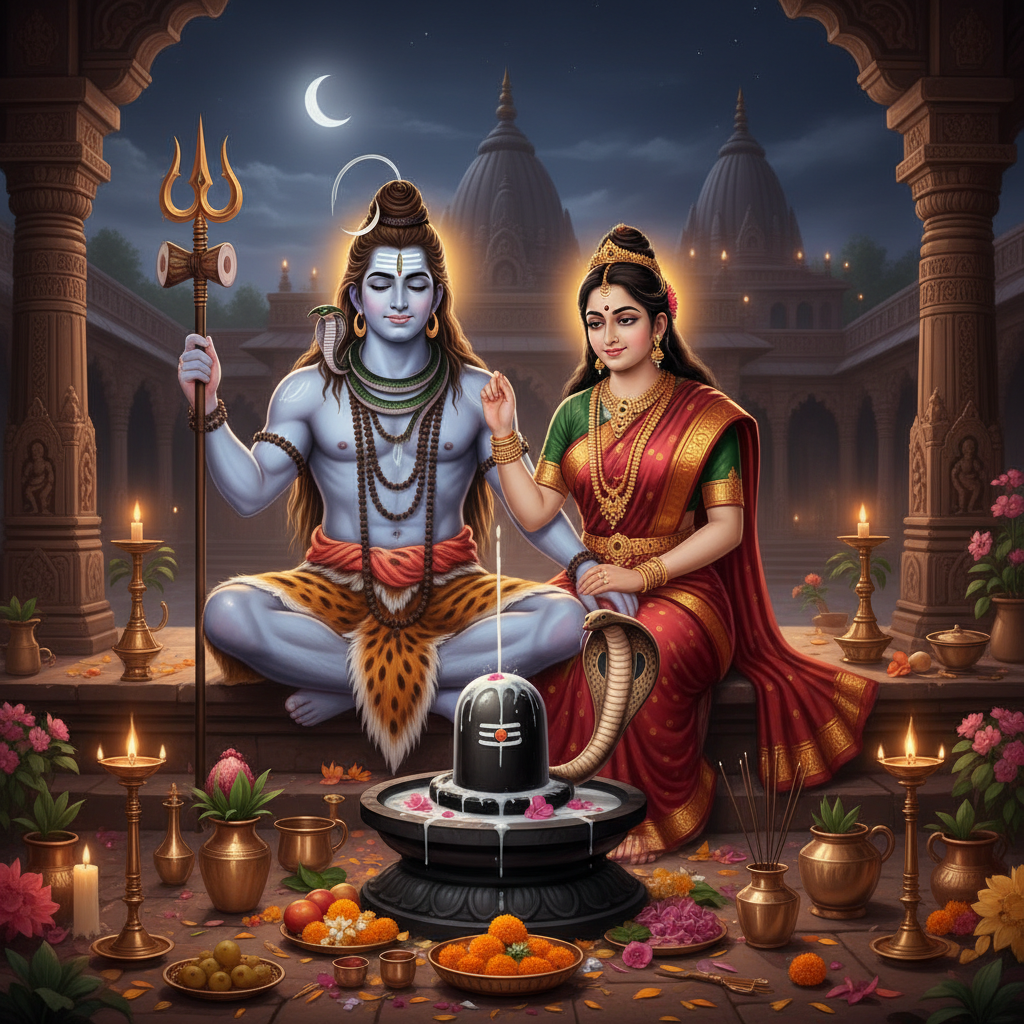
- Ravana performed severe tapasya and obtained from Shiva a linga of great power as a boon
- He was told he could carry it to Lanka on one condition, that he must not set it down on the way
- At this spot he was made to set it down, in most tellings through a trick
- To prevent him taking it, thousands of identical lingas appeared around it
- Ravana could not tell which was the original, took one at random and left
- The true linga remained here, and the place is called Koteshwar, from koti, meaning a very great number
What the katha is doing. This is a widespread story type in India, and versions of it explain shrines from Gokarna in Karnataka to Baijnath in Himachal.
The consistent structure is worth noticing:
- A powerful figure obtains something genuinely great through real effort, which the tradition does not deny
- The gift comes with a condition about restraint, not about strength
- He fails the condition, not through weakness in battle but through haste or distraction
- What he wanted stays where it fell, and becomes available to everyone else
Ravana in these stories is never a fool. He is a great tapasvi who cannot hold still, and the shrine exists because of that specific failing.
The Country Around It
Getting to Narayan Sarovar means crossing western Kutch, and the journey is a large part of what the visit is.
What you pass through:
- Scrub, salt flats and very long stretches with no settlement
- The edge of the Rann, the salt desert that fills in the monsoon and dries to white crust
- Chinkara country. The Narayan Sarovar Sanctuary nearby protects Indian gazelle and other dry country wildlife
- Villages that are small, widely separated and dependent on tankers in bad years
Lakhpat, on the way, deserves a stop. It is a walled town on the edge of the Rann, once a port on a navigable channel of the Indus system, prosperous enough to build substantial walls.
Then the earthquake of 1819 altered the drainage of the region, the channel dried, and the port died. The walls still stand, enclosing a town of a few families. Walking inside them is one of the strangest experiences in Gujarat, and the site includes a gurudwara associated with a visit by Guru Nanak on his travels.
What this landscape does to the pilgrimage. Tirthas in fertile country are approached through crowds and commerce. This one is approached through emptiness, and by the time you arrive the lake has already been given significance by the two hundred kilometres of dry ground behind you.
That is not incidental. A lake of Vishnu granted in a drought means something different when you have driven across the drought to reach it.
Visiting Narayan Sarovar
Getting there
- Narayan Sarovar, Lakhpat taluka, Kutch district, Gujarat
- Roughly 210 km from Bhuj by road, which is the practical base
- Bhuj has an airport and a railway station, and is well connected to Ahmedabad
- There is no useful public transport for the last stretch. Hire a car with a driver from Bhuj
- Allow a full day from Bhuj and back, or stay overnight in basic accommodation
When to go
- November to February. Kutch summers are extreme and this is exposed country
- Kartik Purnima, when a fair is held at the sarovar and pilgrims come in numbers
- After the monsoon the lake is at its fullest, and the Rann is at its most striking
- Avoid mid summer entirely
A border area note
- This is close to the international border. Carry government photo identification for everyone in the vehicle
- Follow any instructions from security personnel, and do not photograph military or border installations
- Do not attempt to go beyond the points where the public road ends
What to see
- The sarovar and the ghats
- The temple complex and the Trikamraiji shrine
- Koteshwar Mahadev, four kilometres on, at sunset if you can time it
- Lakhpat fort town on the way, which most people drive past
Practical notes
- Carry water, food and fuel. Services are very thin on this route
- Accommodation is dharamshala grade at the sarovar. Bhuj is the comfortable base
- Mobile coverage is patchy
- The lake level varies with the monsoon and can be low in a dry year
- Facilities for rites for ancestors exist. Arrange in advance rather than on arrival
Combining the visit
- Bhuj for the Aina Mahal, Prag Mahal and the Kutch Museum
- Mata no Madh, the Ashapura shrine, on the way out from Bhuj
- The Rann and the villages of the Banni grasslands
- Mandvi for the beach and the shipbuilding yards
A closing thought. A tirtha listed alongside Mansarovar and Pushkar ought to be famous. This one is at the end of a two hundred kilometre road through salt and scrub, and it is quiet enough that you can sit on the steps of a five hundred year old idea and hear nothing.
Common Questions From Devotees
What are the Panch Sarovar?+
The five sacred lakes named in the Bhagavata Purana: Mansarovar in Tibet below Kailash, Bindu Sarovar at Siddhpur in north Gujarat, Narayan Sarovar in Kutch, Pampa Sarovar near Hampi in Karnataka and Pushkar Sarovar in Rajasthan.
How do I reach Narayan Sarovar?+
It is in Lakhpat taluka at the western end of Kutch, roughly 210 km from Bhuj by road. Bhuj has an airport and railway station and is the practical base. There is no useful public transport for the last stretch, so hire a car with a driver and allow a full day from Bhuj and back.
What is the katha of the lake?+
The region was arid and a long drought had left the sages and people without water. They performed austerities and called on Vishnu as Narayana. He appeared and where he set his foot, or by some tellings touched the ground with his toe, water came, and the tank that formed carries his name.
What is Koteshwar Mahadev?+
A Shiva temple on the Kori Creek about four kilometres from the sarovar, often described as the westernmost temple of India. The katha holds that Ravana obtained a powerful linga from Shiva on condition he not set it down, was made to set it down here, and thousands of identical lingas appeared so he could not identify the original.
Who built the temples at Narayan Sarovar?+
The complex in its present form is attributed to the eighteenth century and to the patronage of a queen of the Kutch ruling house, remembered locally as Maharani Rooprani or Rupaliba. Religious endowment was one of the few channels through which a woman with resources could commission permanent public building in her own name.
Do I need identification for this area?+
Yes. This is close to the international border, so carry government photo identification for everyone in the vehicle, follow any instructions from security personnel, do not photograph military or border installations, and do not go beyond the points where the public road ends.
About the author
Pandit Ravindra Sharma · Vedic Rituals & Bhakti, 22+ years
Pandit Ravindra is the Vandnaa editorial team's resident specialist on aarti, chalisa, and daily devotion. He has performed home and temple pujas across Varanasi and Delhi for over two decades and contributes the bhakti-focused articles on this site.
Meet the Vandnaa editorial team →