What Is a Skandha
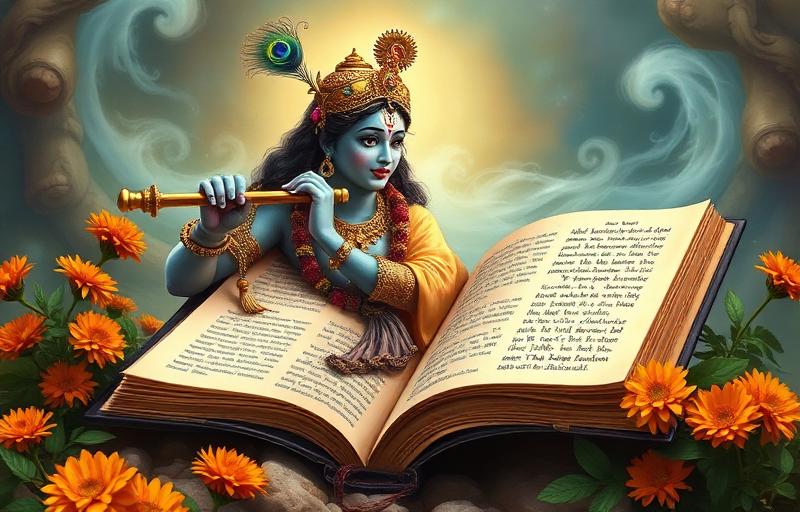
The Bhagavata Purana is organised into twelve skandhas, a Sanskrit word meaning branch or book, each one a substantial section in its own right. Together they take the reader on a journey that begins with the nature of the universe and ends with the glory of devotion itself, with the story of Krishna forming the heart of the entire text.
Understanding the twelve skandhas at a glance helps a devotee approach this vast scripture with a sense of its shape, rather than feeling lost in its scale. This overview offers a simple, traditional guide to what each skandha holds.
Skandhas One to Three: Setting the Frame
The first skandha opens at Naimisharanya, where the sage Suta Goswami begins narrating the Purana to gathered sages, and introduces the frame story of King Parikshit receiving his fate and turning to Shukadeva for guidance. The second skandha continues this dialogue, addressing questions on the nature of the Absolute and the process of creation.
The third skandha deepens this cosmology through the conversation between the sage Maitreya and Vidura, and includes the teachings that the sage Kapila offers his own mother, Devahuti, on the path of devotion and self-realisation, alongside an account of the Varaha avatar.
Skandhas Four to Six: Kings, Devotion and Grace
The fourth skandha tells the stories of devoted figures such as Dhruva and King Prithu, along with the account of Daksha's yajna and Sati. The fifth skandha narrates the story of King Bharata, after whom Bharatvarsha is said to be named, and offers a traditional description of the universe's geography, its continents and realms.
The sixth skandha includes the story of Ajamila, whose deathbed utterance of Narayana's name is remembered as an example of how sincere devotion, even at the last moment, is never turned away, along with the account of Vritrasura and further genealogies.
Skandhas Seven to Nine: Devotion Tested and Rewarded
The seventh skandha contains one of the most cherished stories in the entire Purana, that of the devoted boy Prahlada and Vishnu's appearance as Narasimha to protect him from his father, the demon king Hiranyakashipu. The eighth skandha narrates the story of Gajendra Moksha, the Vamana avatar and King Bali, and the churning of the ocean by devas and asuras.
The ninth skandha turns to the genealogies of the solar and lunar dynasties, recounting the stories of many noble kings, including ancestors later connected to the Ramayana, tracing the lineage that leads toward the tenth skandha's central story.
Skandha Ten: The Life of Krishna
The tenth skandha is the longest and most beloved of the twelve, devoted entirely to the life of Lord Krishna, from his birth in a Mathura prison and his transfer to Gokul, through his miraculous childhood in Vrindavan, his playful and profound bond with the gopis and Radha, his youth defeating Kansa, and his later years as king in Dwarka.
It is this skandha that inspires the overwhelming majority of Krishna bhajans, Janmashtami retellings, Rasa Leela performances and devotional art across India, and for many devotees it is their first and most enduring point of connection with the entire Bhagavata Purana.
Skandhas Eleven and Twelve: Final Teachings
The eleventh skandha carries Krishna's final teachings, often called the Uddhava Gita, delivered to his devoted friend Uddhava, along with the account of the Yadava dynasty's end and Krishna's return to his eternal abode. The twelfth and final skandha closes the text with prophecies concerning the Kali Yuga, reflections on the eventual dissolution of the universe, and a glorification of the Bhagavata Purana itself and the merit of hearing it.
The text closes by returning to its frame story, completing the circle that began with Parikshit's seven days beside the Ganga, leaving listeners with the same message he received, that devotion to God is the surest refuge at any moment of life.
What People Ask Most
How many skandhas does the Bhagavata Purana have?+
The Bhagavata Purana is organised into twelve skandhas, or books, moving from creation and cosmology through the life of Krishna to closing teachings on devotion and liberation.
Which skandha of the Bhagavata Purana tells Krishna's life story?+
The tenth skandha is devoted entirely to Krishna's life, from his birth and childhood in Vrindavan to his years as king in Dwarka, and is the longest and most recited of the twelve.
What is covered in the final skandha of the Bhagavata Purana?+
The twelfth skandha closes the text with prophecies about the Kali Yuga, reflections on the dissolution of the universe, and a glorification of the Purana and the merit of hearing its stories with devotion.
About the author
Anjali Mehta · Editor, M.A. Religious Studies
Anjali is the managing editor for Vandnaa and oversees the festival and vrat coverage. She holds an M.A. in Religious Studies and reviews every published article for accuracy, accessibility, and tradition-fidelity.
Meet the Vandnaa editorial team →