Who Bhumiya Dev Is
Bhumiya Dev, known across Haryana, western Uttar Pradesh and parts of Rajasthan as Khera Dada, Dada Nagar Khera or simply Bhumiya, is the deity of the village land and of the ancestor who first settled it.
The word bhumi means earth and khera means the raised mound on which the original settlement stood. Every old village in the region has such a mound, and on it a small platform where the founder is worshipped as a deity rather than remembered as a person.
His role is very specific:
- He is the owner of the land in the devotional sense, so the village asks his permission before anything new begins
- He is the protector of the family line, invoked at birth, marriage and the building of a house
- He is the witness of the village, invoked when a dispute is settled or a promise made
Bhumiya Dev is not part of the Puranic pantheon, and no katha of cosmic battles is attached to him. He belongs to the older layer of Hindu worship where the ancestor, the land and the deity are understood as one continuous presence.
The Khera: What the Shrine Looks Like
The khera shrine is usually the plainest structure in the village and often the oldest.
A typical khera has a whitewashed platform, sometimes with a small domed chhatri, standing on or beside the settlement mound. Inside there may be nothing more than a stone, a lamp niche, and the marks of sindoor and ghee left by generations. Around it are the clay lamps, iron trishuls and small bells left by families whose vows were fulfilled.
Several customs are attached to the place itself:
- The mound is not dug or built upon, even when the village expands around it
- A lamp is lit on Amavasya and on festival days, usually by a family that has taken on that duty
- Newlyweds and newborns are brought here first, before visits to relatives begin
- Nothing is taken back from the khera, not even flowers
Many kheras also have a second small shrine nearby for Dada Bhaiya, Sati Mata or Bhaiya Ji, ancestral figures of a specific gotra or family. Villages with several founding families sometimes maintain several kheras, each looked after by its own lineage.
The Occasions: When the Family Goes to the Khera
In Haryana households the khera visit is not optional, and the sequence is well fixed.
- Marriage - the family invites Bhumiya Dev before the wedding work begins, and the bride is taken to the khera when she first enters the village. In many families the groom bows there before the barat leaves.
- Childbirth - the mother and newborn visit after the customary days at home, and churma or halwa is distributed
- Griha pravesh - a lamp is offered at the khera before the family sleeps the first night in a new house
- A new tractor, vehicle or shop - the first drive or the first day of business begins with a bow at the khera
- Amavasya and Diwali - lamps are lit and prasad offered by whoever is in the village
- After a safe return - from a posting, a long illness or a court matter
The underlying idea is worth noting: the khera is where the family's connection to the village is renewed. Even families that have lived in Gurugram, Delhi or abroad for two generations usually return for these moments, and the elders will name the khera before they name the town.
What Is Offered to Bhumiya Dev
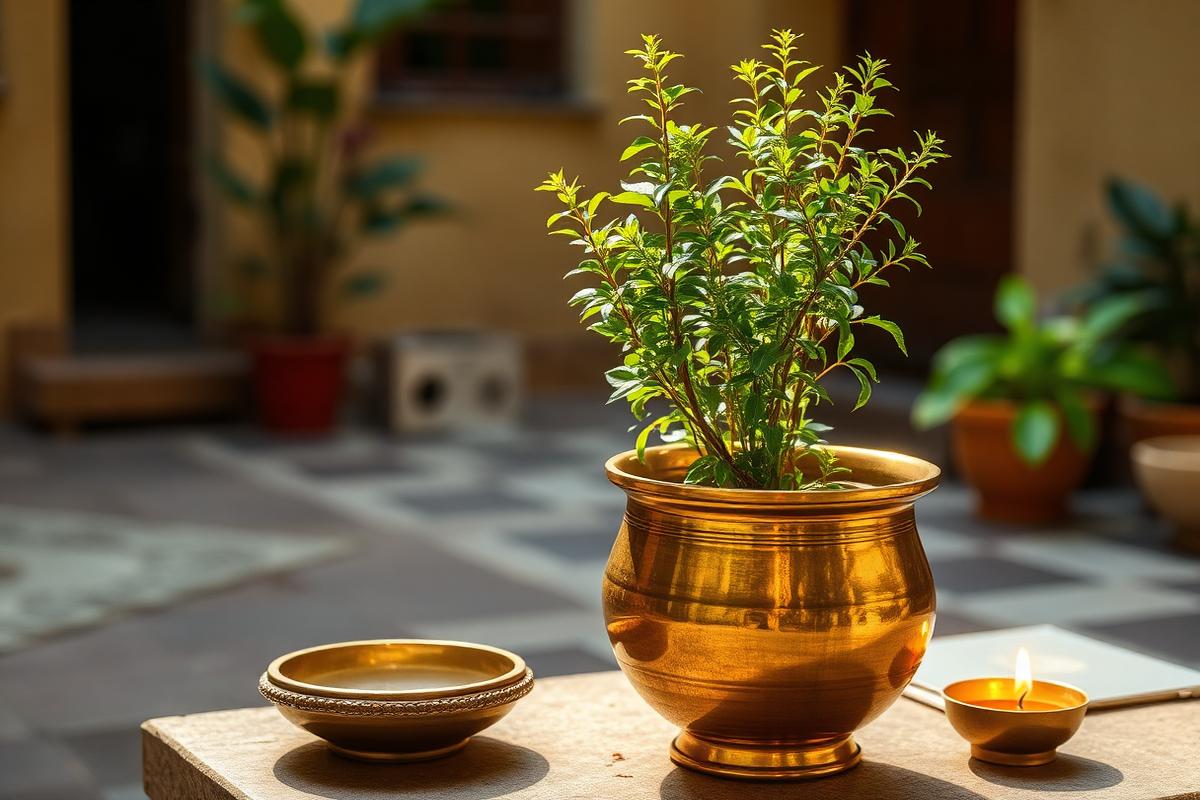
The offerings are farm kitchen food, made at home and shared immediately.
- Churma - coarse wheat rotis crushed with gud and ghee, the most characteristic offering of the region
- Halwa and puri, especially at weddings and after childbirth
- Batasha, gud and boora
- Milk, ghee and water poured at the platform
- A red thread, bangles or a small chunri at kheras where an ancestral mother figure is worshipped alongside
- Lamps of desi ghee or mustard oil, lit at dusk
Since Bhumiya Dev is an ancestor deity, the prasad is distributed to the village rather than kept, and children are usually served first. Families often make a sava kilo or savaser offering, a measure of one and a quarter, which is considered auspicious for a vow.
Animal offerings are not part of this worship in most Haryana villages today. The tradition here has settled firmly on grain, gud, ghee and milk, and many families are particular that the offering must be cooked at home rather than bought from a shop.
Bhumiya Dev in Haryana's Wider Devotion
Haryana's devotional life has three clear layers, and Bhumiya Dev sits at the base of it.
- The land layer - Bhumiya Dev at the khera, Sati Mata and Dada Bhaiya shrines, and the peepal or jal tree of the village
- The regional Devi layer - Sheetla Mata at Gurugram, whose Chaitra mela draws lakhs, Mansa Devi at Panchkula, Bhadrakali at Kurukshetra, and the family kuldevi visited after a wedding
- The pan Hindu layer - Kurukshetra as the land of the Bhagavad Gita, with Brahma Sarovar, Jyotisar and the Gita Jayanti Mahotsav, plus Shiva temples such as Sthaneshwar Mahadev
A family in a Haryana village will usually keep all three without any sense of contradiction. The khera handles the ground, the Devi handles protection and health, and Kurukshetra handles the larger meaning of dharma. When someone says they are going for darshan, the question that follows is simply which of the three they mean.
Keeping the Tradition Without the Village
As families move to cities, the khera tradition faces a practical question: what to do when you cannot reach the mound.
Most families answer it in one of these ways:
- Fix an annual visit. Diwali, Holi or the family's wedding season is when the khera is visited and the year's vows are completed together.
- Offer at home on the same day. Churma or halwa made at home, a lamp lit facing the direction of the village, and the khera named aloud is widely accepted.
- Send the offering. Families often ask relatives in the village to complete the sava kilo offering on their behalf, which the tradition treats as valid.
- Keep the name alive. Children are told which khera the family belongs to, along with the gotra and the kuldevi. This is the part most at risk of being lost in one generation.
What should not happen, elders in the region insist, is turning the khera into a large temple or fencing it into private property. Its meaning depends on staying open, plain and owned by the whole village. A simple platform, a lit lamp and a family that still knows its name is the entire tradition.
Common Questions From Devotees
Who is Bhumiya Dev?+
Bhumiya Dev, also called Khera Dada or Dada Nagar Khera, is the deity of the village land and of the ancestor who first settled it. He is worshipped at a platform on the khera, the old settlement mound, across Haryana, western Uttar Pradesh and parts of Rajasthan.
Why do newlyweds and newborns visit the khera?+
The khera deity is treated as the owner and witness of the village, so a new member of the family is presented there first. The bride is taken to the khera when she enters the village, and the newborn is brought after the customary days at home.
What is offered at a Bhumiya Dev shrine?+
Churma made of wheat, gud and ghee is the classic offering, along with halwa, puri, batasha, milk and a ghee lamp. The prasad is distributed in the village rather than taken home, and children are usually served first.
Is Bhumiya Dev the same as a kuldevta?+
They are related but not identical. Bhumiya Dev belongs to the village land and is worshipped by everyone who lives there, while a kuldevta or kuldevi belongs to a specific family line and travels with the family wherever it settles.
Can the khera tradition be kept by families living in cities?+
Yes. Most families fix an annual visit around Diwali, Holi or a wedding, offer churma at home on the same day when a visit is not possible, or ask relatives in the village to complete the offering on their behalf.
Are animal offerings made to Bhumiya Dev?+
Not in most Haryana villages today. The offering has settled on grain, gud, ghee, milk and home cooked churma or halwa, and many families insist the prasad must be prepared at home rather than bought.
About the author
Anjali Mehta · Editor, M.A. Religious Studies
Anjali is the managing editor for Vandnaa and oversees the festival and vrat coverage. She holds an M.A. in Religious Studies and reviews every published article for accuracy, accessibility, and tradition-fidelity.
Meet the Vandnaa editorial team →Explore on Vandnaa
Related Articles
Kuldevta / Kuldevi - How to Find Your Family Deity, Why It Matters & Worship Vidhi
10 min read
Sheetla Mata Temple, Gurugram: The Ancient Guardian of Health
7 min read
Mansa Devi Temple, Panchkula: The Shakti Shrine of the Chandigarh Region
7 min read
Bhadrakali Temple, Kurukshetra: A Shakti Peeth of the Mahabharata
8 min read