Who Budhi Thakurani Is
Budhi Thakurani is the presiding goddess of Berhampur, also called Brahmapur, the largest city of Ganjam district in southern Odisha. She is a Shakti form worshipped as the guardian of the city itself, and her authority over Berhampur is treated as complete. Nothing significant in the old city's civic and commercial life is done without her.
Her name carries the relationship the city has with her. Budhi means the elder one, and Thakurani is the term of respect used for the goddess in Odia. Together they mean the elder mother of the place.
What makes her worship distinct:
- She is worshipped in the ghata form, a consecrated pot, rather than through a fixed sculpted image in the usual sense
- Her festival is held once every two years, not annually, which concentrates the city's devotion into a single long celebration
- The festival is built around the idea that the goddess goes to her father's home, and the family she visits belongs to the traditional weaver community of the city
- The entire city, including its trade associations and street communities, participates in organising it
For people of Berhampur, whether they live in the city or have moved away, Budhi Thakurani is not one deity among many. She is the city's own.
The Thakurani Jatra: A Daughter Visiting Home
The Thakurani Jatra is held once in two years and runs for several weeks, usually beginning in the month of Chaitra.
The structure of the festival follows a family visit rather than a temple ritual:
- The goddess is invited to leave her shrine and come to the home of the Desibehera family, the head family of the traditional weaver community, who are regarded as her father's household
- A temporary structure is built to receive her, and she stays there for the duration of the jatra
- The city treats the period as her time at her maternal home, and devotion is expressed as hospitality - offerings, decoration, performance and constant attendance
- At the end, she is escorted back with the same ceremony, and the temporary structure is dismantled
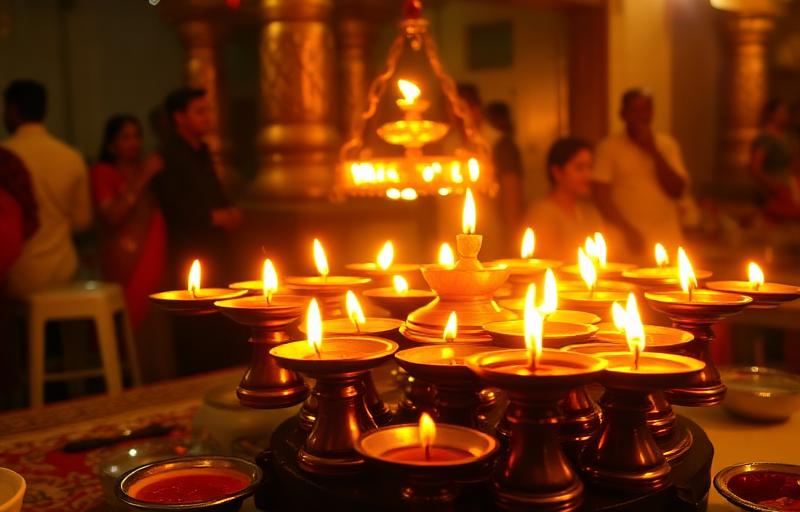
The city changes completely during the jatra. Streets are decorated, thousands of visitors arrive from across Ganjam and beyond, traditional performances run through the nights, and the city's shopkeepers and associations organise their own contributions.
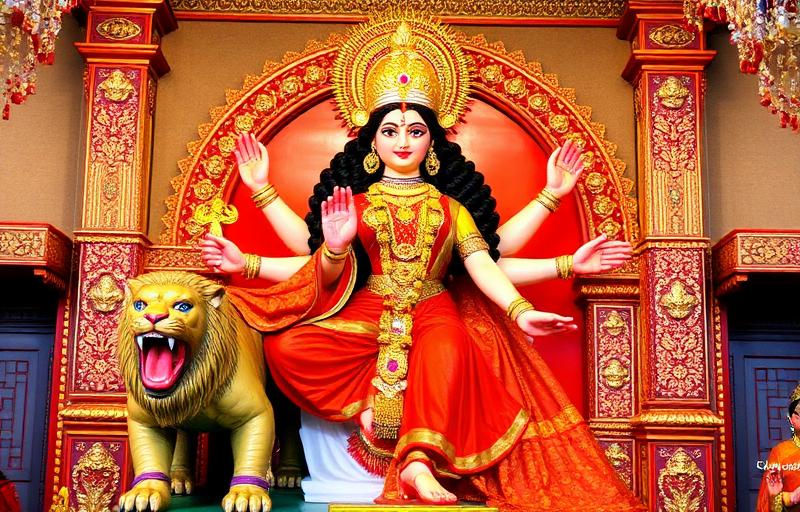
The emotional logic is one Indian devotees recognise instantly. This is the same relationship Bengal has with Durga during her puja and Uttarakhand has with Nanda Devi, a goddess treated not as a distant power but as a daughter of the household who comes home and is then sent back with tears.
Worship in the Ghata Form
Budhi Thakurani is worshipped in the ghata, a consecrated pot in which the goddess is invoked, rather than exclusively through a permanent sculpted image.
Ghata worship is one of the oldest and most widespread forms of Devi upasana in eastern India, and it appears wherever the Devi is approached as a presence rather than as a figure:
- The pot is prepared, filled and installed with prescribed rites, and the Devi is invited into it
- For the period of the festival, the ghata is the deity, receiving all offerings and worship
- At the conclusion, the invocation is formally closed
At the Thakurani Jatra, the ghata parivartan, the ceremonial change and installation of the ghata, is among the most important moments of the entire festival, watched by large crowds.
This form matters for understanding the deity. A goddess in a pot can be carried, can travel to a family's home and can be received as a guest. A fixed stone image cannot. The ghata is what makes the entire idea of the goddess visiting her father's house possible in practice.
A Festival the Whole City Owns

One reason the Thakurani Jatra has survived and grown is that no single institution controls it.
- The Desibehera family of the weaver community holds the hereditary role of receiving the goddess
- Street and locality committees across Berhampur organise decoration, lighting and processions in their own areas
- Trade and merchant associations contribute, since the goddess is regarded as the guardian of the city's commerce
- Cultural troupes perform traditional Odia and Ganjam forms through the nights, including folk dance and drama
- Families across the city host relatives and visitors, and the jatra functions as a reunion
The biennial timing plays a part in this. Because the jatra does not happen every year, its arrival is planned for well in advance, savings are set aside, families schedule visits home, and the scale is larger than an annual festival could sustain.
For visitors, this is what makes it worth seeing. It is not a temple event that a city attends. It is a city event that a temple is at the centre of.
Budhi Thakurani Among Odisha's Goddesses
Odisha's Devi tradition is unusually layered, combining Puranic Shakti worship, tribal goddess traditions and town guardian deities.
- Biraja of Jajpur - the Shakti Peeth of Odisha, one of the oldest Devi centres in the state
- Tara Tarini, Ganjam - the twin goddesses on the Kumari hills above the Rushikulya, close to Berhampur
- Samaleswari, Sambalpur - the presiding goddess of western Odisha
- Mangala of Kakatpur - closely associated with the Jagannath tradition, since the artisans who carve the new deities begin with her permission
- Stambheswari or Khambeswari - worshipped in the form of a pillar, one of the oldest layers of Devi worship in the region
- Budhi Thakurani, Berhampur - the city guardian, worshipped in the ghata
What runs through this list is that Odisha's goddesses are place bound. Each belongs to a specific town, hill or river, and devotees identify them by location as naturally as by name. Berhampur's relationship with Budhi Thakurani is the clearest example of that, since the goddess and the city are effectively spoken of as one subject.
Visiting Berhampur for the Jatra
The jatra is worth planning for, but it needs preparation because of the crowds and the biennial schedule.
- Check the year and dates. The jatra is held once in two years, usually starting in Chaitra. Confirm the current schedule locally before planning travel.
- Getting there - Berhampur is on the Chennai to Kolkata rail route, with Bhubaneswar the nearest major airport, about a three hour drive
- Accommodation - book well ahead. Hotels in the city fill up completely during the jatra period.
- What to expect - crowded streets, all night performances, temporary structures and processions. Move on foot in the old city rather than by vehicle.
- Etiquette - do not photograph rituals at the Desibehera household or the ghata ceremonies without asking, keep to the crowd flow, and follow volunteer directions
- Nearby - Tara Tarini temple about thirty kilometres away, Gopalpur on Sea, and Chilika lake for a longer trip
Outside the jatra period, Berhampur is quiet and the goddess can be visited without crowds. Devotees who want to understand the tradition, however, will get far more from a jatra visit, because the festival is where the relationship between the city and its goddess becomes visible.
Frequently Asked Questions
Who is Budhi Thakurani?+
Budhi Thakurani is the presiding goddess of Berhampur in Ganjam district, Odisha, worshipped as the guardian of the city. Budhi means the elder one and Thakurani is the Odia term of respect for the goddess.
How often is the Thakurani Jatra held?+
Once every two years, usually beginning in the month of Chaitra and running for several weeks. The biennial schedule is one reason the festival is organised on such a large scale.
Why does the goddess leave her shrine during the jatra?+
The festival is built on the idea that the goddess visits her father's home. She is received at the household of the Desibehera family of the traditional weaver community, stays in a temporary structure for the jatra and is then escorted back.
What is ghata worship?+
It is the worship of the Devi invoked in a consecrated pot rather than in a sculpted image. During the jatra the ghata is the deity, receiving all offerings, and the ghata parivartan ceremony is among the festival's most important moments.
Which other goddesses are important in Odisha?+
Biraja of Jajpur, Tara Tarini in Ganjam, Samaleswari of Sambalpur, Mangala of Kakatpur and Stambheswari worshipped in pillar form are among the most important, along with Budhi Thakurani as the guardian of Berhampur.
When should visitors plan a trip for the jatra?+
Confirm the year and dates locally, since the jatra is biennial, then book accommodation well in advance because Berhampur fills up completely. Bhubaneswar is the nearest major airport, about three hours away.
About the author
Pandit Mahesh Trivedi · Festival Traditions & Panchang
Pandit Mahesh leads the festival-date and Panchang content on Vandnaa. He cross-references multiple regional panchangs (Drik, Vaishnava, Bengali, Marathi) for every festival date published on the site.
Meet the Vandnaa editorial team →