What Is a Chandi Path
Chandi Path refers to the ritual recitation of Durga Saptashati, the Devi Mahatmyam, undertaken with a specific sankalp, a resolve or purpose, whether for protection, health, removing obstacles, or the general wellbeing of the family. The text is the same seven hundred verse composition, but the word path here points to the fuller ritual around it, not just the reading.
A Chandi Path may be done by an individual at home, or sponsored through a pandit or a group of priests, sometimes as part of a larger Chandi Yagna or Havan. This piece focuses on the vidhi around undertaking it, not on the meaning of its verses.
The Best Time to Begin
Navratri remains the most common period to begin a Chandi Path, though many devotees also start one on an auspicious tithi recommended by their family priest, or simply on a Tuesday or Friday morning. Beginning at sunrise, after the day's first bath, is widely preferred.
If the path is being done for a specific purpose tied to an important life event, it is common to begin a few days before that event and complete it beforehand, rather than starting on the day itself.
Preparation and Taking the Sankalp
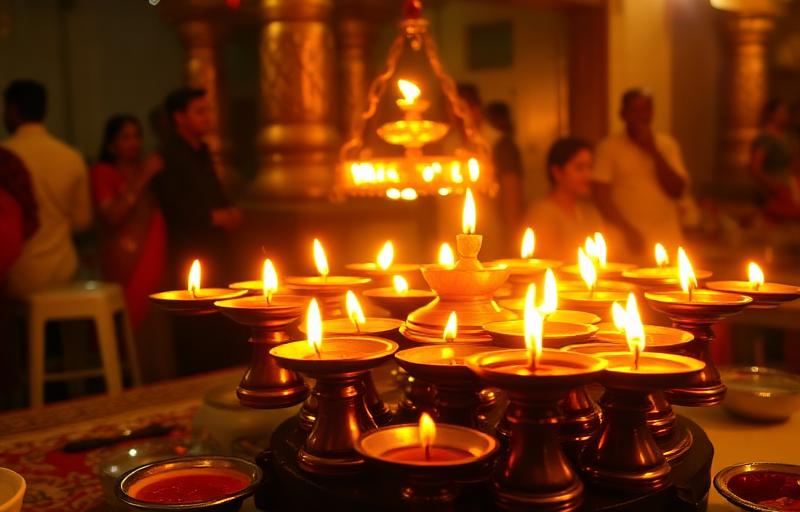
Bathe and wear clean clothes before sitting for the path. Set up a small altar with a picture or idol of the Goddess, a lit lamp, and if possible, a kalash of water. Sit facing east or north on a personal aasan.
Before opening the text, take a sankalp with water in the right hand, stating your name, place, and the purpose of the path in simple words, even mentally if you are not familiar with the formal Sanskrit sankalp format. This step is what distinguishes a Chandi Path from a casual reading.
The Navarna Mantra and the Sequence to Follow

Many who perform a full Chandi Path begin with a few rounds of the Navarna Mantra, Om Aim Hreem Kleem Chamundaye Vichche, before opening the text, and repeat it again at the end. This is followed by the anga stotras and then the thirteen chapters, in the same order described in the standard path vidhi.
If the path is spread across nine days, each day should open and close with the same short mantra repetition, giving the practice a consistent frame from the first day to the last.
Rules to Observe During the Path
- Keep the sankalp simple and honest, this is a prayer, not a transaction with fixed guaranteed outcomes
- Maintain the same seat, time and lamp through all the days of the path once begun
- If a pandit is performing the path on your behalf, be present or at least aware of the timing so your own intention stays connected to it
- Avoid mixing this path with unrelated errands in the same sitting, treat the time as set apart
- Do not treat the count of repetitions as more important than the sincerity behind them
Benefits and Closing Thought
A Chandi Path performed with sincerity is regarded as a way of drawing the Goddess's protective strength into one's life, and devotees often describe a sense of renewed courage and calm after completing one. It is commonly undertaken during difficult transitions or before important beginnings.
The closing thought worth carrying forward is that the sankalp taken at the start matters as much as the recitation itself. A path begun with a clear, honest intention and completed with steady attention holds its full meaning.
Common Questions From Devotees
Is Chandi Path different from Durga Saptashati?+
The text recited is the same. Chandi Path usually refers to the fuller ritual, with a sankalp and often the Navarna Mantra, undertaken for a specific purpose, while Durga Saptashati path can also refer to the general daily or Navratri recitation.
Can Chandi Path be done through a pandit instead of by oneself?+
Yes, many families sponsor a Chandi Path or Chandi Yagna performed by a pandit or a group of priests, especially for elaborate versions. Staying connected to the sankalp and timing keeps the practice meaningful even then.
Do I need to repeat the Navarna Mantra a fixed number of times?+
There is no single universal count that applies to everyone. Many recite it in rounds of a mala before and after the path, but the sincerity of the repetition matters more than reaching a specific number.
About the author
Acharya Vinaya Kapoor · M.A. Sanskrit, Mantra & Stotra Studies
Acharya Vinaya holds an M.A. in Sanskrit from Banaras Hindu University and writes the mantra and stotra commentary on Vandnaa. Her focus is on accurate pronunciation, traditional context, and helping modern readers connect with classical texts.
Meet the Vandnaa editorial team →