What Was the Samudra Manthan?
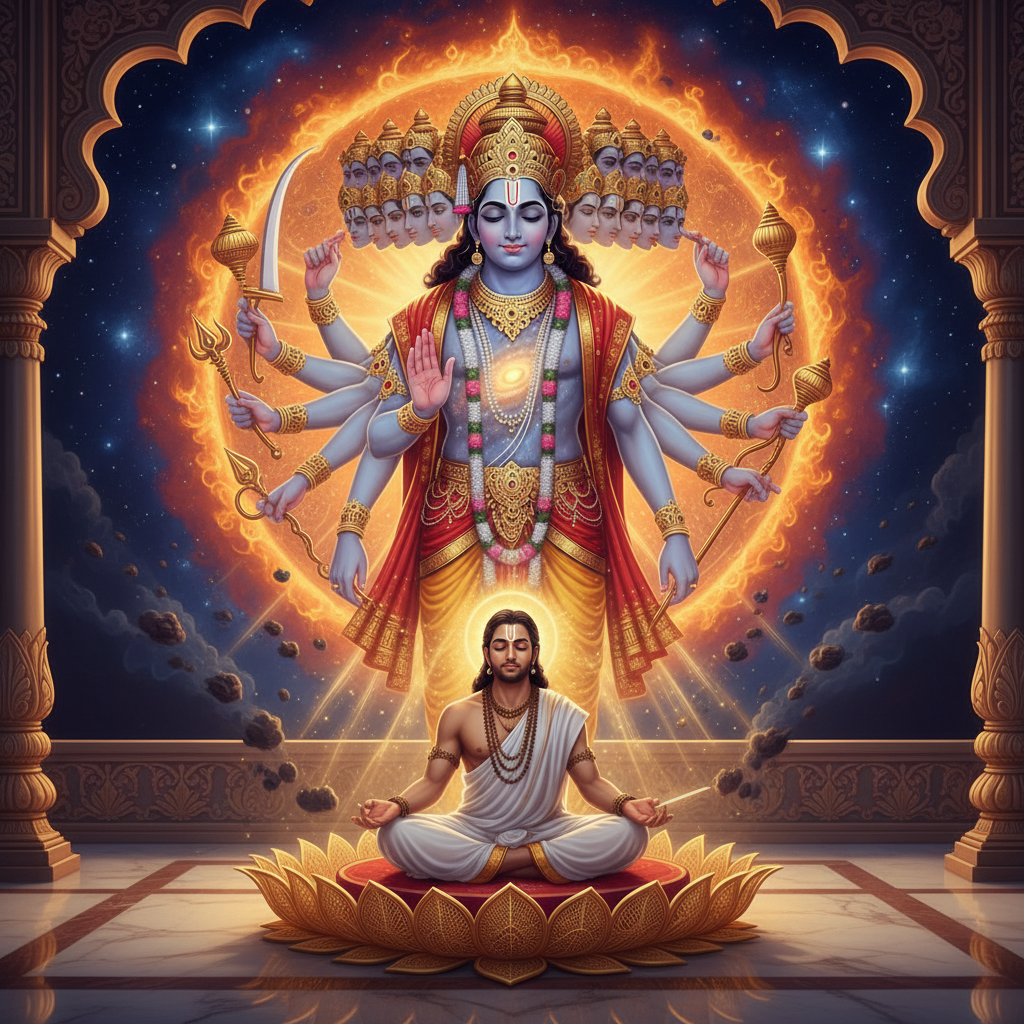
The Samudra Manthan ('churning of the ocean') is one of the most celebrated episodes of the Puranas. To regain their lost strength and the nectar of immortality (amrit), the devas and asuras joined together to churn the Kshira Sagara (ocean of milk). They used Mount Mandara as the churning rod and the great serpent Vasuki as the rope, while Lord Vishnu, as the Kurma (tortoise) avatar, supported the mountain on his back.
As the ocean was churned, fourteen ratnas (treasures) rose from its depths one by one - some terrible, some divine. These came to be known as the Chaudah Ratna.
The Fourteen Ratnas
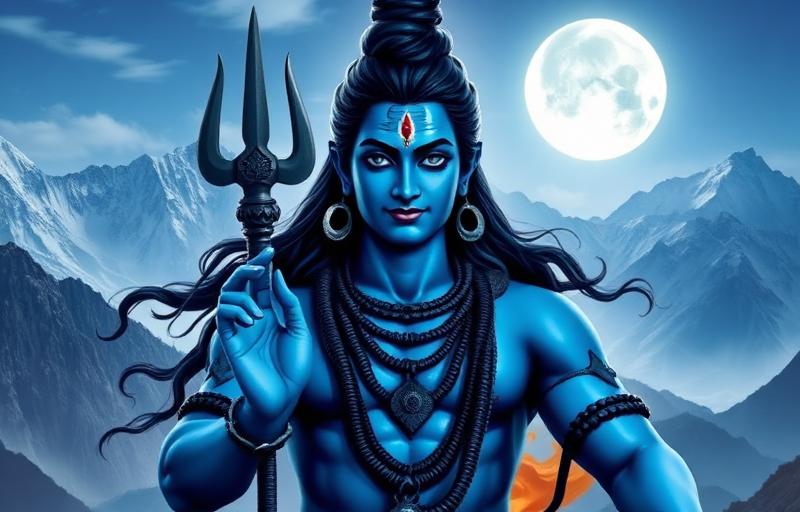
- Halahala (vish) - The deadly poison that emerged first; Lord Shiva drank it to save creation, becoming Neelkanth.
- Kamadhenu - The divine wish-fulfilling cow, giver of all nourishment, taken by the sages.
- Uchchaihshravas - The celestial seven-headed white horse, taken by the asura king Bali.
- Airavata - The majestic white elephant, who became the mount (vahana) of Indra.
- Kaustubha - The most precious jewel, adorned by Lord Vishnu upon his chest.
- Kalpavriksha - The wish-granting tree, placed in Indra's heaven (Devaloka).
- Rambha (Apsara) - The celestial dancer; the beautiful apsaras who graced the court of the devas.
- Lakshmi - Goddess Mahalakshmi, the divine mother of fortune, who chose Lord Vishnu as her consort.
- Varuni - The goddess of wine (sura), received by the asuras.
- Chandra - The moon, which adorned the forehead of Lord Shiva.
- Parijata - The fragrant celestial flowering tree of paradise.
- Panchajanya (Shankha) - The divine conch, taken by Lord Vishnu.
- Sharanga (the bow) - The mighty bow of Lord Vishnu (in many tellings, with other divine weapons).
- Dhanvantari with the Amrit - The divine physician, father of Ayurveda, rising last carrying the kalash of the nectar of immortality.
From Poison to Nectar
The churning teaches a profound truth: before the nectar comes the poison. The first thing to rise was the dreadful Halahala, so toxic it threatened to destroy all creation. Lord Shiva drank it to protect the worlds, holding it in his throat, which turned blue - earning him the name Neelkanth.
Only after this sacrifice did the treasures and finally the amrit appear, carried by Dhanvantari. A struggle for the nectar followed, in which Lord Vishnu took the enchanting form of Mohini to ensure the amrit reached the devas. The whole episode is read as a parable: great gain demands patience, sacrifice and the grace of the divine, and the bitter must be faced before the sweet is won.
The Deeper Meaning
The Samudra Manthan is far more than a story of treasures. The ocean is often read as the human mind, and the churning as sustained spiritual effort (sadhana). When we churn our inner depths, both poison (our flaws and fears) and nectar (wisdom and bliss) rise - and we must, like Shiva, learn to hold the poison without being destroyed by it.
It also teaches cooperation: even devas and asuras had to work together, with Vishnu as the steady support beneath, to achieve what neither could alone. And it reminds the devotee that the highest reward, amrit (immortality / liberation), is reached only at the very end, after every lesser treasure and every trial has been passed.
What People Ask Most
What are the 14 ratnas of the Samudra Manthan?+
The fourteen ratnas are Halahala (poison), Kamadhenu, Uchchaihshravas, Airavata, Kaustubha, Kalpavriksha, the Apsaras (Rambha), Lakshmi, Varuni, Chandra, Parijata, Panchajanya conch, the bow Sharanga, and Dhanvantari with the amrit. Some texts vary the list slightly.
What came first from the churning of the ocean?+
The deadly poison Halahala emerged first. Lord Shiva drank it to save all creation, holding it in his throat, which turned blue - which is why he is called Neelkanth.
Who emerged last in the Samudra Manthan?+
Dhanvantari, the divine physician and father of Ayurveda, rose last carrying the kalash of amrit (nectar of immortality). The struggle for this amrit followed, with Vishnu taking the Mohini form.
What is the spiritual meaning of the Samudra Manthan?+
The ocean represents the mind and the churning represents sadhana. From inner effort both poison (flaws) and nectar (wisdom) arise. It teaches patience, sacrifice and that the highest reward, amrit, comes only after every trial.
About the author
Anjali Mehta · Editor, M.A. Religious Studies
Anjali is the managing editor for Vandnaa and oversees the festival and vrat coverage. She holds an M.A. in Religious Studies and reviews every published article for accuracy, accessibility, and tradition-fidelity.
Meet the Vandnaa editorial team →