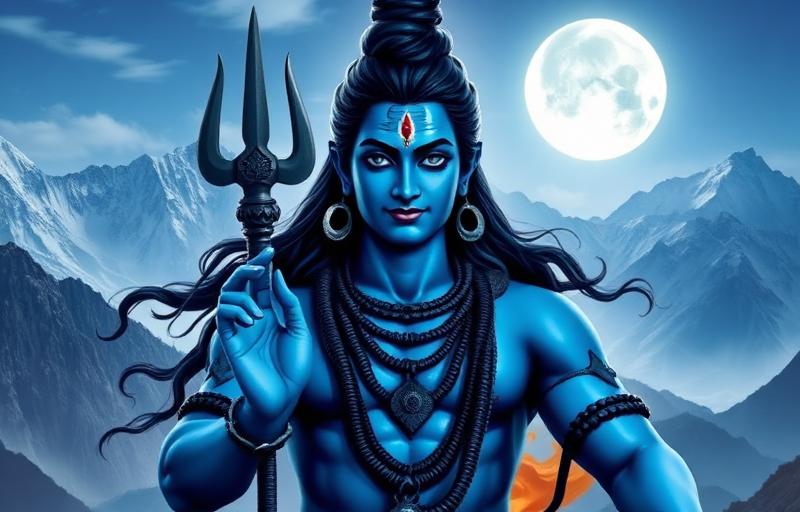
Who Is Neelkanth?
Neelkanth means 'the one with the blue throat', and it is one of the most loved names of Lord Shiva. Neel means blue and kanth means throat.
The name recalls a supreme act of compassion - the moment Lord Shiva swallowed a deadly poison to protect all of creation, holding it in his throat so that it harmed neither him nor anyone else. From that act, his throat turned blue, and he became known forever as Neelkanth, the saviour who took the world's poison upon himself. The story comes from the great churning of the ocean, the Samudra Manthan.
The Churning of the Ocean
Long ago, the devas (gods) and asuras (demons) joined together to churn the cosmic ocean of milk, the Kshira Sagara, to bring forth amrita, the nectar of immortality. They used Mount Mandara as the churning rod and the serpent Vasuki as the rope, with Lord Vishnu supporting the mountain as the tortoise Kurma.
As they churned with great effort, many wondrous things rose from the ocean - Goddess Lakshmi, the divine cow Kamadhenu, the wish-granting tree, the moon and other treasures. But before the nectar appeared, something terrible emerged first: a tremendous poison called halahala (kalakuta), so deadly that its fumes alone could destroy all the worlds.
Shiva Drinks the Halahala Poison
As the halahala spread its deadly fumes, terror gripped the gods and demons alike. The whole of creation stood in danger. In their helplessness, all turned to Lord Shiva, the great compassionate one, and prayed for refuge.
Moved by mercy, Shiva agreed to save the worlds. He gathered the terrible poison and drank it. At that moment, Goddess Parvati, fearing for him, pressed his throat to stop the poison from going further into his body. The halahala stayed held in his throat, and there it turned his neck a deep blue. Shiva neither swallowed it fully nor let it spread - he simply held the world's poison in himself, out of love.
For this supreme sacrifice, he became known as Neelkanth, and the worlds were saved so that the churning could continue and the nectar finally appear.
Significance & Connection to Sawan

The Neelkanth katha carries a beautiful teaching: true greatness lies in taking suffering upon oneself for the good of others. Shiva held the poison so creation could live, and his blue throat became an eternal mark of selfless love.
This story is especially remembered in the holy month of Sawan (Shravan), beloved of Shiva. It is said that the events around the churning fall in this season, and so Sawan is filled with the worship of Shiva - jalabhishek (offering of water and milk) on the Shivling, Mondays (Sawan Somvar) fasts, the Kanwar yatra, and chanting of Om Namah Shivaya. Offering cool water to cool the throat that once held the world's poison is at the heart of Sawan devotion.
- Recite the names of Shiva, including Neelkanth, with devotion.
- Offer jal, milk and bel patra on the Shivling, especially on Sawan Mondays.
- Reflect on the lesson of selfless service that the katha teaches.
What People Ask Most
Why is Shiva called Neelkanth?+
Shiva is called Neelkanth, the blue-throated one, because he drank the deadly halahala poison during Samudra Manthan to save creation. Parvati pressed his throat so the poison stayed there, turning his neck blue.
What was the halahala poison?+
Halahala (also called kalakuta) was a tremendous poison that emerged from the ocean during the churning, before the nectar appeared. Its fumes alone were so deadly they could destroy all the worlds, until Shiva drank it.
What was Samudra Manthan churned for?+
The devas and asuras churned the ocean of milk to obtain amrita, the nectar of immortality. They used Mount Mandara as the rod and the serpent Vasuki as the rope, with Vishnu supporting the mountain as the tortoise Kurma.
Why is the Neelkanth katha linked to Sawan?+
The events of the churning are said to fall around the month of Sawan, dear to Shiva. So Sawan is filled with Shiva worship - jalabhishek on the Shivling, Sawan Somvar fasts and the Kanwar yatra - offering cool water to the throat that held the world's poison.
About the author
Anjali Mehta · Editor, M.A. Religious Studies
Anjali is the managing editor for Vandnaa and oversees the festival and vrat coverage. She holds an M.A. in Religious Studies and reviews every published article for accuracy, accessibility, and tradition-fidelity.
Meet the Vandnaa editorial team →