Many Ways to Worship the Sun
Surya, the visible god of light, life and health, is worshipped across Hindu tradition in several forms. Some offer a quiet daily Arghya at sunrise, others observe Ratha Saptami once a year, many practise Surya Namaskar as a yogic salutation, and millions keep the great four-day Chhath Puja. Though all honour the same Sun, they differ deeply in scale, intensity and meaning. Understanding these differences helps a devotee choose the practice that fits their faith and capacity.
What Makes Chhath Puja Unique
Chhath Puja falls on Kartik Shukla Shashti (the sixth tithi of the bright fortnight of Kartik, around October to November), and is a strict four-day festival. Its heart is two Arghya offerings - Sandhya Arghya to the setting Sun and Usha Arghya to the rising Sun - given standing in water. Uniquely, it worships not only Surya but also Chhathi Maiya, regarded as a guardian goddess of children and the household. No other Surya worship combines this deity, the dual arghya and the extraordinary austerity of Chhath. Confirm exact dates with a regional Panchang each year.
Chhath vs Daily Surya Arghya
Daily Surya Arghya is a simple, gentle practice - after a morning bath, one offers water from a copper vessel to the rising Sun while chanting Om Suryaya Namah or the Gayatri Mantra. It takes a few minutes and requires no fasting. Chhath, by contrast, is observed only once or twice a year with intense preparation, a strict nirjala (waterless) fast and arghya at both dusk and dawn. Daily Arghya is everyday gratitude; Chhath is a rare, total surrender of body and mind to the Sun.
Chhath vs Ratha Saptami

Ratha Saptami falls on the seventh tithi of Magha Shukla paksha (around January to February) and marks the Sun turning his chariot toward the northern hemisphere. It is widely observed in South India, where devotees bathe at sunrise with arka (calotropis) leaves on the head, offer Arghya and prepare a pongal offering. It is largely a single-day observance focused purely on Surya. Chhath is a four-day festival of the north and east, far stricter, with nirjala fasting and the worship of Chhathi Maiya alongside the Sun.
Chhath vs Surya Namaskar
Surya Namaskar is a sequence of twelve yogic postures performed at sunrise, each linked to a name and beej mantra of the Sun. It is primarily a practice of health, discipline and devotion that anyone can do daily, blending physical exercise with reverence. It is not a festival, has no fixed tithi and involves no fasting or arghya. Chhath, in contrast, is a calendar festival of ritual offering and austerity, not a physical practice. Many devotees combine both - daily Surya Namaskar through the year and Chhath once a year.
How the Fasting Differs
The austerity of Chhath sets it far apart. The main vratis observe a 36-hour nirjala fast, taking neither food nor water, and stand in cold river or pond water for the arghya. Daily Surya Arghya needs no fasting at all, Surya Namaskar requires only a light or empty stomach, and Ratha Saptami usually involves a simple single-day fast broken after the morning arghya. This explains why Chhath is revered as one of the most demanding and spiritually intense vrats in Hindu tradition.
Which Practice Is Right for You
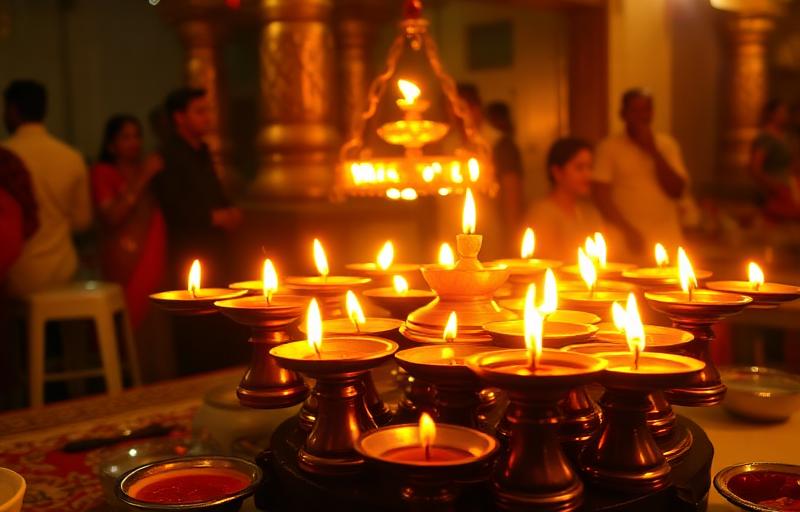
All forms of Surya worship are valid and complete in themselves - the right one depends on your faith, health and tradition. Daily Arghya suits anyone wanting a gentle daily connection, Surya Namaskar suits those who blend wellness with devotion, and Ratha Saptami is a simple yearly observance. Chhath is for those drawn to its great discipline and the worship of Chhathi Maiya, usually within a family or community that keeps the tradition. Begin with what you can sustain with sincerity.
Common Questions From Devotees
How is Chhath Puja different from daily Surya Arghya?+
Daily Arghya is a short, fast-free practice of offering water to the rising Sun. Chhath is a strict four-day festival with a 36-hour nirjala fast, arghya at both dusk and dawn, and the worship of Chhathi Maiya alongside Surya.
On which tithi is Chhath Puja celebrated?+
The main day of Chhath is Kartik Shukla Shashti, the sixth tithi of the bright fortnight of Kartik, usually falling between October and November. Always confirm the exact dates with a regional Panchang.
Who is Chhathi Maiya?+
Chhathi Maiya is a guardian goddess worshipped during Chhath alongside Surya, regarded as the protector of children and the wellbeing of the household. Her worship is unique to Chhath and sets it apart from other Surya rituals.
Is Ratha Saptami the same as Chhath?+
No. Ratha Saptami is a largely single-day South Indian observance on Magha Shukla Saptami honouring only Surya. Chhath is a four-day, far stricter festival of north and east India with nirjala fasting and the worship of Chhathi Maiya.
Is Surya Namaskar a form of Chhath worship?+
No. Surya Namaskar is a daily sequence of twelve yogic postures with Sun mantras, focused on health and devotion. It has no fixed tithi, fasting or arghya, while Chhath is a calendar festival of ritual offering and strict austerity.
Which Surya worship is best for a beginner?+
A simple daily Surya Arghya or Surya Namaskar is the easiest way to begin, as neither needs fasting. Chhath demands great discipline and is usually kept within a family tradition. Start with what you can sustain sincerely.
About the author
Pandit Mahesh Trivedi · Festival Traditions & Panchang
Pandit Mahesh leads the festival-date and Panchang content on Vandnaa. He cross-references multiple regional panchangs (Drik, Vaishnava, Bengali, Marathi) for every festival date published on the site.
Meet the Vandnaa editorial team →Explore on Vandnaa
Related Articles

Chhath Puja 2026: Date, 4-Day Puja Vidhi, Surya Arghya Timings & Sacred Mantras
10 min read
Surya Dev Aarti & Chalisa - Lyrics, Meaning, Benefits & Sunday Worship
9 min read
Surya Gayatri Mantra - Meaning, 7 Powerful Benefits & Daily Chanting Vidhi
9 min read
What Is Sankalp in Puja - Meaning, Significance & How to Do It
8 min read
Vrat ke Niyam - General Fasting Rules, Dos & Donts
9 min read
Skanda Shashti 2026 - Significance, Tithi & Puja Vidhi
9 min read