Two Beloved but Different Ganesha Traditions
Maharashtra's devotion to Ganesha is expressed through many temples, but two names stand out above the rest for devotees across the state, the ancient Ashtavinayak circuit and the immensely popular Dagdusheth Halwai Ganpati in Pune. Though both honour the same beloved deity, they represent quite different traditions in origin, form and the way devotees experience them.
Understanding this difference helps devotees appreciate each on its own terms, rather than comparing them as though they were meant to be the same kind of pilgrimage.
The History Behind Each
The Ashtavinayak temples are of ancient origin, their idols regarded by devotees as swayambhu, self-manifested rather than consecrated by human hands, with legends reaching back into itihasa and purana tradition. Their exact age is not precisely recorded, but they have been sites of worship for a very long time, embedded deeply in the region's rural devotional landscape.
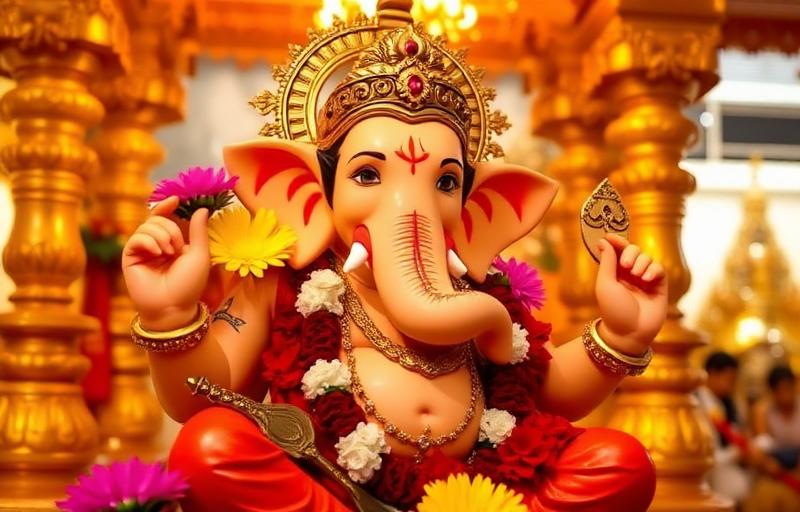
Dagdusheth Halwai Ganpati, by contrast, has a comparatively recent and well documented history. It was established in Pune by a sweet seller named Dagdusheth Halwai, who, after suffering personal loss, was guided by his spiritual teacher to install a Ganesha idol for public worship as an act of devotion and service. What began as a personal offering grew over time into one of Pune's most visited and beloved temples.
Form, Setting and Scale
The eight Ashtavinayak temples are spread across the rural and semi-rural districts of Pune, Raigad and Ahmednagar, each a relatively modest structure in a quiet, often riverside or hillside setting, visited as a multi-day pilgrimage circuit. Dagdusheth Halwai Ganpati, on the other hand, is a single urban temple in the heart of Pune city, known for its elaborately decorated idol and shrine, visited year-round by a steady stream of devotees and tourists alike.
During Ganesh Chaturthi, Dagdusheth Halwai Ganpati becomes the centre of Pune's famously grand Ganeshotsav celebrations, drawing enormous processions and crowds, a scale of festivity quite different from the more contemplative, spread-out rhythm of the Ashtavinayak yatra.
How Devotees Approach Each
Many devotees do not see these as competing choices but as complementary expressions of the same faith. The Ashtavinayak Yatra is often undertaken as a deliberate, planned pilgrimage, sometimes as a once in a lifetime vow, while a visit to Dagdusheth Halwai Ganpati fits naturally into everyday life in Pune, whether a quick darshan on the way to work or a special visit during festivals.
Both are approached with the same underlying devotion, only the rhythm and setting differ, one a journey across the region's ancient sacred geography, the other a steady presence within the city's daily life.
The Takeaway
Whether at a centuries-old cave shrine or a beautifully adorned city temple, devotees find that Ganesha's presence is not diminished by the age or scale of the structure around him. Both the Ashtavinayak temples and Dagdusheth Halwai Ganpati remind devotees that what matters most in worship is the sincerity brought to it, an offering of faith and love, not a comparison of grandeur.
Frequently Asked Questions
Is Dagdusheth Halwai Ganpati part of the Ashtavinayak?+
No, Dagdusheth Halwai Ganpati is a separate temple in Pune city and is not one of the eight Ashtavinayak shrines, which are all located in more rural parts of Maharashtra.
Who established Dagdusheth Halwai Ganpati?+
The temple traces its origins to Dagdusheth Halwai, a Pune sweet seller who, guided by his spiritual teacher, installed a Ganesha idol for public worship as an act of devotion after personal loss.
How are the Ashtavinayak temples different from Dagdusheth Halwai Ganpati?+
The Ashtavinayak temples are ancient, self-manifested shrines spread across rural Maharashtra as a pilgrimage circuit, while Dagdusheth Halwai Ganpati is a single, comparatively recent urban temple in Pune known for its grand Ganeshotsav celebrations.
About the author
Pandit Ravindra Sharma · Vedic Rituals & Bhakti, 22+ years
Pandit Ravindra is the Vandnaa editorial team's resident specialist on aarti, chalisa, and daily devotion. He has performed home and temple pujas across Varanasi and Delhi for over two decades and contributes the bhakti-focused articles on this site.
Meet the Vandnaa editorial team →