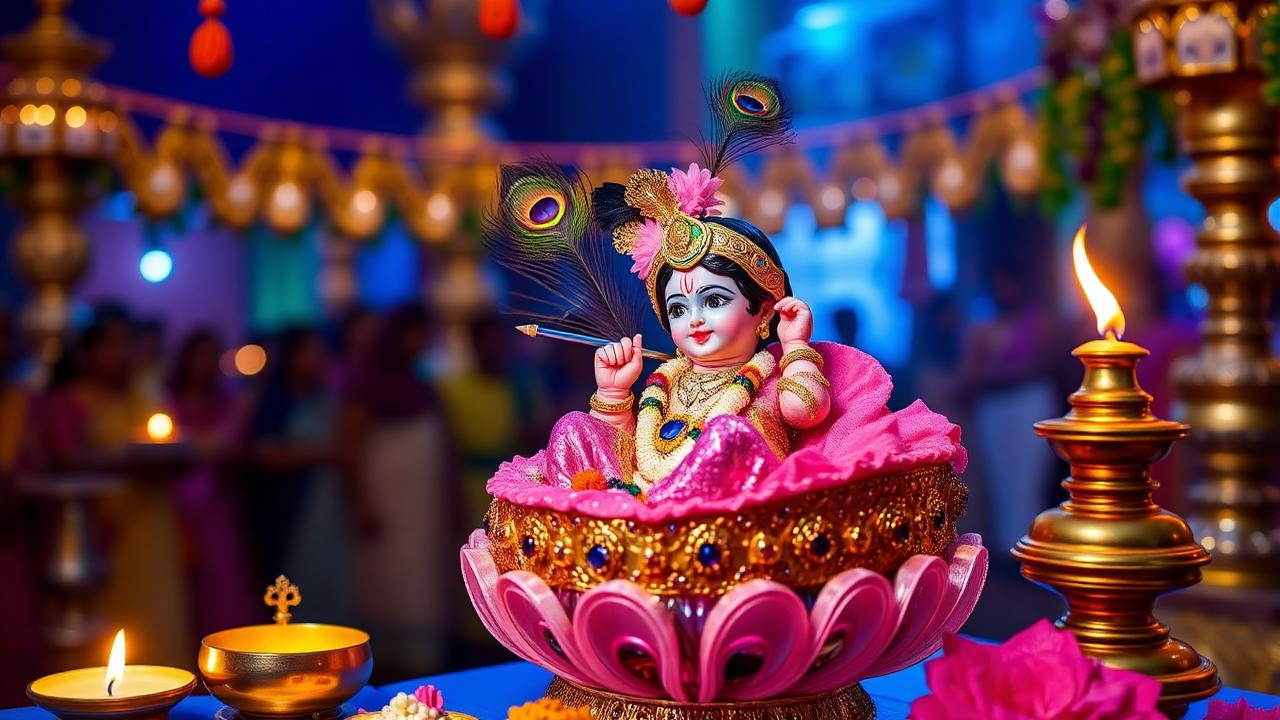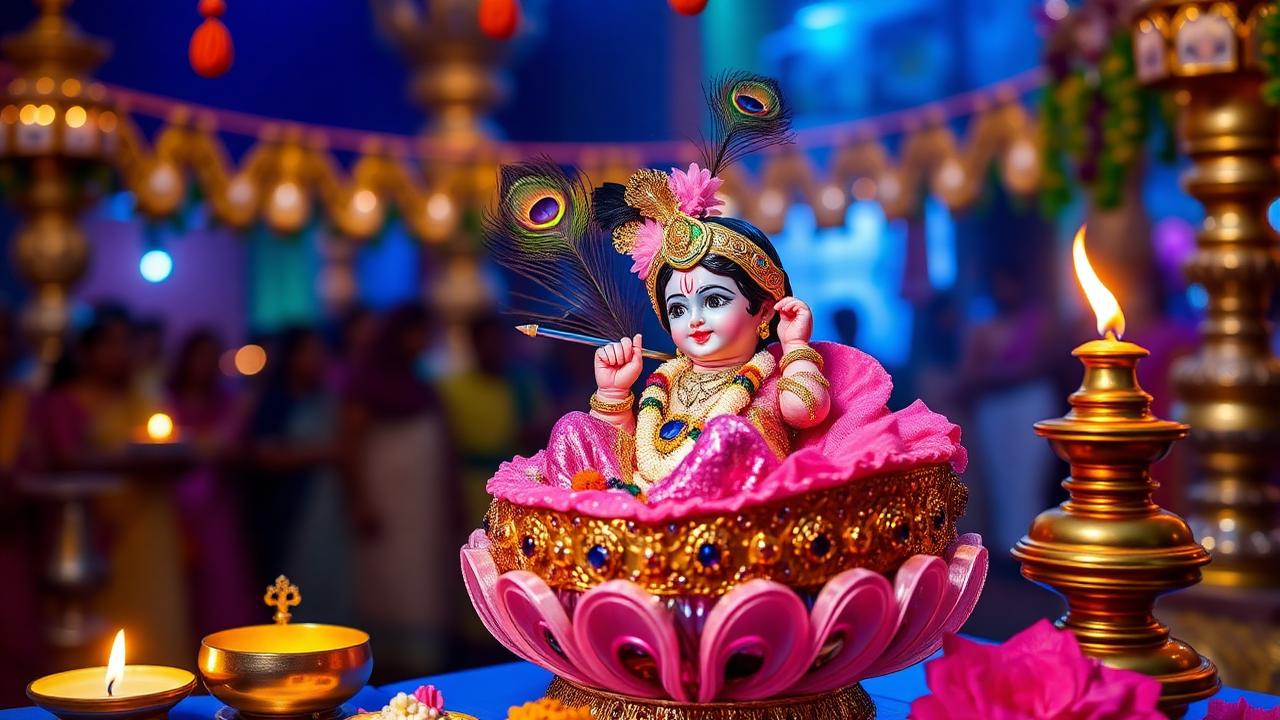
The Makhan Chor of Gokul
In Gokul, the gopis churned butter through the night, singing of Krishna. Every morning little Krishna and his friends - Sudama, Madhumangal, Subala - raided their homes for that butter. Tired of the daily thefts, the gopis began hanging their butter and curd pots high from the ceiling, far beyond a small boy's reach.
Krishna's answer became history: the boys formed a human pyramid, Krishna climbed to the top, and the pot came down. When the gopis complained to Yashoda, Krishna denied everything with wide innocent eyes - 'Ma, I didn't eat it. The butter walked into my mouth by itself.'
Why did he steal at all? The gopis churned that butter while remembering him - every turn of the churning rod carried their love. Krishna did not want butter; he wanted the love inside it. That is why the tradition says: God is hungry only for devotion.
What the Handi, Pyramid and Broken Pot Symbolise
- The hung pot (handi): The sweetest things in life - and the Divine Himself - are placed just beyond easy reach. Effort is part of the design.
- The human pyramid: No one reaches the pot alone. Each layer stands on someone's shoulders. Community is the ladder to God.
- The Govinda at the top: The one who climbs highest also carries everyone's weight of trust. Leadership is service at the top of a pyramid built by others.
- Breaking the pot: When Krishna breaks the pot, the curd and butter shower on everyone below. The reward of spiritual effort is never private - it rains down on the whole community.
- The spilled dahi: What overflows is meant to be shared. Sweetness kept sealed in a pot feeds no one.
So when a Govinda pathak breaks a handi in Mumbai today, they are performing a tiny parable: reach together, break the barrier, share the sweetness.
Sharing the Story at Home This Janmashtami
1. Tell it at the midnight puja: After the birth aarti, narrate the makhan-chori story to children - it turns ritual into memory. 2. Offer makhan-mishri: White butter with sugar crystals is Krishna's favourite bhog. Offer it at midnight, then distribute as prasad. 3. Mini-handi for children: Tie a small pot of sweets at a safe, low height and let children gently reach it (no climbing, always supervised). 4. Chant while you celebrate: A simple Om Namo Bhagavate Vasudevaya or the Hare Krishna mahamantra keeps the day's centre where it belongs - on Krishna, not only on the pot.
Frequently Asked Questions
What is the real story of Dahi Handi?+
Young Krishna loved butter so much that he and his friends formed human pyramids to steal the pots the gopis had hung from their ceilings. Dahi Handi re-enacts this leela - and its deeper message that God is drawn to love, not wealth.
Why is Krishna called Makhan Chor?+
'Makhan Chor' means butter thief. It is an affectionate name for Krishna's childhood habit of stealing freshly churned butter from the gopis' homes - butter they had made while lovingly remembering him.
What does breaking the handi symbolise?+
The hung pot is the Divine placed beyond easy reach; the pyramid is community effort; the break is the moment grace showers on everyone. The reward - curd and butter - spills onto the whole group, teaching that spiritual sweetness is always shared.
About the author
Pandit Mahesh Trivedi · Festival Traditions & Panchang
Pandit Mahesh leads the festival-date and Panchang content on Vandnaa. He cross-references multiple regional panchangs (Drik, Vaishnava, Bengali, Marathi) for every festival date published on the site.
Meet the Vandnaa editorial team →