Who Dauji Is
Dauji Maharaj is Balarama, Krishna's elder brother, and at Baldeo in Mathura district he is not a supporting figure in someone else's story. He is the deity of the temple, and the town is named for him.
Dau is the Braj word for elder brother, and that is how the whole region addresses him.
What the tradition holds about him:
- He is the elder brother, born before Krishna, who grew up with him in Gokul and Vrindavan
- He is described as fair complexioned where Krishna is dark, and the murti at Baldeo is a striking black stone figure with Revati beside him
- His weapons are the hal, the plough, and the musal, the pestle, which is why he is called Halayudha
- He is associated with strength, agriculture and the protection of the household
- In Vaishnava reckoning he is counted among the manifestations of the divine, and in some traditions as an avatar in his own right
What makes Baldeo unusual is the relationship devotees have with him. In Braj, Krishna is approached with sweetness, play and longing. Dauji is approached the way a family approaches its eldest son: with respect, with complaints, and with the expectation that he will sort things out.
The Temple at Baldeo
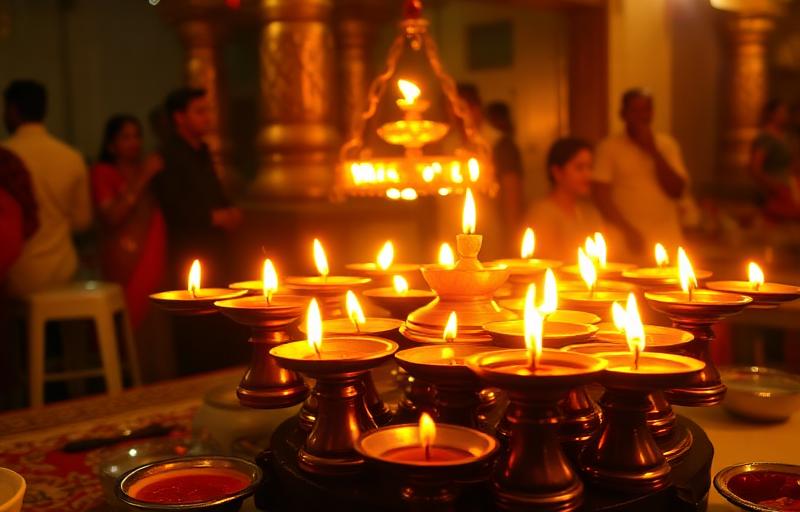
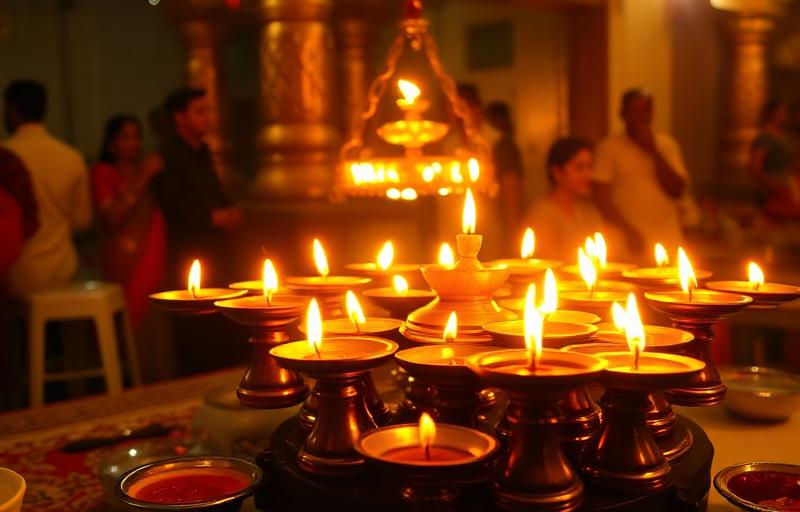
The Dauji temple at Baldeo stands about twenty kilometres from Mathura, and it is one of the busiest shrines in Braj outside Vrindavan and Mathura themselves.
What you find there:
- A large black stone murti of Dauji, with Revati at his side, in a temple whose present structure dates from the Maratha period of Braj's rebuilding
- The Kshir Sagar, the tank beside the temple, where pilgrims bathe before darshan
- A tradition that the murti was recovered from the Kshir Sagar and installed by devotees, which is the account the temple's own tradition gives
- Constant footfall from Braj villages, since Dauji is the kuldevta of a large number of families in the region
The temple's rhythm is worth understanding. This is not primarily a pilgrimage site for outsiders. It is the family shrine of a whole district, and much of what happens there is families arriving for the first tonsure of a child, for a marriage blessing, for a vow completed after a good harvest or a recovered illness.
Offerings are simple and local. Sweets, particularly peda and rabri, are the usual bhog, and the sweet shops around the temple are part of the experience.
The aarti timings draw large crowds, and on his festival days the town fills far beyond its size.
Huranga: The Holi Where Women Win
The single thing Baldeo is most known for happens the day after Holi, and it is called Huranga.
What it is:
- It is played in the temple courtyard, not in the streets
- The men of the Pandas, the temple's traditional families, and the women of those families take opposing sides
- The men throw colour on the women
- The women respond by tearing the men's upper garments into strips, twisting them into whips called korda, soaking them, and striking the men with them
- The men are expected to take it, and they do, with drums, singing and enormous crowds watching
The reversal is the point. For one day, in the courtyard of the elder brother of Braj, the women hold the field and the men have no recourse.
How it relates to Lathmar Holi at Barsana and Nandgaon, which is the more famous version of the same idea: in Lathmar Holi the men come from another village and the women drive them off with staves. In Huranga, the contest is internal, between the men and women of the temple's own families, and the weapon is made from the men's own clothing.
It is played in Falgun, the day after Holika Dahan and the main Holi, and it draws visitors from across the region and beyond.
Why Balarama Is Worshipped Separately
Most people meet Balarama as a character in the Krishna narrative. In Braj, and in several other regions, he is a deity with his own worship, and it is worth understanding why.
- He is held to be a manifestation of Shesha, the serpent on whom Vishnu rests, and this identification is old and widespread
- As Halayudha, the plough bearer, he is the deity of agriculture, which in an agrarian region is not a minor portfolio
- He is associated with strength and protection, and is invoked by wrestlers and by families seeking the safety of their sons
- In the Jagannath tradition of Puri, he is Balabhadra, one of the three deities on the chariots, again worshipped in his own right
- At Kendrapara in Odisha he is the presiding deity of a major temple
What this produces is a deity approached in a completely different register from Krishna. There is no viraha, no longing, no romantic theology. Dauji is straightforward. You come with a practical problem and you state it.
Devotees in Braj put it plainly. If you want to talk to Krishna about love, go to Vrindavan. If you want something done, go and tell the elder brother.
The two shrines are twenty kilometres apart, and a great many families visit both in the same trip for exactly these two different reasons.
Festivals at Baldeo
Baldeo's calendar runs on Braj time, with its own emphases.
- Huranga, the day after Holi in Falgun, which is the temple's most famous occasion
- Balarama Jayanti, observed on Shravan Purnima in many traditions, when his appearance is celebrated with special abhishek and bhog
- Deva Chhath and other Braj observances, kept with the temple's own customs
- Holi, which in Braj runs for weeks rather than a day, with Baldeo taking its place in the regional sequence
- Janmashtami, when the elder brother's temple keeps the festival alongside all of Braj
A note on planning. The Braj Holi sequence moves from village to village over roughly a fortnight, and Baldeo's Huranga falls at the end of it, the day after the main Holi.
A common circuit for visitors who want the full sequence:
- Barsana for Lathmar Holi
- Nandgaon the following day
- Vrindavan and Mathura through the main days
- Baldeo for Huranga, the day after Holi
All of these are within an hour or two of each other, and during Holi the roads are extremely crowded, so plan for slow travel and book accommodation far in advance.
Visiting Baldeo
Practical notes for a visit.
Getting there
- Baldeo is roughly 20 km from Mathura, reached by road in under an hour
- Mathura is on the main Delhi to Agra rail and road corridor, so the town is easy to reach from either city
- Shared vehicles and autos run from Mathura through the day
At the temple
- Bathe or wash at the Kshir Sagar before darshan if you are following the local custom
- Peda and rabri from the shops around the temple are the usual offering and prasad
- Aarti times draw the largest crowds, and the temple is busiest on Sundays and festival days
- Dress modestly, remove footwear at the designated place, and keep phones away during aarti
If you go for Huranga
- Expect very large crowds in a confined courtyard
- Wear clothes you are prepared to lose, since colour and water are unavoidable
- Understand that the play involves the temple's own families and that visitors are spectators, not participants
- Watch your belongings and keep valuables and cameras protected
One suggestion for an ordinary day. Go in the morning, take darshan without hurrying, sit for a while in the courtyard, and then walk the small town. Baldeo is not a place that performs for visitors, and that is precisely its appeal.
Common Questions From Devotees
Who is Dauji Maharaj?+
Dauji Maharaj is Balarama, Krishna's elder brother, worshipped as the presiding deity of the temple at Baldeo in Mathura district. Dau is the Braj word for elder brother, and he is the kuldevta of a large number of families across the region.
What is Huranga?+
Huranga is the Holi played in the Dauji temple courtyard at Baldeo the day after Holi. The men throw colour and the women tear their upper garments into strips, twist them into wet whips called korda and strike the men with them, who are expected to take it.
How is Huranga different from Lathmar Holi?+
In Lathmar Holi at Barsana and Nandgaon, men come from another village and the women drive them off with staves. In Huranga the contest is internal, between the men and women of the temple's own families, and the whips are made from the men's own torn clothing.
Why is Balarama worshipped separately from Krishna?+
He is held to be a manifestation of Shesha, is the plough bearing deity of agriculture as Halayudha, and is associated with strength and protection. He is worshipped in his own right at Baldeo, as Balabhadra in the Jagannath tradition of Puri, and at Kendrapara in Odisha.
What is offered at the Dauji temple?+
Sweets are the usual bhog, particularly peda and rabri from the shops around the temple. Many families come for a child's first tonsure, a marriage blessing or to complete a vow, and pilgrims bathe at the Kshir Sagar tank beside the temple before darshan.
How do you reach Baldeo?+
Baldeo is about 20 km from Mathura and takes under an hour by road. Mathura sits on the main Delhi to Agra rail and road corridor, and shared vehicles and autos run from Mathura through the day.
About the author
Pandit Mahesh Trivedi · Festival Traditions & Panchang
Pandit Mahesh leads the festival-date and Panchang content on Vandnaa. He cross-references multiple regional panchangs (Drik, Vaishnava, Bengali, Marathi) for every festival date published on the site.
Meet the Vandnaa editorial team →