
What Stands at Deogarh
Deogarh sits above the Betwa river in Lalitpur district of Uttar Pradesh, close to the Madhya Pradesh border, and the Dashavatara temple there is among the most important surviving structures in Indian religious architecture.
What makes it significant:
- It dates to the Gupta period, generally placed around the fifth to early sixth century
- It is one of the earliest surviving stone temples with a shikhara, the tower form that would define north Indian temple architecture for the next thousand years
- Its sculptural panels, particularly the Anantashayana, are among the finest works of the period
- It is a Vishnu temple, and the name Dashavatara reflects the avatar imagery associated with the site
What a visitor finds is a compact stone structure on a raised platform, with three of its four exterior faces carrying large sculpted panels, and stairways at the corners of the platform.
The superstructure is partly lost, which is usual for a building of this age, and the site sits within a wider complex of later temples and remains, including a substantial group of Jain temples on the hill.
Deogarh is not a busy pilgrimage centre. It is a site of extraordinary art historical importance that receives a modest and steady stream of visitors.
The Anantashayana Panel
The single most famous thing at Deogarh is the panel of Vishnu Anantashayana, Vishnu reclining on the serpent Shesha.
What the panel shows:
- Vishnu, asleep, lying along the coils of the serpent, whose many hoods form a canopy above his head
- Lakshmi at his feet
- Brahma seated on the lotus above, emerging from Vishnu's navel in the standard iconography of creation
- Attendant figures and celestials in the upper register
- Madhu and Kaitabha, the two asuras of that episode, in the lower register with the personified weapons of Vishnu confronting them
What the panel is depicting is a cosmological moment rather than a story episode. Vishnu in yoga nidra, the cosmic sleep between cycles, with creation about to proceed from him.
Why it matters:
- The composition is fully resolved, not experimental, which tells you the tradition of representing this scene was already mature by the Gupta period
- The serenity of the central figure, contrasted with the tension in the lower register, is the panel's whole achievement as sculpture
- The iconographic elements established here recur across India for the next fifteen hundred years, at Badami, at Mahabalipuram, in Odisha and in temple painting
Standing in front of it, what is worth noticing is how little has changed. Any Anantashayana image in a temple today, or on a calendar, is recognisably the same composition.
The Other Panels
Two further large panels survive on the temple's exterior, and both are as carefully composed as the Anantashayana.
Nara Narayana
- Depicts the sages Nara and Narayana in the Himalaya, in ascetic practice
- The pair are understood in the tradition as manifestations associated with Vishnu, and Arjuna and Krishna are identified with them in the Mahabharata
- The panel's subject is tapasya, and the composition is quiet where the Anantashayana is cosmic
Gajendra Moksha
- Depicts the rescue of Gajendra, the elephant seized by a crocodile in a lake, who calls on Vishnu and is saved
- Vishnu is shown arriving, and the elephant with the lotus offering
- The story is among the best loved in the Bhagavata, read as the account of the devotee who calls at the end of his own strength
Also at the site:
- Doorway carvings of considerable refinement, with river goddesses and attendant figures
- Fragments and panels from the wider complex, some in the site museum and some at other collections
- The later temples on the hill, and the substantial group of Jain temples of the medieval period
What the three panels together give you is a sense of how a Gupta temple presented its deity. Not one image, but a set of narrative and cosmological statements placed on the walls in a considered order.
Why Gupta Temples Matter
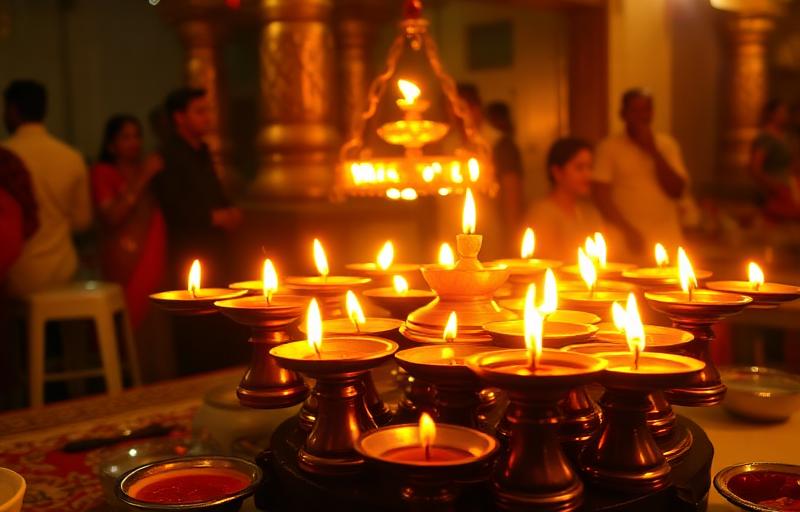
Deogarh belongs to a small group of surviving structures from the period in which the Hindu temple, as a building type, took the form it would keep.
What was being worked out in that period:
- The garbhagriha, the small dark sanctum housing the deity, as the temple's core
- The shikhara, the tower rising above the sanctum, which becomes the defining north Indian form
- The doorway as a site of concentrated sculpture, with river goddesses, guardians and foliate ornament
- The placement of narrative panels on exterior walls in a fixed relationship to the sanctum
- The platform with stairways, raising the temple above ground level
Other surviving structures from around the period include the temples at Sanchi, Tigawa, Bhitargaon with its brick tower, and Nachna, all of them small and all of them foundational.
What happens after this is a thousand years of elaboration. Khajuraho, Bhubaneswar, Modhera, Konark and the great Chola temples of the south are all developments of principles visible at Deogarh in compact form.
For a visitor, this is what makes the site worth the journey. You are standing in front of an early and complete statement of an idea that shaped religious building across the subcontinent, and it is small enough to take in at once.
Deogarh as a Living Site
It should be said clearly that Deogarh's Dashavatara temple is a protected monument rather than an active temple with daily worship at the scale of a pilgrimage shrine.
What that means in practice:
- The structure is under the care of the Archaeological Survey of India
- Access is during monument hours, with a ticket, rather than through temple timings
- Ritual worship is not conducted in the sanctum as it would be at a functioning temple
- Visitors come as pilgrims, as students of art, and as travellers
But the wider Deogarh site is very much alive:
- The hill temples, including the large group of Jain temples, are visited and maintained by the Jain community, and are a significant site in their own right
- Local shrines around the village continue in worship
- The Betwa below, and the surrounding country, carry their own local observances
How to hold this. Some sacred sites in India are working temples. Some are monuments where worship has ceased. Some, like Deogarh, are both, with a protected structure at the centre and living practice around it.
Approaching a monument with devotion is entirely appropriate, and a great many Indian visitors to Deogarh do exactly that. The panel of Vishnu asleep on the serpent does not stop being an image of the divine because it is also one of the most important sculptures in Indian art.
Visiting Deogarh
Practical notes.
Getting there
- Deogarh is in Lalitpur district, Uttar Pradesh, near the Madhya Pradesh border, above the Betwa
- Lalitpur is the nearest town and railhead, roughly 30 km away, on the Delhi to Bhopal line
- Jhansi is the nearest major junction, about 120 km, well connected from Delhi, Bhopal and Gwalior
- Road access is by taxi or local transport from Lalitpur, and the last stretch is rural
When to go
- October to March is the comfortable season, with clear light for the sculpture
- Avoid peak summer, since the site is exposed and the region gets very hot
- Monsoon makes the Betwa and the surrounding country beautiful but the roads harder
At the site
- Monument hours apply, generally sunrise to sunset, with an entry ticket
- Allow at least two hours for the Dashavatara temple and the immediate complex, more if you want the hill temples
- Carry water and sun protection, since there is little shade
- A guide, if available, adds a great deal for the panels
Combining the trip
- Jhansi and its fort
- Orchha, about two hours from Jhansi, with the Ram Raja temple and the cenotaphs on the Betwa
- Khajuraho, further east, for the later development of the same architectural tradition
- Chanderi, across in Madhya Pradesh
A closing suggestion. Go early, before the light gets hard, and spend most of your time on the Anantashayana panel alone. It rewards standing still in front of it far more than it rewards walking around.
What People Ask Most
How old is the Dashavatara temple at Deogarh?+
It dates to the Gupta period, generally placed around the fifth to early sixth century, making it one of the earliest surviving stone temples with a shikhara and among the most important structures in Indian religious architecture.
What is the Anantashayana panel?+
It shows Vishnu asleep on the coils of the serpent Shesha, with Lakshmi at his feet, Brahma on the lotus from his navel, celestials above and the asuras Madhu and Kaitabha below confronted by Vishnu's personified weapons. It depicts yoga nidra, the cosmic sleep between cycles.
What other panels survive at the temple?+
Nara Narayana, showing the two sages in ascetic practice in the Himalaya, and Gajendra Moksha, the rescue of the elephant seized by a crocodile who calls on Vishnu and is saved. The doorway carvings with river goddesses are also of high quality.
Is it an active temple?+
The Dashavatara temple is a protected monument under the Archaeological Survey of India, visited during monument hours with a ticket rather than temple timings, and ritual worship is not conducted in the sanctum. The wider site, including the Jain temples on the hill, remains in active use.
How do you reach Deogarh?+
It is in Lalitpur district of Uttar Pradesh near the Madhya Pradesh border. Lalitpur, about 30 km away on the Delhi to Bhopal line, is the nearest railhead, and Jhansi about 120 km away is the nearest major junction. The last stretch is by road through rural country.
What can be combined with a Deogarh visit?+
Jhansi and its fort, Orchha about two hours from Jhansi with the Ram Raja temple and the Betwa cenotaphs, Chanderi across in Madhya Pradesh, and Khajuraho further east for the later development of the same architectural tradition.
About the author
Pandit Ravindra Sharma · Vedic Rituals & Bhakti, 22+ years
Pandit Ravindra is the Vandnaa editorial team's resident specialist on aarti, chalisa, and daily devotion. He has performed home and temple pujas across Varanasi and Delhi for over two decades and contributes the bhakti-focused articles on this site.
Meet the Vandnaa editorial team →Explore on Vandnaa
Related Articles
Soron Sukar Kshetra: The Tirtha Where Vishnu Took the Form of a Boar
8 min read
Dashavatar - 10 Avatars of Lord Vishnu: Names, Order, Meaning, Significance
11 min read
Pashupatinath of Mandsaur: The Eight Faced Shivling on the Shivna River
8 min read
Maluti: The Jharkhand Village With Seventy Temples and One Goddess
8 min read