Who Dev Narayan ji Is
Dev Narayan ji is a folk deity of Rajasthan, revered particularly among the Gurjar community, and worshipped across the districts of Bhilwara, Ajmer, Tonk, Bundi and beyond.
What the tradition holds:
- He is understood as an avatar of Vishnu, born into the Bagaravat family, and his story is told as an incarnation narrative
- His father was Sawai Bhoj, one of the twenty four Bagaravat brothers of the epic
- The Bagaravats were destroyed in a conflict, and Dev Narayan was born afterward to avenge and restore
- He is depicted riding a blue horse named Lila Ghodi, with a spear
- He is associated with healing, particularly of snakebite and of illness in cattle, and with protection
The principal temples are at Asind in Bhilwara district and at Deomali in Ajmer district, along with a very large number of local shrines, many of them simple.
What is distinctive about his worship is not the temples. It is the way his story is transmitted, which is unlike almost anything else in Indian devotional practice.
The Phad
The phad is a long painted cloth scroll, and it is the temple of Dev Narayan ji.
What it is:
- A cloth, often several metres long, painted with the entire narrative of the deity's life in scenes
- Painted by the Joshi families of Bhilwara and Shahpura, a hereditary painting tradition with its own conventions
- Composed not in sequence but with the deity at the centre and episodes arranged around according to their importance
- Rolled up when not in use, and treated as a mobile shrine rather than as a picture
- Consecrated before use, and retired ritually when worn out, usually by immersion in a sacred water body
What this achieves is remarkable. A community without the resources to build stone temples, and living across a wide rural area, produced a temple that can be carried on a shoulder and set up in any village that requests it.
The painting conventions are specific. Figures face each other rather than the viewer, scale indicates importance rather than distance, and the whole surface is filled. It is a system for holding an enormous narrative on one continuous field, and reading it requires knowing where to look.
That is what the performer is for.
The Bhopa and the Performance
The bhopa is the priest performer of the phad, and the performance is the actual worship.
How it works:
- A village invites the bhopa, usually in fulfilment of a vow or in response to illness or misfortune
- The phad is unrolled at night and set up on poles
- The bhopa performs, playing the jantar, a stringed instrument, and singing the narrative
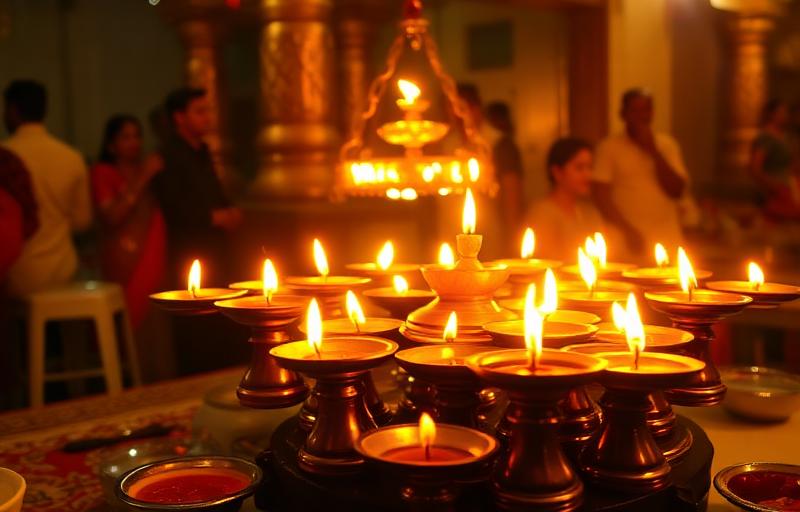
- A bhopi, often his wife, holds a lamp to illuminate the part of the phad being sung, so the audience sees only the episode in progress
- The performance runs through the whole night, and a full recitation of the Dev Narayan epic takes many nights
- The bhopa may enter a state of possession, in which he is understood to speak for the deity, and consultations follow
What this amounts to is a complete religious institution with no building. The priest is itinerant, the temple is portable, the scripture is oral, and the illumination is a single lamp moved by hand.
The Dev Narayan epic itself is enormous. In its full form it is one of the longest oral epics recorded anywhere, running to many thousands of lines, held in memory by performers and transmitted within families.
That body of material was documented in detail by scholars in the twentieth century, and the recordings and translations that resulted are among the more significant pieces of work done on Indian oral tradition.
Worship and Healing
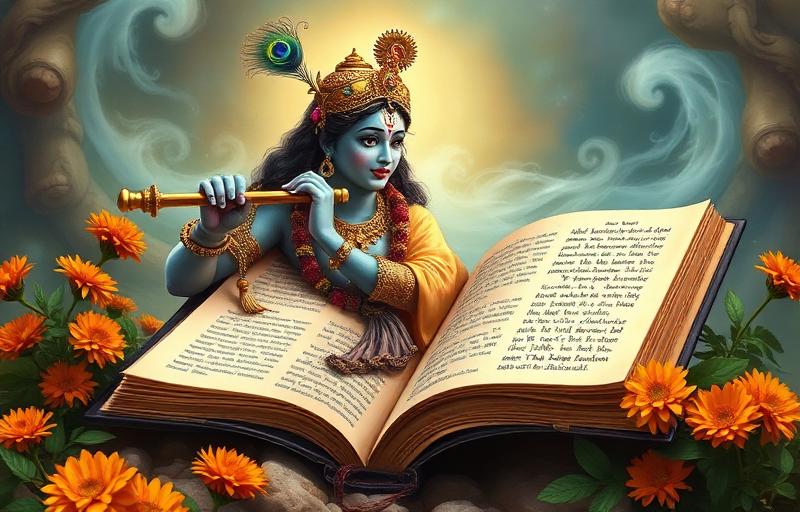
Alongside the phad performance, Dev Narayan ji is worshipped at temples and household shrines.
- Asind in Bhilwara district, the principal temple, where the great fair is held
- Deomali in Ajmer district, a village associated closely with the deity, where custom holds that houses are not roofed with tiles and certain restrictions are observed out of reverence
- Village shrines across the Gurjar settlements, often simple platforms with a stone or an image of the horse
- Household worship, with images and the deity's symbols
What he is approached for:
- Snakebite, which is among his strongest associations
- Illness in cattle, which matters enormously in a pastoral economy
- Protection of the household and herd
- Fulfilment of vows and general wellbeing
The healing association needs one clear statement. Snakebite is a medical emergency requiring immediate hospital treatment and antivenom, and delay costs lives. The same is true of serious illness in people and, for livestock, of veterinary care. Devotional practice runs alongside those and never in place of them, and the tradition's own concern with protection is best served by treating both seriously.
The Asind fair, held around Bhadrapada, is the deity's largest gathering, drawing devotees from across the region.
Phad Painting Today
The phad tradition has changed considerably in recent decades, and the changes are worth understanding.
What has happened:
- The Joshi families of Bhilwara and Shahpura continue to paint, and several members have received national recognition for the craft
- Phads are now painted for collectors, museums and buyers as well as for bhopas, which has kept the craft economically viable
- Training has been opened beyond the hereditary families in some workshops
- Subject matter has extended beyond the traditional epics to other narratives
- The number of practising bhopas performing full night recitations has declined, as rural entertainment and religious patterns have changed
What is lost and what is not. The painting survives, and is arguably in better economic health than it has been for a long time. The performance tradition, which is the harder thing, is under more pressure, since it depends on communities inviting all night recitations and on performers holding thousands of lines in memory.
What is worth appreciating is how much these are two different things. A phad in a gallery is a painting. A phad on poles at night, with a lamp moving across it and a bhopa singing, is a temple in use.
Both exist now, and only one of them is easy to keep.
Where to See This
Practical notes for anyone wanting to encounter this tradition.
The temples
- Asind in Bhilwara district, the principal temple, roughly 60 km from Bhilwara town
- Deomali in Ajmer district, the village associated with the deity, where local custom is observed strictly
- Village shrines across Bhilwara, Ajmer, Tonk and Bundi districts
When to go
- The Asind fair around Bhadrapada, the largest gathering of the year
- Winter, October to March, for comfortable travel in Rajasthan
Seeing phad painting
- Bhilwara and Shahpura are the centres of the painting tradition, and Joshi family workshops can be visited
- Jaipur and Udaipur have galleries and shops selling phads, though quality and price vary widely
- Museums in Delhi, Jaipur and elsewhere hold examples
Seeing a performance
- Full night bhopa performances are village occasions rather than scheduled events, and cannot simply be booked
- Folk festivals in Rajasthan sometimes feature phad performances, though usually abridged
- If you are invited to a village performance, go, sit through as much of the night as you can manage, and do not photograph without asking
Etiquette
- A phad in use is a shrine, not a display
- At Deomali and other associated villages, local restrictions are taken seriously and should be respected without argument
A closing thought. India has an enormous number of temples. It has very few temples that can be rolled up, carried to a village that needs one, and lit by hand for a night.
Frequently Asked Questions
Who is Dev Narayan ji?+
A folk deity of Rajasthan revered particularly among the Gurjar community, understood as an avatar of Vishnu born into the Bagaravat family, son of Sawai Bhoj, depicted riding a blue horse named Lila Ghodi with a spear, and associated with healing and protection.
What is a phad?+
A long painted cloth scroll carrying the deity's entire life narrative in scenes, painted by the Joshi families of Bhilwara and Shahpura. It is treated as a mobile shrine rather than a picture, consecrated before use and ritually retired by immersion when worn out.
Who is a bhopa?+
The priest performer of the phad. He plays the jantar and sings the narrative through the night while a bhopi, often his wife, holds a lamp to illuminate the part being sung. He may enter a state of possession in which he is understood to speak for the deity.
Where are the main temples?+
Asind in Bhilwara district, roughly 60 km from Bhilwara town, is the principal temple and holds the great fair around Bhadrapada. Deomali in Ajmer district is a village closely associated with the deity where local restrictions are observed out of reverence.
What is Dev Narayan ji invoked for?+
Snakebite, illness in cattle, protection of the household and herd, and the fulfilment of vows. Snakebite and serious illness are medical emergencies requiring immediate hospital treatment and antivenom, and veterinary care for livestock; devotion runs alongside those and never in place of them.
Can visitors see a phad performance?+
Full night performances are village occasions rather than scheduled events and cannot simply be booked. Folk festivals in Rajasthan sometimes feature abridged performances. Bhilwara and Shahpura are the centres of the painting tradition and Joshi family workshops can be visited.
About the author
Anjali Mehta · Editor, M.A. Religious Studies
Anjali is the managing editor for Vandnaa and oversees the festival and vrat coverage. She holds an M.A. in Religious Studies and reviews every published article for accuracy, accessibility, and tradition-fidelity.
Meet the Vandnaa editorial team →