Pateshwari Devi and the Meaning of Patan
Devi Patan, at Tulsipur in Balrampur district of Uttar Pradesh, is one of the Shakti Peethas of the eastern plains, and the Devi worshipped there is called Pateshwari.
The Shakti Peeth tradition explains the name. After Sati gave up her body, Shiva carried her through the world in grief, and Vishnu's chakra divided the body so that the parts fell at different places, each becoming a peeth. At Devi Patan, tradition holds that the pat, understood variously as the shoulder or the garment, fell here, giving both the Devi and the place their name.
What makes the shrine distinctive is not only its peeth status but who runs it:
- The temple is under the Nath sampradaya, and its mahant belongs to that lineage rather than to a temple priest family
- The connection runs to Guru Gorakhnath, and through him to the Gorakhnath math tradition of eastern UP and Nepal
- Yogic and tantric practice and standard Devi worship both have a place here, which is unusual at a shrine of this size
The location matters too. Tulsipur sits close to the Nepal border, and the shrine has always drawn devotees from both sides, which shows in the crowds at its annual fair and in the traditions attached to it.
Why Nath Yogis Run a Shakti Peeth
The arrangement at Devi Patan surprises visitors who expect a Devi temple to be run by a Brahmin priesthood, and the explanation lies in the history of the Nath sampradaya in this region.
The Naths are an ascetic order associated with Matsyendranath and Gorakhnath, whose practice combines yoga, tantra and Shaiva devotion. From the medieval period their influence across eastern Uttar Pradesh, Bihar and Nepal was substantial, and several shrines in this belt came under their care.
At Devi Patan this produced a distinctive combination:
- The Devi is worshipped as a Shakti Peeth deity, with the offerings and festivals any Devi shrine would have
- The mahant of the temple is a Nath yogi, and the succession follows the order rather than a family line
- Nath ascetics have a defined presence during the temple's festivals, and the shrine keeps a relationship with Gorakhpur's Gorakhnath math
- A tradition connects the shrine to Ratannath, a Nath figure revered on both sides of the Indo Nepal border, especially in the Dang region of Nepal
For devotees this is not an oddity but a strength. Shakta and Nath traditions have overlapped for centuries across the eastern Gangetic plain, and Devi Patan is one of the clearest surviving examples of an institution where both are maintained together.
The Chaitra Mela and the Crowd From Nepal
The temple's largest gathering is the Chaitra Navratri mela, which runs for weeks around the spring Navratri and is one of the biggest fairs in eastern Uttar Pradesh.
- Devotees arrive from Balrampur, Gonda, Bahraich, Shravasti and the surrounding districts, and in large numbers from across the Nepal border
- The fair spreads well beyond the temple, with stalls, cattle trading, food and night long singing
- Families complete vows made through the year, offering chunri, coconut, sweets and cash
- Mundan ceremonies are performed here in large numbers
- Ashtami and Navami draw the heaviest queues
The Nepal connection is worth understanding. The border here is open for citizens of both countries, families are related across it, and pilgrimage in this belt has never respected the line on the map. Devotees from Dang, Kapilvastu and the Nepali Terai treat Devi Patan as their own shrine, and Nath tradition links the site to Nepal's own Nath centres.
Outside the mela, Tuesday and Sunday are the busy days of the week, and Ashwin Navratri brings a second, smaller peak. The temple is calm on ordinary weekdays, and that is the best time for a first visit.
Inside the Complex

The Devi Patan complex is larger than most visitors expect and contains several shrines around the main sanctum.
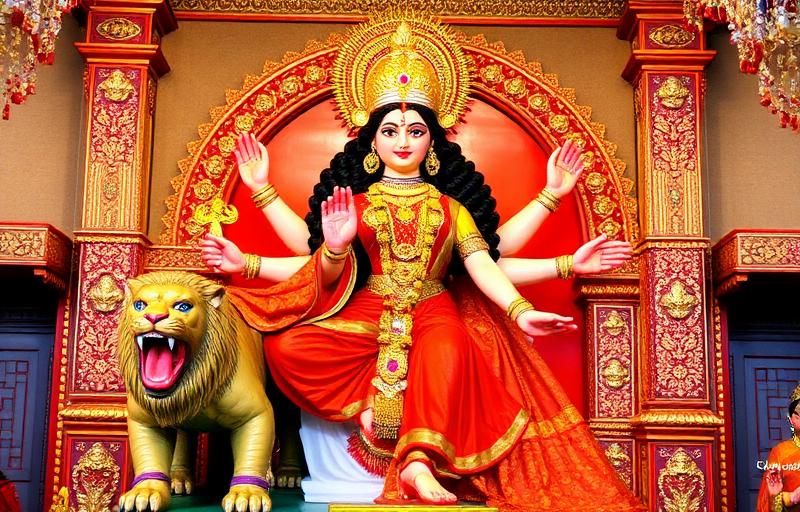
- The main shrine of Pateshwari Devi, where the Devi is worshipped at the seat rather than through an elaborate sculpted image, kept covered and adorned
- A Surya Kund and other water bodies within or near the complex, where devotees bathe before darshan
- Shrines to Bhairav, Hanuman and Shiva within the enclosure, following the usual pattern where a Shakti Peeth keeps its guardian deities close
- The math area where the Nath mahants and ascetics reside, which has its own routines and is not a public space
- Space for the mela grounds outside, used through the year for gatherings
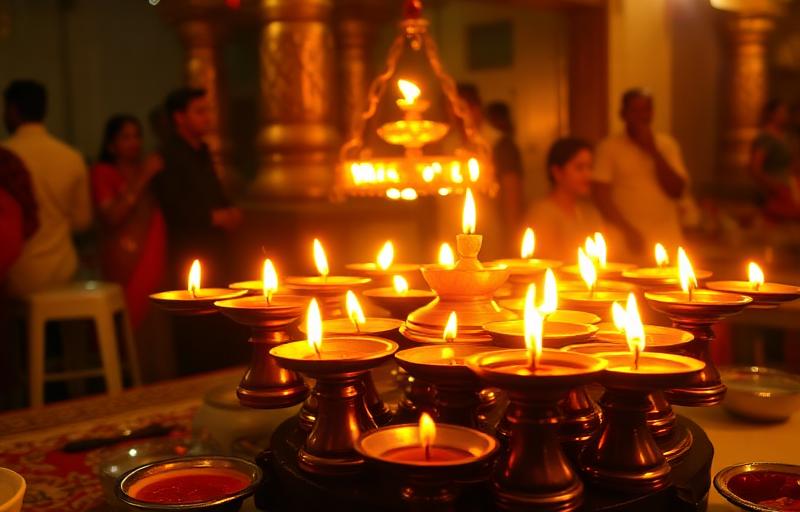
Worship is standard Devi practice. Chunri, sindoor, bangles, flowers, coconut, sweets and lamps are offered, and families keeping Navratri vrat complete their fast with darshan here.
A note that visitors sometimes need: the Nath presence means there are areas of the complex that are part of the order's own life rather than open temple space. Ask before entering unfamiliar sections, do not photograph ascetics without permission, and treat the math side with the same courtesy you would extend at any monastic institution.
The Devi Belt of Eastern Uttar Pradesh
Devi Patan sits in a part of Uttar Pradesh whose Devi shrines get far less attention than the state's Ram and Krishna centres.
- Devi Patan, Tulsipur - the Shakti Peeth described here, run by Nath yogis
- Vindhyavasini, Mirzapur - the state's most visited Devi shrine, with the Trikon Parikrama
- Lalita Devi, Naimisharanya - within the ancient forest tirtha of Naimisha
- Alopi Devi and Kalyani Devi, Prayagraj - the Devi shrines of the Sangam city
- Sheetla Chaukiya, Jaunpur and Patan Devi shrines across the eastern districts
- Shakumbhari Devi, Saharanpur - in the western part of the state
What is interesting about this belt is how the Devi is approached in it. In the Braj and Awadh regions, devotion is shaped by Krishna and Ram, and the mood is one of relationship and service. In the Devi shrines of the east, the mood is closer to petition. Families come with a request, make a vow, and return to complete it.
For devotees interested in this side of Uttar Pradesh, Devi Patan with Shravasti nearby makes a good two day route, and pairs naturally with a longer trip toward Gorakhpur and the Nath math there.
Reaching Tulsipur
Devi Patan is straightforward to reach but off the usual tourist routes, so plan travel rather than assuming facilities.
- Location - Tulsipur, Balrampur district, in the Devipatan division of eastern Uttar Pradesh, close to the Nepal border
- Nearest hubs - Balrampur and Gonda by rail, with Lucknow and Gorakhpur the nearest major cities and airports
- Best time - October to March for weather. Chaitra Navratri for the mela, though accommodation is scarce then and the town is very crowded.
- Stay - basic dharamshalas and small hotels in Balrampur and Tulsipur. For a comfortable base, many visitors stay at Shravasti or Gonda.
- Nearby - Shravasti, one of the most significant ancient sites in the region, is a short drive away, and Gorakhpur with the Gorakhnath math is a longer trip
- Etiquette - modest clothing, footwear removed at the shrine, and permission before photographing inside the complex
One thing worth doing if you have the time. Ask at the temple about the Nath tradition of the math, and about the Nepal side of the shrine's following. Both are living parts of the institution rather than historical footnotes, and the people at the shrine explain them far better than any written account can.
What People Ask Most
Where is Devi Patan Shakti Peeth?+
At Tulsipur in Balrampur district of eastern Uttar Pradesh, close to the Nepal border. The Devi worshipped there is called Pateshwari.
Why is it called Devi Patan?+
In the Shakti Peeth tradition, the pat of Sati, understood variously as the shoulder or the garment, is said to have fallen here, which gives both the Devi and the place their name.
Why is a Shakti Peeth managed by Nath yogis?+
The Nath sampradaya, associated with Matsyendranath and Gorakhnath, had substantial influence across eastern Uttar Pradesh, Bihar and Nepal, and several shrines in this belt came under its care. At Devi Patan the mahant belongs to the Nath order rather than to a priestly family.
When is the Devi Patan mela held?+
The main fair runs around Chaitra Navratri in spring and continues for weeks, drawing devotees from eastern Uttar Pradesh and from across the Nepal border. Ashwin Navratri brings a second, smaller peak.
Why do devotees from Nepal come to this shrine?+
The border here is open to citizens of both countries and families are related across it, so pilgrimage in this belt has always crossed the line. The Nath tradition of the shrine also connects it to Nath centres in Nepal, particularly the Dang region.
What can be visited near Devi Patan?+
Shravasti, one of the most significant ancient sites of the region, is a short drive away, and Gorakhpur with the Gorakhnath math is a longer trip. Balrampur and Gonda are the nearest rail hubs.
About the author
Anjali Mehta · Editor, M.A. Religious Studies
Anjali is the managing editor for Vandnaa and oversees the festival and vrat coverage. She holds an M.A. in Religious Studies and reviews every published article for accuracy, accessibility, and tradition-fidelity.
Meet the Vandnaa editorial team →