The Temple Across the River
The Doul Govinda temple stands at Rajaduar in North Guwahati, at the foot of the Chandra Bharati hill, on the far bank of the Brahmaputra from the main city.
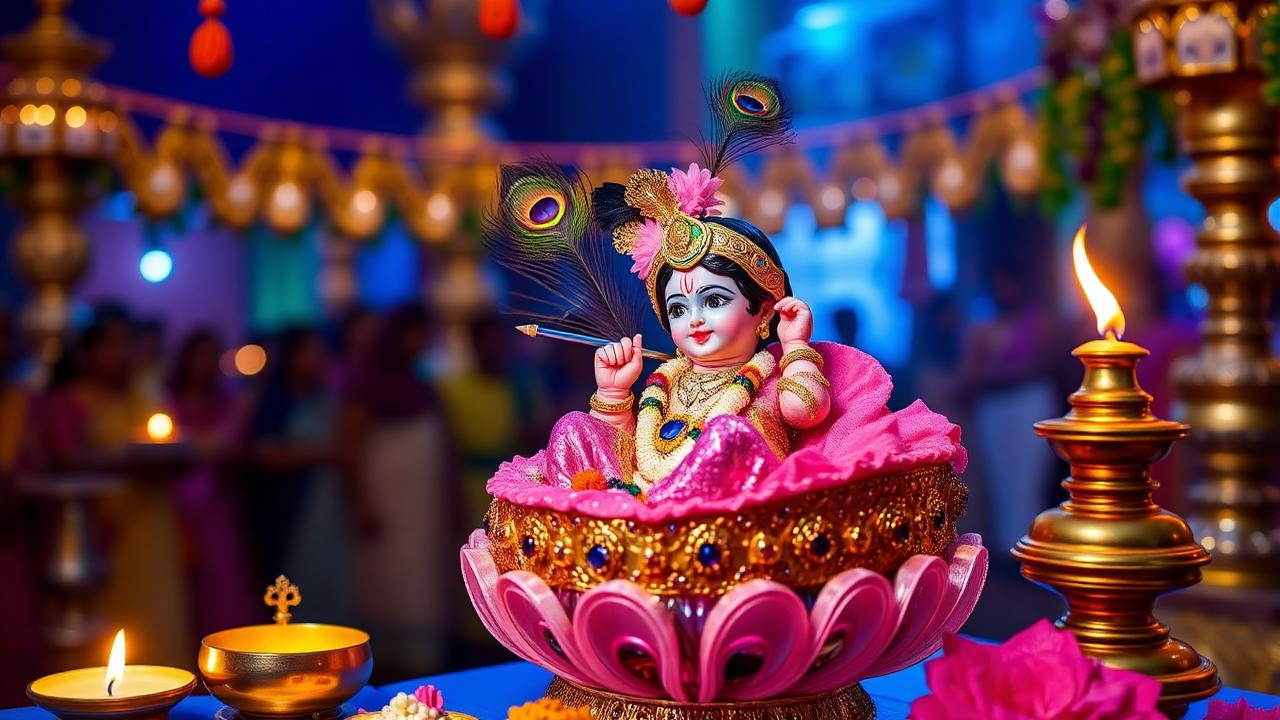
The deity is Krishna as Govinda, and the temple is among the most visited Vaishnava shrines in the Guwahati area. Its daily rhythm is built around nam kirtan, the congregational singing of the deity's names that defines Assamese Vaishnava practice.
What gives the temple its particular character:
- The river crossing. Devotees traditionally reach it by ferry from Guwahati, which makes the visit a small journey rather than a stop.
- The setting, at the foot of a hill in North Guwahati, which is quieter and more rural than the city across the water
- The daily kirtan, which is participatory rather than performed, with devotees joining in
- The Doul Utsav, its great annual festival, which is Assam's Holi and the reason the temple is known across the state
Guwahati's devotional map is dominated by Kamakhya, and rightly so. Doul Govinda represents the other half of the city's religious life, the Vaishnava half, which has its own institutions, its own music and its own calendar.
Doul Utsav: How Assam Keeps Holi
Doul Utsav, also called Doul Jatra or Deul, is the Assamese form of Holi, celebrated in Falgun, and at Doul Govinda it is the event of the year.
The festival runs over several days and follows a structure that is quite different from the single day of colour played in north India:
- A bonfire is lit on the first night, corresponding to Holika Dahan elsewhere
- The deity is brought out from the sanctum and placed in a specially built structure or platform for the festival, and this is the doul from which the festival takes its name
- Nam kirtan continues through the days and nights, with groups singing in relay
- Phakuwa, coloured powder, is played, but within the festival's ritual frame rather than as a free for all
- The deity is taken in procession, and devotees accompany the palanquin with singing and drums
- On the final day the deity returns to the sanctum, completing the cycle
The scale at Doul Govinda is substantial. Ferries across the Brahmaputra run full, roads on the north bank fill, and devotees come from across Assam.
What distinguishes the Assamese observance is the emphasis on music over colour. In north India, Holi is defined by the playing of colours. In Assam, the colour is one element within days of continuous kirtan, procession and community feasting, and devotees describe the kirtan as the centre of it.
The Ekasarana Tradition Behind It
To understand Vaishnava worship in Assam you have to understand Ekasarana Dharma, the tradition established by Srimanta Sankardev in the fifteenth and sixteenth centuries.
Its core positions:
- Eka sarana, single refuge, in Krishna as the supreme, without worship of other deities as separate ends
- Nam, the name, as the principal practice, sung congregationally rather than recited privately
- Rejection of elaborate ritual, image based complexity and priestly mediation as necessary for devotion
- Devotion expressed through literature, music, drama and performance, in Assamese and Brajavali rather than Sanskrit alone
The institutions this produced are distinctive:
- The namghar, a prayer house present in almost every Assamese village, functioning as both a religious and a community space
- The satras, monastic centres, most famously on the river island of Majuli, which remain centres of Assamese art, dance and music
- Borgeet, the devotional songs composed by Sankardev and Madhavdev
- Ankiya Naat and Bhaona, the dramatic form created by Sankardev to carry the teaching to ordinary people
Doul Govinda's daily kirtan and its Doul Utsav sit within this world. The temple is not a satra, but the devotional grammar around it, the emphasis on nam, the participatory singing and the community structure of the festival, comes directly from the Ekasarana tradition that shaped Assamese Vaishnavism.
Kamakhya and Govinda: Two Halves of One City
Guwahati is unusual among Indian cities in holding two complete devotional worlds within a few kilometres of each other, on opposite banks of the same river.
The Shakta side, on and around Nilachal hill:
- Kamakhya, worshipped at a rock cleft, the great tantric centre, with the Ambubachi mela
- The Mahavidya temples around the complex
- Ugratara at Uzan Bazar, worshipped at a water filled pit
- Older shrines including Umananda on the river island and the Navagraha temple
The Vaishnava side, largely across the river and through the state:
- Doul Govinda at Rajaduar, with its Doul Utsav
- Hayagriva Madhava at Hajo, a short drive away
- Namghars in every village and neighbourhood
- The satras of Majuli and elsewhere, upriver
These are not rival camps. Assamese families move between them without any sense of contradiction, attending Ambubachi and Doul Utsav in the same year and keeping both traditions in the same household.
What the pairing shows is something true of Hindu practice generally but unusually visible here. A tantric Devi shrine of national importance and a congregational Vaishnava tradition that rejects ritual complexity operate a ferry ride apart, and have done so for centuries.
Crossing the River for Darshan
The journey is part of the visit, and it is worth doing the traditional way if conditions allow.
- By ferry - services run from Guwahati ghats across the Brahmaputra to North Guwahati. Timings depend on the season and river conditions, so check locally on the day.
- By road - the Saraighat bridge and the newer crossings connect North Guwahati by road, which is the reliable option in monsoon or when ferries are not running
- Best time - October to March for weather, and Falgun for the Doul Utsav, which is when the temple is at its fullest
- Timings - morning and evening worship, with kirtan through the day. Evenings are particularly good for hearing the nam kirtan.
- Offerings - flowers, tulsi, sweets and fruit, all available near the temple
- Etiquette - remove footwear, dress modestly, and sit quietly if kirtan is in progress rather than moving through it
Nearby on the north bank: the Chandra Bharati hill, other old shrines of North Guwahati, and Hajo, about half an hour further, with the Hayagriva Madhava temple on the hill.
A suggestion for those interested in Assamese Vaishnavism beyond a temple visit: if your trip allows, continue upriver to Majuli and spend time at the satras. The daily prayer, the borgeet, the mask making and the Bhaona performances there are the fullest living expression of the tradition that shaped Doul Govinda's worship.
Keeping the Tradition Outside Assam
Assamese families outside the state keep this devotion in ways that travel easily, which is a consequence of how the tradition was built.
- Nam kirtan requires only people and a khol or clapping, and Assamese associations in Delhi, Bengaluru, Mumbai and abroad hold regular sessions
- Namghar spaces have been established by Assamese communities in several cities, functioning exactly as they do at home, as both prayer hall and community centre
- Borgeet is learnt and sung, and recordings are widely available
- Doul Utsav and Bihu are the two occasions around which the community gathers wherever it is settled
- Bhaona performances are staged by cultural associations, keeping the dramatic tradition alive outside Assam
The portability is not accidental. A tradition centred on the name, sung together, in the local language, without required ritual apparatus, is exactly the kind of practice that survives migration intact.
For devotees from outside the tradition who want to engage with it, the simplest entry is a nam kirtan session. It requires no initiation, no knowledge of Assamese and no prior preparation. You sit, you listen, and after a while you join in, which is precisely what the tradition intended when it made the name its central practice.
Frequently Asked Questions
Where is the Doul Govinda temple?+
At Rajaduar in North Guwahati, at the foot of the Chandra Bharati hill, across the Brahmaputra from the main city. Devotees traditionally reach it by ferry, and road access is available through the Saraighat and newer bridges.
What is Doul Utsav?+
Doul Utsav, also called Doul Jatra, is the Assamese form of Holi, celebrated in Falgun over several days. A bonfire is lit, the deity is brought out to a specially built platform, nam kirtan runs through the days and nights, colours are played and the deity is taken in procession.
How is Assamese Holi different from north Indian Holi?+
It runs over several days rather than one, and the emphasis is on continuous nam kirtan, the deity's procession and community feasting, with colour as one element within that frame rather than the defining activity.
What is Ekasarana Dharma?+
It is the Vaishnava tradition established by Srimanta Sankardev, centred on single refuge in Krishna and on nam, the congregational singing of the name, with devotion expressed through Assamese literature, music and drama rather than elaborate ritual.
What is a namghar?+
A namghar is the prayer house found in almost every Assamese village, used for nam kirtan and also functioning as a community space. Assamese communities in other cities and abroad have established namghars that work the same way.
What else can be visited around Doul Govinda?+
The Chandra Bharati hill and other old shrines of North Guwahati, Hajo with the Hayagriva Madhava temple about half an hour away, and across the river Kamakhya, Ugratara and Umananda in Guwahati itself.
About the author
Pandit Mahesh Trivedi · Festival Traditions & Panchang
Pandit Mahesh leads the festival-date and Panchang content on Vandnaa. He cross-references multiple regional panchangs (Drik, Vaishnava, Bengali, Marathi) for every festival date published on the site.
Meet the Vandnaa editorial team →