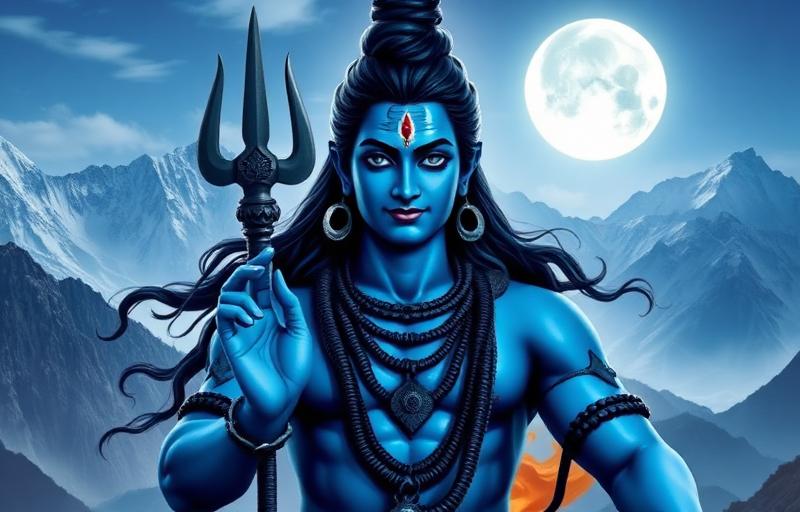
The Katha of the Broken Linga
The Pancharama Kshetras are five Shiva temples in coastal Andhra Pradesh, and they exist because of a single episode.
Tarakasura had obtained a boon and wore a Shivling at his throat, and as long as it remained intact he could not be killed. The devas were unable to defeat him.
Kumara Swamy, Kartikeya, was born for this purpose, and it was he who eventually confronted the asura. In the telling, he could not kill Tarakasura until Vishnu advised him that the linga had to be broken first.
Kartikeya struck the linga, and it shattered into five pieces.
The pieces did not fall inert. Each one flew across the region, and where each landed it began to grow, expanding and threatening to become uncontainable.
On Vishnu's advice, the devas installed each piece where it had fallen, with the appropriate rites, and each installation is one of the five kshetras:
- Amararama at Amaravati, in Guntur district
- Draksharama in Kakinada district
- Somarama at Bhimavaram, in West Godavari
- Ksheerarama at Palakollu, in West Godavari
- Kumararama at Samalkot, in Kakinada district
The installation is why these are called aramas. Each is the place where a piece of that linga was set down and worshipped so that it would stop growing.
Draksharama: The Bhimeswara Temple
Draksharama, in Kakinada district, is the most significant of the five, for reasons beyond the Pancharama tradition.
What is there:
- The Bhimeswara Swamy temple, with a very tall linga in a sanctum built across two storeys, so that worship is offered at the upper level to reach the top of the linga
- A large complex with prakaras, mandapas and extensive inscriptions, many of them from the Eastern Chalukya period and later, which make the temple important to historians as well as devotees
- The Manikyamba shrine, since Draksharama is also counted among the Ashtadasa Shakti Peethas, the eighteen great seats of the Devi
- Water tanks and subsidiary shrines within the complex
The temple's construction is attributed to the Eastern Chalukyas around the ninth to tenth centuries, with additions in later periods, and it is among the finest examples of temple architecture in coastal Andhra.
The name is traditionally connected to Daksha, and the site is associated in local tradition with the Daksha yagna, the episode in which Sati gave up her body, which is what links it to the Shakti Peetha list.
That combination is what makes Draksharama unusual. It is a Pancharama kshetra, a Shakti Peetha and a major inscriptional site at once, which is a rare set of claims for one temple to hold.
The Other Four
Each of the five kshetras has its own character, and devotees who complete the circuit describe them as distinct.
- Amararama, Amaravati - on the Krishna river in Guntur district, where the deity is Amareswara. Amaravati is also a major site in the region's ancient history, with a significant Buddhist stupa nearby, and the town has been an important centre for a very long time.
- Somarama, Bhimavaram - where the deity is Someswara, and where the linga is described as changing colour with the phases of the moon, which is the tradition most associated with this temple
- Ksheerarama, Palakollu - where the deity is Ksheera Ramalingeswara, and the tall gopuram is among the highest in the region
- Kumararama, Samalkot - where the deity is Bhimeswara, in a temple that shares its architectural style and two storey sanctum arrangement with Draksharama, both being Eastern Chalukya works
- Draksharama - described above
Completing all five is treated as a pilgrimage in its own right in coastal Andhra, and families undertake it over two or three days, since the temples lie within a manageable area across Guntur, West Godavari and Kakinada districts.
The Godavari and Krishna delta in which these temples stand is one of the densest temple regions in India, and it also holds Annavaram, Simhachalam, Bhadrachalam, Antarvedi and a great many others.
For a devotee planning a Shaiva circuit, the Pancharamas are the framework this region gives you, and the five together take in Chalukya architecture, a Shakti Peetha and a katha that explains the whole arrangement.
Why Kartikeya Matters Here

The Pancharama katha is a Kartikeya story, and that is worth dwelling on because it places these temples in a particular tradition.
Kartikeya, called Kumara Swamy, Subrahmanya, Skanda and Murugan depending on the region, was born specifically to defeat Tarakasura. That is his purpose in the Puranic narrative, and the Pancharama episode is its conclusion.
What the katha establishes:
- Tarakasura's invincibility came from a Shivling, which means the asura's power was itself derived from Shiva
- Kartikeya, Shiva's son, had to break his own father's linga to complete his purpose
- The pieces could not simply be discarded. They had to be installed and worshipped, which turned the weapon of an asura into five centres of devotion
- The Kumararama at Samalkot carries his name, marking his role directly
That last move is characteristic of Hindu narrative. What was an instrument of harm is not destroyed but consecrated, and the site of a defeat becomes a place of worship.
Kartikeya's devotion is strongest in Tamil Nadu, where he is Murugan with the six abodes, and in Karnataka and Kerala. In Andhra his presence is more diffuse, but the Pancharamas are his imprint on the region's Shaiva geography, and the katha is told at all five temples.
Manikyamba and the Shakti Peetha Claim
Draksharama's second identity is as a Shakti Peetha, and it is counted among the Ashtadasa Shakti Peethas, the eighteen listed in the well known stotra attributed to Adi Shankaracharya.
The Devi here is Manikyamba, worshipped in her own shrine within the Bhimeswara temple complex.
The Shakti Peetha tradition, in brief:
- Sati gave up her body at her father Daksha's yagna, to which Shiva had not been invited
- Shiva carried her body through the world in grief
- Vishnu's chakra divided the body, and the parts fell at different places
- Each place became a peetha, a seat of the Devi, with a Bhairava present alongside her
The number of peethas varies by text, from the eighteen of the Ashtadasa list to fifty one and more in other enumerations. Draksharama appears in the eighteen, which places it among the most significant.
What makes the site coherent is the Daksha connection. The name Draksharama is connected in tradition to Daksha, and the yagna at which Sati gave up her body is placed here in local telling, which is why both the Shiva and the Devi presence at this temple derive from the same episode.
For devotees, that means Draksharama can be visited as a Shaiva site, as a Shakta site, or as both in a single darshan, and most families do the last.
Doing the Pancharama Yatra
The five temples are close enough together to be covered as a single circuit, and this is how devotees in coastal Andhra approach them.
The temples and their districts:
- Amararama, Amaravati, Guntur district
- Draksharama, Kakinada district
- Kumararama, Samalkot, Kakinada district
- Somarama, Bhimavaram, West Godavari
- Ksheerarama, Palakollu, West Godavari
Planning:
- Two to three days is enough by road, with Rajahmundry, Kakinada or Vijayawada as a base depending on your starting point
- The Kakinada pair, Draksharama and Kumararama, are close together
- Bhimavaram and Palakollu are close together in West Godavari
- Amaravati is the outlier, further west on the Krishna
- There is no prescribed order in general practice, though families sometimes follow a customary sequence
Best time is October to March. Coastal Andhra is hot and humid for much of the year, and Mahashivratri is the peak occasion at all five temples.
What to carry: bel patra, flowers, and a vessel if you wish to offer water. Traditional dress is expected at these temples.
What to combine: Annavaram for the Satyanarayana vratam, Simhachalam near Visakhapatnam, Antarvedi at the Vasishta Godavari river mouth, and Rajahmundry on the Godavari, all of which lie within the same belt.
One closing note. These are not tourist temples, and outside Mahashivratri they are quiet. If you want to see Chalukya era temple architecture without crowds, in a region where the tradition has been continuous for more than a thousand years, the Pancharama circuit is among the best in India for it.
Reader Questions Answered
What are the Pancharama Kshetras?+
They are five Shiva temples in coastal Andhra Pradesh, at Amaravati, Draksharama, Bhimavaram, Palakollu and Samalkot, established where the five pieces of Tarakasura's Shivling fell after Kartikeya broke it.
What is the Tarakasura katha?+
Tarakasura wore a Shivling at his throat that made him unkillable. Kartikeya, born for the purpose, could not defeat him until Vishnu advised that the linga be broken first. It shattered into five pieces which flew across the region and began to grow where they fell, and each was installed and worshipped there.
Why is Draksharama the most important of the five?+
Because it is a Pancharama kshetra, one of the Ashtadasa Shakti Peethas with the Manikyamba shrine, and a major inscriptional site of the Eastern Chalukya period, with a very tall linga in a two storey sanctum.
Who is Manikyamba?+
Manikyamba is the Devi worshipped at Draksharama, in her own shrine within the Bhimeswara temple complex. Draksharama is counted among the eighteen Ashtadasa Shakti Peethas, and local tradition connects the site to the Daksha yagna.
How long does the Pancharama yatra take?+
Two to three days by road, with Rajahmundry, Kakinada or Vijayawada as a base. Draksharama and Kumararama are close together in Kakinada district, Bhimavaram and Palakollu in West Godavari, and Amaravati is further west on the Krishna.
What is special about Somarama at Bhimavaram?+
The deity there is Someswara, and the tradition most associated with this temple is that the linga is described as changing colour with the phases of the moon.
About the author
Pandit Mahesh Trivedi · Festival Traditions & Panchang
Pandit Mahesh leads the festival-date and Panchang content on Vandnaa. He cross-references multiple regional panchangs (Drik, Vaishnava, Bengali, Marathi) for every festival date published on the site.
Meet the Vandnaa editorial team →Explore on Vandnaa
Related Articles
Annavaram Satyanarayana Swamy: The Hill Where Hundreds Perform the Vratam Every Morning
8 min read
Simhachalam Temple: Varaha Narasimha's Sandalwood Form
7 min read
Kanipakam Varasiddhi Vinayaka: The Ganesha Who Settles Disputes and Keeps Growing
8 min read
Lord Kartikeya (Murugan): Significance, Mantras & Worship Vidhi
9 min read