The Twin Form of Varaha Narasimha
Perched on a hill near Visakhapatnam in Andhra Pradesh, Simhachalam temple is dedicated to a rare and unique form of Lord Vishnu, Varaha Narasimha, uniting two of his incarnations in one deity. The boar-headed Varaha, who is remembered for rescuing the earth, and the man-lion Narasimha, who protected his devotee Prahlada, are worshipped together here as a single, combined presence.
Devotees see in this twin form a reminder that the Lord takes whatever shape is needed, in whatever moment, to protect dharma and his devotees. The temple's hill setting, overlooking the Bay of Bengal in the distance, adds to its reputation as one of the most atmospheric Vishnu shrines of South India.
History and Temple Legend
According to temple tradition, the deity at Simhachalam is connected to the story of Prahlada, the devotee whose father Hiranyakashipu was slain by Lord Narasimha. It is believed that the image was once lost to time, buried and forgotten, until a king out hunting in these hills is said to have discovered it and, guided by a dream, had it consecrated once more.
What makes Simhachalam distinct among Narasimha shrines is the unusual practice that follows from this legend, the custom of keeping the deity covered in sandalwood paste through the year. Devotees regard this practice as a living link to the temple's ancient past, carried forward without interruption across generations.
The Sandalwood Covering and Chandanotsavam
For all but one day of the year, the deity at Simhachalam remains hidden beneath a thick layer of sandalwood paste, applied by temple priests as an offering believed to cool the fierce energy, or ugra swaroopa, of Lord Narasimha. Devotees through the year therefore have darshan of the sandalwood-covered form rather than the deity's bare image.
Once a year, on the auspicious day of Akshaya Tritiya, the sandalwood layer is ceremonially removed in a festival known as Chandanotsavam, or Nija Rupa Darshanam, revealing the original form of the deity for a few hours. Thousands of devotees travel to Simhachalam specifically for this day, considering it an exceptionally rare and blessed darshan.
Darshan Guide and Festivals
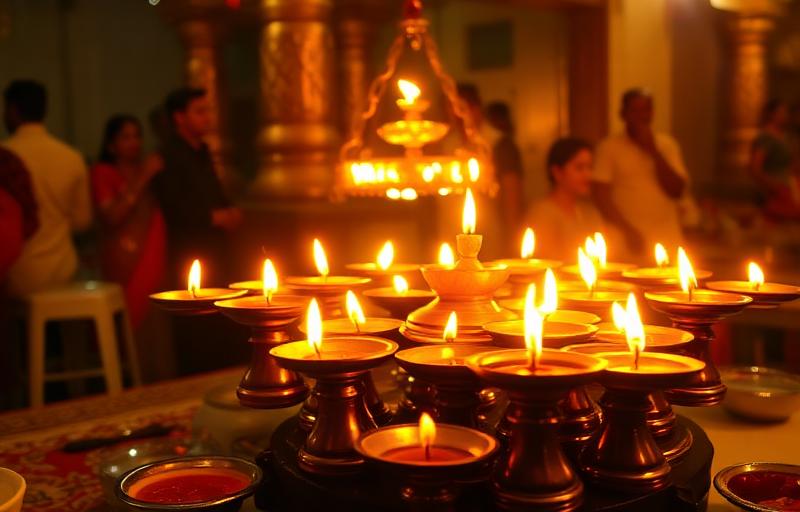
The temple follows a daily rhythm of rituals from early morning to evening, and devotees are advised to check local timings before planning a visit, as these can vary around major festivals.
- The Chandanotsavam in the month of Vaishakha, around Akshaya Tritiya, is the most significant day at Simhachalam, when the sandalwood is removed for a few hours
- The temple also celebrates a grand annual Kalyanotsavam, or celestial wedding festival, along with other festivals through the year
- Devotees should dress modestly and be prepared for queues during festival season
- The hill location offers a peaceful, scenic setting away from city crowds, which many devotees find conducive to quiet prayer
How to Reach Simhachalam
Simhachalam is located on a hillock on the outskirts of Visakhapatnam, one of Andhra Pradesh's major cities, making it easily accessible.
The Visakhapatnam Railway Station and Visakhapatnam Airport both connect the city to major destinations across India, and local buses and taxis run regularly from the city to the temple hill.
Many devotees combine a visit to Simhachalam with the beaches and other sacred sites around Visakhapatnam, making it a convenient stop on a broader pilgrimage of Andhra Pradesh's Vishnu temples.
Mantra and a Devotee's Reflection
Devotees at Simhachalam often chant 'Om Namo Narasimhaya', meaning 'salutations to Lord Narasimha', believed to invoke courage and protection.
The hidden form of the deity beneath sandalwood, revealed only once a year, teaches devotees a quiet lesson, that faith does not always need to see to believe, and that patient devotion is itself rewarded when the veil finally lifts. As with all worship, visiting Simhachalam is an act of faith and love, not a transaction.
Quick Answers
Why is the deity at Simhachalam covered in sandalwood?+
Tradition holds that the sandalwood paste cools the intense, fierce energy of Lord Narasimha's Ugra form, allowing devotees to approach and worship safely through the year.
When can devotees see the deity's original form?+
The sandalwood is removed once a year, typically around Akshaya Tritiya, during the festival of Chandanotsavam, when the deity's true form is revealed for a few hours.
How is Simhachalam connected to other Narasimha temples?+
Simhachalam is one of several revered Narasimha shrines in Andhra Pradesh, alongside sites like Ahobilam, all devoted to Lord Vishnu's fierce protector form who saved his devotee Prahlada.
About the author
Pandit Ravindra Sharma · Vedic Rituals & Bhakti, 22+ years
Pandit Ravindra is the Vandnaa editorial team's resident specialist on aarti, chalisa, and daily devotion. He has performed home and temple pujas across Varanasi and Delhi for over two decades and contributes the bhakti-focused articles on this site.
Meet the Vandnaa editorial team →