Significance of the Dwadashakshari Mantra
Dwadashakshari means 'of twelve syllables' (dwadasha = twelve, akshara = syllable). The mantra Om Namo Bhagavate Vasudevaya is counted on the fingers as twelve syllables and is one of the most sacred and complete mantras of Lord Vishnu, who is also known as Vasudeva (the all-pervading Lord, and the son of Vasudeva, Krishna).
This mantra appears in the Bhagavata Purana and is dear to the whole Vaishnava tradition. By tradition it is the mantra the boy-saint Dhruva received from sage Narada and chanted in deep tapasya, by which he won the Lord's darshan and an undying place in the heavens.
Its significance lies in its completeness. In just twelve syllables it offers a full salutation and surrender to the Supreme - acknowledging God as Bhagavan (the all-glorious) and as Vasudeva (the one who dwells in and pervades all). It is chanted for liberation as much as for peace and protection.
The Mantra and Its Word-by-Word Meaning
ॐ नमो भगवते वासुदेवाय Om Namo Bhagavate Vasudevaya
The twelve syllables: Om - Na - Mo - Bha - Ga - Va - Te - Vaa - Su - De - Vaa - Ya.
Word by word:
- ॐ (Om): the primordial sound, the Pranava, the very name of Brahman.
- नमो (Namo): I bow, I offer salutation and surrender.
- भगवते (Bhagavate): to Bhagavan, the all-glorious Lord, full of all majesty, knowledge and grace.
- वासुदेवाय (Vasudevaya): to Vasudeva - the Lord who dwells within and pervades all that exists, and who appeared as the son of Vasudeva, Shri Krishna.
Full meaning: Om. I bow in loving surrender to Bhagavan Vasudeva, the all-pervading Supreme Lord who lives in the heart of every being.
This is a nama mantra of pure salutation. Each time it is chanted, the devotee lays the whole self at the feet of the Lord who is both within and everywhere.
Benefits of the Dwadashakshari Mantra
- Deep surrender and refuge: As a pure salutation to Vasudeva, it cultivates trust and letting-go at the Lord's feet.
- Peace of mind: Steady chanting calms restlessness, anxiety and fear, settling the mind in the Lord.
- Purification: The mantra is said to cleanse the heart of old impressions and to support a satvik, devotional life.
- Protection: Vaishnavas chant it for the Lord's shelter in difficulty, just as Dhruva and Prahlada took refuge in Vasudeva.
- Progress toward liberation: Being a complete mantra of the Supreme, it is held to lead the sincere chanter toward moksha.
- Suitable for japa and meditation: Its twelve syllables sit easily on the breath, making it excellent for daily mala and silent meditation.
These are the traditional spiritual benefits described in the Vaishnava tradition; the mantra is a sadhana of devotion and remembrance.
How to Chant - Vidhi
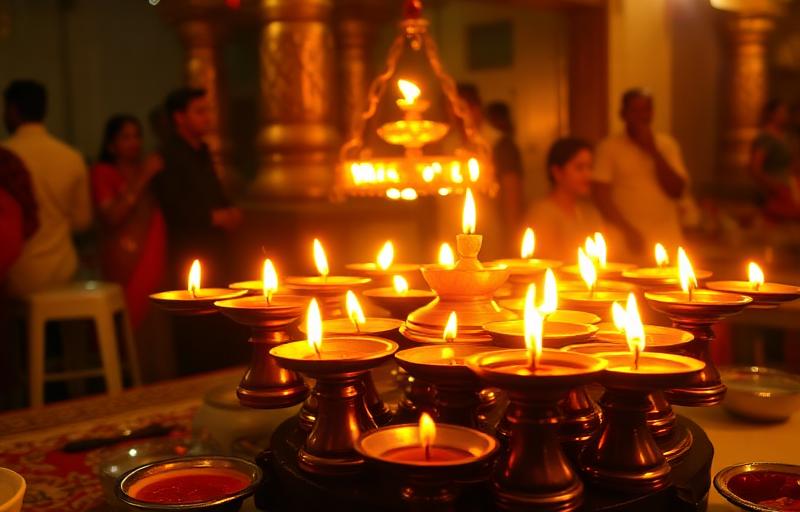
1. Best time: Early morning (brahma muhurta) after a bath is ideal; Ekadashi and Wednesdays are especially auspicious for Vishnu mantras. 2. Seat and direction: Sit on a clean asan facing east or north, before an image of Vishnu or Krishna. Light a ghee lamp and offer tulsi. 3. Sankalp: Take a moment of resolve, offering the japa to Bhagavan Vasudeva, seeking devotion and peace. 4. Use a mala: Chant 'Om Namo Bhagavate Vasudevaya' on a tulsi mala of 108 beads, one round or more daily, at a calm, even pace. 5. Listen as you chant: Hear each of the twelve syllables, letting the mind rest in the meaning - bowing to the Lord within all. 6. Be regular: Keep a fixed daily count. After japa, sit quietly for a few moments, then close with a pranam and offer the practice to the Lord.
Reader Questions Answered
What is the Dwadashakshari Mantra?+
Dwadashakshari means 'twelve-syllabled'. The mantra is 'Om Namo Bhagavate Vasudevaya', the twelve-syllable mantra of Lord Vishnu (Vasudeva), a complete prayer of salutation and surrender to the Supreme Lord.
What does Om Namo Bhagavate Vasudevaya mean?+
It means 'Om, I bow in loving surrender to Bhagavan Vasudeva' - the all-glorious, all-pervading Supreme Lord who dwells in every heart and who appeared as Shri Krishna, the son of Vasudeva.
Which saint chanted this twelve-syllable mantra?+
By tradition, the boy-devotee Dhruva received this mantra from sage Narada and chanted it in deep tapasya. Through it he won the darshan of Lord Vishnu and an eternal place among the stars (the Dhruva-tara, Pole Star).
How should the Dwadashakshari Mantra be chanted?+
Chant it after a bath, seated facing east or north before Vishnu's image, ideally using a tulsi mala of 108 beads, one or more rounds daily. Ekadashi and Wednesdays are especially auspicious. Chant calmly, hearing each syllable.
About the author
Acharya Vinaya Kapoor · M.A. Sanskrit, Mantra & Stotra Studies
Acharya Vinaya holds an M.A. in Sanskrit from Banaras Hindu University and writes the mantra and stotra commentary on Vandnaa. Her focus is on accurate pronunciation, traditional context, and helping modern readers connect with classical texts.
Meet the Vandnaa editorial team →