Krishna's Legendary Capital by the Sea
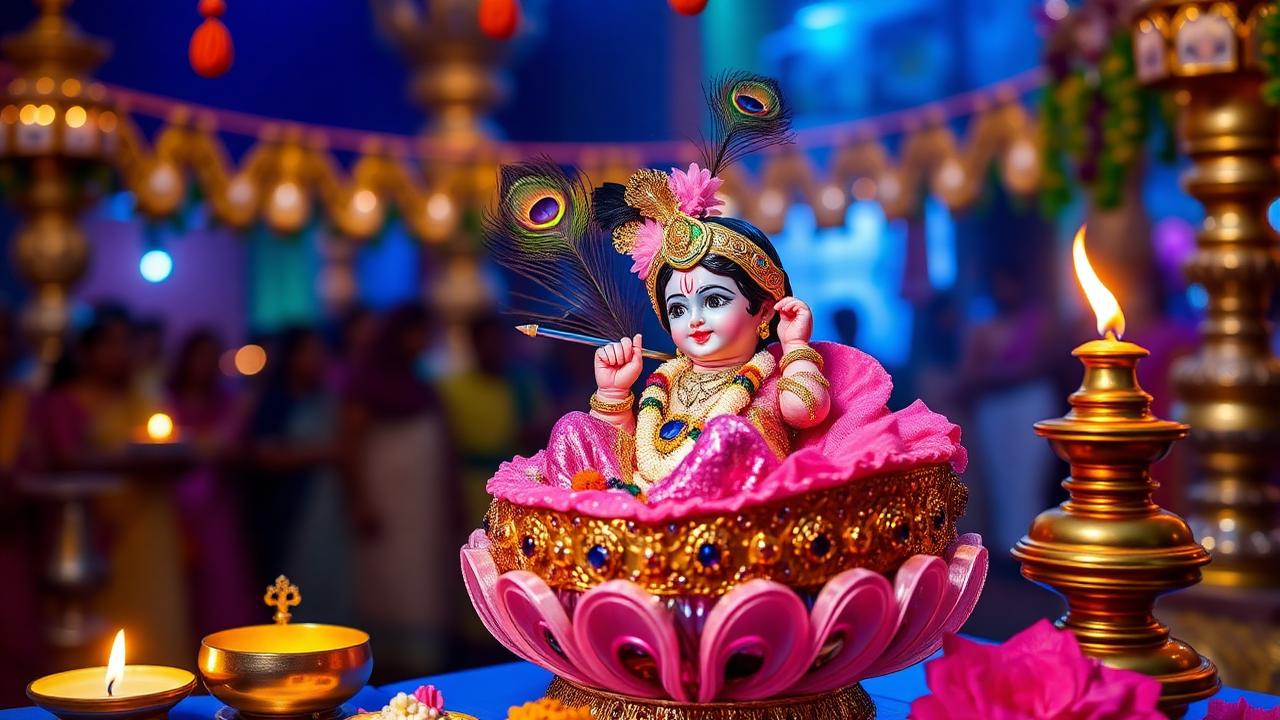
According to tradition central to Krishna's life story, after years of conflict with the tyrant king Jarasandha in Mathura, Krishna made the decision to relocate his people to a safer, more defensible location, eventually establishing a new capital on the western coast of what is now Gujarat. This city, Dwarka, meaning the gateway, is remembered as the seat from which Krishna ruled as king for the remainder of his earthly life, a role quite distinct from the pastoral, playful image of his childhood in Vrindavan and Gokul.
Dwarkadhish Temple, whose name itself translates to Lord of Dwarka, stands today as the principal shrine commemorating this chapter of Krishna's life, honoring him specifically in his identity as ruler and protector rather than solely as the divine cowherd or charioteer more commonly depicted elsewhere. The temple is also known as Jagat Mandir, the world temple, reflecting the grandeur ascribed to it across centuries of devotional tradition.
For devotees, this dimension of Krishna's story carries particular meaning, presenting a vision of the divine that includes statecraft, responsibility and the burdens of leadership alongside more commonly celebrated themes of love and playfulness. Dwarka represents Krishna as a builder of institutions and a protector of his people, a king who established order after years of upheaval.
The temple's coastal setting, at the confluence of the Gomti creek and the Arabian Sea, adds a further layer of resonance to this legend, tying the mythological account of a city built and later reclaimed by the sea to the very real, dramatic coastline pilgrims encounter when they arrive, where the temple's towering shikhara appears to rise directly out of the water's edge.
The Legend of the City Reclaimed by the Sea
Among the most evocative elements of the Dwarka legend is the belief that the original city, built during Krishna's reign, was submerged by the sea shortly after his passing from this world, as though the ocean itself reclaimed what had been built at its edge only for the duration of his earthly presence. This account appears across various Puranic sources and has been retold by generations of devotees as part of the larger, poignant narrative surrounding the end of Krishna's earthly life and the subsequent decline of the Yadava dynasty he led.
In recent decades, this ancient legend has drawn considerable interest from marine archaeologists, who have conducted underwater explorations off the coast near present-day Dwarka, identifying submerged structures and artifacts along the seabed. These findings are often cited by devotees and researchers alike as intriguing points of connection between recorded legend and physical evidence, though the precise dating, origin and interpretation of these underwater remains continue to be studied and discussed within archaeological circles.
Regardless of how this ongoing research develops, the legend itself carries a devotional weight independent of archaeological confirmation. For pilgrims, standing at Dwarka's shoreline and looking out toward the sea is understood as looking toward the very waters believed to hold the remnants of Krishna's original city, adding a layer of contemplative depth to an already significant pilgrimage.
The present-day Dwarkadhish Temple, built inland from where the original city is believed to have stood, is itself understood by devotees as a continuation of an unbroken tradition of worship at this location, rebuilt and expanded across centuries even as the exact original site remains a subject of ongoing exploration beneath the waves.
Architecture and the Daily Flag-Changing Ritual
The present Dwarkadhish Temple structure rises as a five-storied building, constructed largely from limestone and sand in a style associated with Chalukyan-era craftsmanship, though the site's core sanctity and continuous worship tradition trace back considerably earlier, with the current architecture itself the product of expansion and reconstruction across many centuries. The temple rests on a foundation of numerous carved pillars, and its towering shikhara reaches a considerable height above the surrounding town, visible from a distance across the flat coastal landscape.
One of the most distinctive living traditions at the temple is its flag ritual. Atop the shikhara flies a large flag bearing the sun and moon symbols, understood by devotees as a mark of Krishna's eternal, unceasing presence and sovereignty over the city. This flag is ceremonially changed multiple times over the course of a single day, a practice maintained through contributions from devotees who sponsor individual flag-changing ceremonies, a small but treasured act of participation in the temple's daily life that many pilgrims specifically arrange in advance of their visit.
Inside, the sanctum houses the black stone image of Dwarkadhish, richly adorned with fine garments and jewelry that are traditionally changed according to a set ritual calendar throughout the year, aligned with festivals and seasonal observances. The inner sanctum's rituals follow an elaborate daily schedule, beginning early in the morning and continuing with multiple aartis through the day.
This blend of grand architecture and intimate daily ritual, most visible in the modest act of a devotee sponsoring a single flag change, captures something essential about Dwarkadhish worship, a monumental temple that nonetheless remains built around small, personal, repeatable acts of devotion.
📿 Vandnaa's daily darshan and aarti timing guides help you plan visits like this flag ritual around the moments that matter most.
Swarga Dwar and Moksha Dwar: The Temple's Two Gates

Pilgrims approaching Dwarkadhish Temple typically enter through Swarga Dwar, meaning the gateway to heaven, a grand entrance located on the northern side of the temple that leads devotees up a flight of steps into the main sanctum complex. This entrance, facing the Gomti creek where it meets the sea, is where most first-time visitors begin their darshan experience, and the steps leading up to it are often filled with devotees, vendors selling offerings, and the general bustle typical of a major pilgrimage site.
After completing darshan, pilgrims traditionally exit through a separate gate on the southern side of the temple, known as Moksha Dwar, the gateway to liberation. This practice of entering and exiting through two distinctly named, symbolically significant gates is understood by devotees as part of the completed ritual experience of the visit, entering in hope and reverence, and departing having received the deity's blessing, symbolically moving a step closer to spiritual liberation.
Between these two gates lies a flight of dozens of stone steps connecting the temple to the Gomti creek below, where many pilgrims also take a ritual dip before or after their temple visit, treating the creek's waters with a sanctity comparable to other holy rivers in Hindu tradition. This combination of temple darshan and creek bathing forms the complete traditional pilgrimage sequence followed by most visiting devotees.
For practical purposes, first-time visitors should note the flow of pilgrim movement through these two separate gates, following the same entry and exit convention observed by the crowd helps navigate what can be a genuinely packed temple complex, particularly during major festivals like Janmashtami, when the temple draws exceptionally large crowds celebrating Krishna's birth.
Dwarka's Place Among the Char Dham
Dwarka holds a place of special distinction as one of the four Char Dham, the set of pilgrimage sites at India's four cardinal directions traditionally credited to Adi Shankaracharya as a unifying spiritual circuit meant to connect devotees to the sacred geography of the entire subcontinent. Alongside Badrinath in the north, Puri in the east and Rameshwaram in the south, Dwarka represents the western point of this pilgrimage, dedicated specifically to Krishna in his form as sovereign of this coastal kingdom.
Beyond the Char Dham, Dwarka is also counted among the Sapta Puri, the seven sacred cities of Hindu tradition believed to grant moksha, or liberation, to those who visit with sincere devotion, a list that includes cities like Varanasi, Ayodhya and Mathura. This dual significance, belonging to both major pilgrimage frameworks, places Dwarka among a small handful of Indian cities considered essential across more than one major devotional tradition.
For many devotees, a pilgrimage to Dwarka is undertaken specifically as part of completing the full Char Dham circuit, a journey historically considered a significant lifetime spiritual achievement given the geographic spread and logistical effort once required to visit all four sites. Even today, with considerably easier travel infrastructure than in earlier centuries, completing the Char Dham remains a meaningful goal for many devout Hindu families.
Nearby, pilgrims frequently combine their Dwarkadhish darshan with visits to the Nageshwar Jyotirlinga, one of the twelve Jyotirlingas located a short distance away, and Bet Dwarka, an island associated with Krishna's residence, reachable by boat, both of which extend a Dwarka pilgrimage into a fuller regional circuit of sacred sites connected to Krishna's legendary life here.
Visitor Guide: Reaching Dwarka
Dwarka's location on Gujarat's western coastline makes it a somewhat longer journey than some other major temple towns, but improved connectivity in recent years has made planning a visit considerably more straightforward.
- How to reach: Dwarka has its own railway station connected to major Gujarat cities and beyond, and Jamnagar houses the nearest significant airport, roughly a couple of hours away by road; regular bus services also connect Dwarka to Ahmedabad and other major towns in the state
- Temple timings: The temple typically opens early in the morning and remains accessible through the day with a midday interval, and multiple aartis take place at scheduled times, with many pilgrims specifically planning around the Mangala Aarti or evening aarti timings
- Sponsoring the flag ritual: Devotees interested in sponsoring a flag-changing ceremony can typically arrange this through temple authorities, ideally with some advance planning given demand
- Nearby sites: Nageshwar Jyotirlinga and Bet Dwarka are commonly combined with the main temple visit, with Bet Dwarka requiring a short boat ride from the mainland
- Best time to visit: The cooler months from October to March are generally more comfortable given Gujarat's coastal heat, while Janmashtami draws the largest and most festive crowds of the year
Most pilgrims find that a visit to Dwarka comfortably combines with the nearby Somnath Temple further down the Gujarat coastline, and many plan a single extended trip covering both significant sites in one journey. Spacing the two temple visits across a couple of days, rather than rushing between them, generally allows for a calmer and more meaningful darshan experience at each site.
Common Questions From Devotees
Why is Dwarka significant to Krishna's story?+
Tradition holds Krishna established Dwarka as his kingdom after leaving Mathura following conflict with Jarasandha, ruling from here for the rest of his earthly life. Dwarkadhish Temple honors him specifically in this role as sovereign.
Is Dwarkadhish Temple part of the Char Dham?+
Yes, Dwarka represents the western point of the four Char Dham, alongside Badrinath, Puri and Rameshwaram, and is also counted among the Sapta Puri, the seven cities traditionally associated with moksha.
What is the flag-changing tradition at Dwarkadhish Temple?+
A large flag bearing sun and moon symbols atop the shikhara is ceremonially changed multiple times a day, often sponsored by individual devotees as a personal act of participation in the temple's daily ritual.
What are Swarga Dwar and Moksha Dwar?+
They are the temple's two main gates, the entrance, Swarga Dwar, facing the Gomti creek, and the exit, Moksha Dwar, on the southern side, together forming a symbolic ritual sequence of entering in reverence and leaving with blessing.
How do I reach Dwarka and what else can I visit nearby?+
Dwarka has its own railway station, with Jamnagar's airport a couple of hours away by road. Nearby, pilgrims commonly visit the Nageshwar Jyotirlinga and Bet Dwarka island, reachable by a short boat ride.
About the author
Pandit Ravindra Sharma · Vedic Rituals & Bhakti, 22+ years
Pandit Ravindra is the Vandnaa editorial team's resident specialist on aarti, chalisa, and daily devotion. He has performed home and temple pujas across Varanasi and Delhi for over two decades and contributes the bhakti-focused articles on this site.
Meet the Vandnaa editorial team →