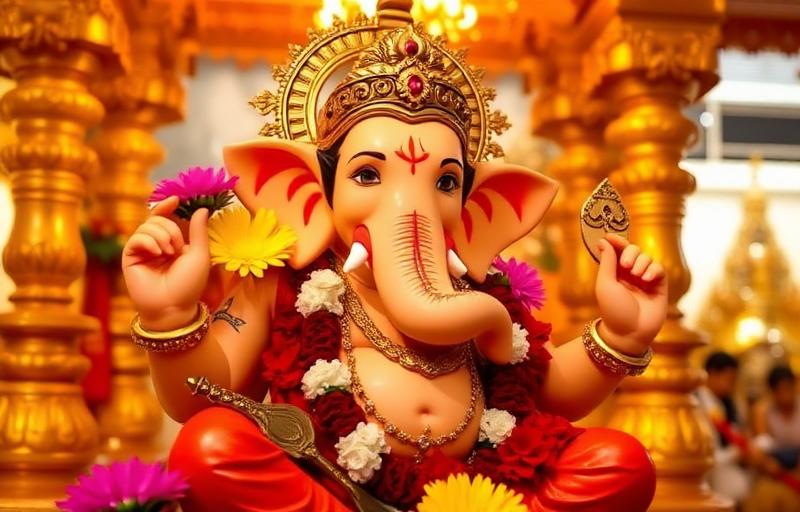
A Gentler Way to Welcome Ganesha
In recent years, alongside the familiar plaster-of-Paris idols that have long been popular for their fine detailing, more devotees have begun turning to eco-friendly Ganesh idols made from natural clay. This shift reflects a growing wish among devotees to celebrate Ganeshotsav in a way that is as kind to the earth as it is joyful for the community.
Far from being a recent invention, this practice is in many ways a return to how idols were traditionally made for generations, before manufactured materials became widely available.
Why More Devotees Are Choosing Natural Materials
Growing awareness of how slowly plaster-of-Paris idols dissolve, and the effect this can have on the rivers, lakes and coastal waters where they are traditionally immersed, has led many devotees, mandals and civic groups to reconsider the materials used in idol-making. Natural clay, by contrast, breaks down easily and returns to the earth much as it came from it.
For many devotees, this shift is not seen as a compromise on devotion but as an extension of it, an acknowledgement that honouring Ganesha should also mean caring for the natural world he is so often shown protecting.
The Devotional Meaning Behind Sustainable Choices
For many devotees, choosing an eco-friendly idol carries its own devotional significance.
- It is seen as an offering of responsibility alongside faith, honouring Ganesha through care for creation
- Natural clay idols dissolve gently and fully, aligning closely with the traditional meaning of visarjan as a return to the elements
- Many families involve children in choosing or even shaping a clay idol, making the practice a hands-on lesson in devotion and care
- Communities that adopt sustainable practices often report a renewed sense of collective responsibility that extends beyond the festival itself
Shadu Clay, Natural Colours and Simple Immersion

Eco-friendly idols are traditionally shaped from shadu mitti, a fine natural clay, and finished with natural, water-soluble colours rather than synthetic paints. Many devotees now also choose to immerse smaller idols at home in a bucket or tub of water, later using the dissolved clay to nourish potted plants or a home garden.
For larger community idols, many mandals now arrange for immersion in specially built artificial ponds, which allow the joyful public rituals of visarjan to continue while keeping natural water bodies protected.
Mandals and Communities Working Together
Across many cities, mandals now work alongside municipal bodies and civic groups to collect immersed idol remains from artificial tanks for proper composting or disposal, ensuring the sustainable practice extends through the entire process rather than stopping at the idol's material alone.
Such collaborations are often organised as community efforts in their own right, with volunteers, families and local authorities pooling their efforts so the festival's growth does not come at the cost of the rivers, lakes and coastline that so many communities also depend on and cherish.
Devotion That Cares for Creation
The growing tradition of eco-friendly idols reminds devotees that true devotion naturally extends into care for the world around us. Honouring Ganesha, the remover of obstacles, can also mean removing the obstacles we ourselves place in the path of nature.
Whether an idol is immersed in a river, a specially built tank, or a bucket at home, the prayer offered remains the same, Om Gam Ganapataye Namah, a reminder that faith and responsibility have always belonged together.
Quick Answers
What are eco-friendly Ganesh idols made from?+
They are traditionally shaped from shadu mitti, a fine natural clay, and finished with natural, water-soluble colours instead of synthetic paints.
How can a clay idol be immersed at home?+
Smaller clay idols can be gently immersed in a bucket or tub of water at home, and the dissolved clay can later be used to nourish potted plants or a garden.
Do mandals also follow eco-friendly practices for larger idols?+
Many mandals now arrange immersion in specially built artificial ponds and work with municipal bodies to collect and dispose of idol remains responsibly.
About the author
Pandit Mahesh Trivedi · Festival Traditions & Panchang
Pandit Mahesh leads the festival-date and Panchang content on Vandnaa. He cross-references multiple regional panchangs (Drik, Vaishnava, Bengali, Marathi) for every festival date published on the site.
Meet the Vandnaa editorial team →