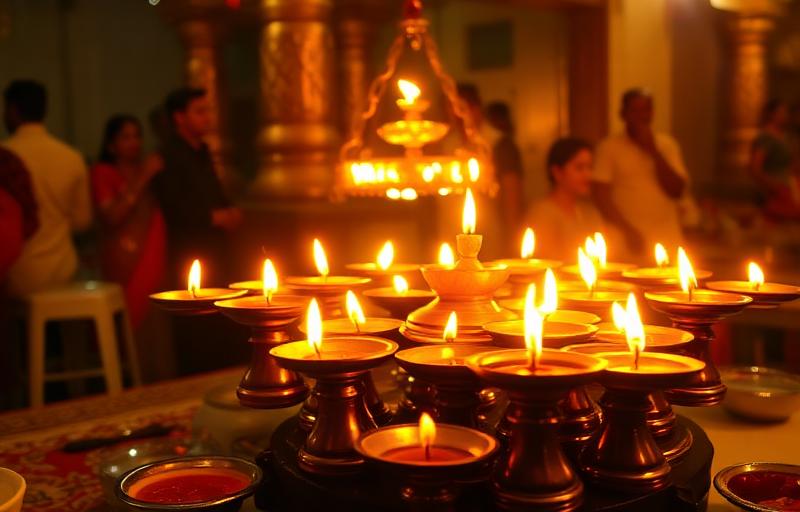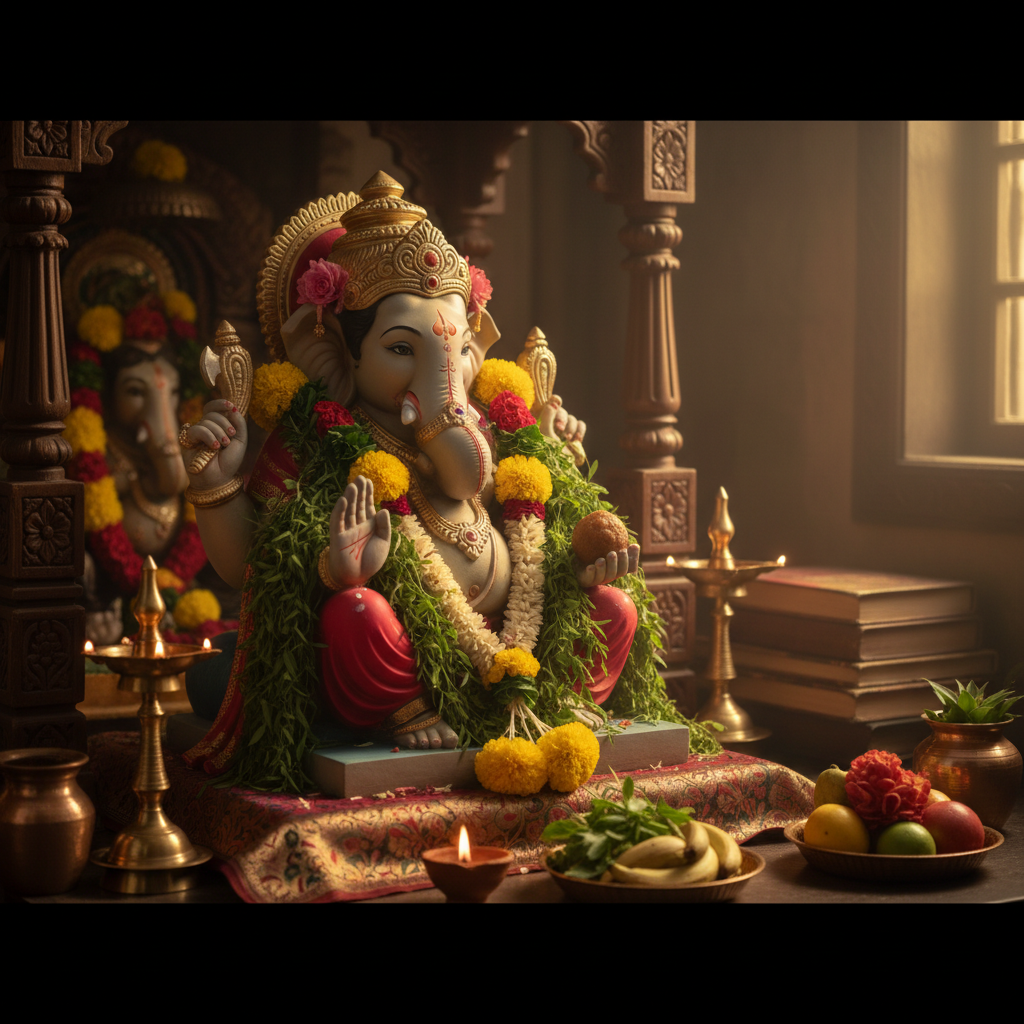
What Ganesh Visarjan Means
Ganesh Visarjan is the ceremonial immersion of Ganesha's idol in water, marking the close of his stay among devotees during Ganesh Chaturthi. Whether observed on the second, fifth, seventh or tenth day depending on family and community tradition, visarjan is the moment when the joyful welcome of the festival gives way to a tender, often emotional farewell.
Far from being a sorrowful end, visarjan is understood by devotees as the natural completion of a devotional cycle, a moment that carries as much meaning as the welcome that opened the festival.
The Symbolism Behind Returning Ganesha to Nature
At the heart of visarjan lies a simple but profound idea: the clay idol, shaped from earth and water, is returned to the elements from which it came. This act reflects a deeper truth that devotees hold close, that all forms are temporary, and that the divine itself is formless and everywhere, even after a particular image dissolves.
Worshipping Ganesha in idol form for a set number of days, and then releasing that form back into nature, is a way of honouring both his presence and the truth that devotion does not depend on any single form remaining forever.
Why Visarjan Is as Sacred as the Welcome
Devotees approach visarjan with the same devotion, if a different mood, as Ganesha's arrival.
- It is seen as sending Ganesha off with love and gratitude for the blessings received during his stay
- The procession to the water body is itself an act of collective devotion, often accompanied by music, dance and chanting
- Many devotees use the moment to reflect on the obstacles they hope to release, just as the idol is released into the water
- The promise to welcome him again the following year gives the farewell a hopeful, rather than sorrowful, character
The Procession, the Chants and the Ritual
On visarjan day, devotees carry the idol in a procession toward a river, lake, sea or, increasingly, an artificial tank, accompanied by dhol beats, dance and the resounding chant of Ganpati Bappa Morya, Pudhchya Varshi Lavkar Ya, a joyful call meaning 'Father Ganesha, come again soon next year.'
Before immersion, a final aarti is offered, along with a prayer of thanks and a request for forgiveness for any shortcoming in the worship offered. The idol is then gently lowered into the water, often amid tears as much as celebration, as the community bids their beloved guest farewell.
How the Practice Continues to Evolve
In recent years, many devotees and mandals have begun adapting how visarjan is carried out, choosing artificial ponds, buckets at home, or designated collection points instead of natural water bodies, out of concern for rivers, lakes and the sea. These changes are widely seen not as a departure from tradition, but as a way of honouring Ganesha's own teachings about care and responsibility.
Whatever the method, the essential meaning of visarjan, a devotional farewell filled with gratitude and hope, remains unchanged.
A Farewell Filled with Hope
Ganesh Visarjan teaches devotees that endings, when approached with faith, need not be sorrowful. Just as Ganesha is welcomed with joy, he is sent off with gratitude, in the confident hope of his return the following year.
As the idol is immersed, devotees offer the prayer Om Gam Ganapataye Namah, along with the heartfelt call Ganpati Bappa Morya, carrying the spirit of the festival forward until it is time to welcome him again.
Quick Answers
Why is Ganesha's idol immersed in water?+
The immersion symbolises returning the clay idol to the elements it was formed from, reflecting the belief that the divine is formless and present everywhere, beyond any single image.
What does the chant Ganpati Bappa Morya mean?+
It is a joyful call meaning 'Father Ganesha, come again soon next year,' expressing devotees' hope and affection as they bid him farewell.
Is it necessary to immerse the idol in a river or the sea?+
No, many devotees now immerse the idol in an artificial tank, a bucket at home, or a designated collection point, a practice widely embraced as a caring alternative to natural water bodies.
About the author
Pandit Mahesh Trivedi · Festival Traditions & Panchang
Pandit Mahesh leads the festival-date and Panchang content on Vandnaa. He cross-references multiple regional panchangs (Drik, Vaishnava, Bengali, Marathi) for every festival date published on the site.
Meet the Vandnaa editorial team →