Should You Start Ganpati Sthapana This Year?
Deciding to bring Ganpati Bappa home for the first time is often driven by a childhood family memory, a new home of one's own, or simply an unexplained pull toward starting a tradition that feels personal rather than inherited. The first practical decision is not the puja itself but the duration: how many days will the idol stay before visarjan. First-timers are generally better off choosing a shorter cycle, either Dedh Din (one and a half days, immersed the next morning) or a three-day sthapana, rather than committing straight away to the full ten-day Ganeshotsav that experienced households manage with practiced ease.
This is not about devotion being smaller or less sincere, it is purely about sustainability. A ten-day sthapana means twice-daily rituals without fail, a lamp that many traditions expect to stay lit continuously, and a household that cannot easily travel or leave the idol genuinely unattended for long stretches, all of which is manageable once the rhythm becomes familiar but can feel quietly overwhelming the very first time, especially for someone juggling a full-time job. Once a shorter cycle has been completed comfortably for a year or two, many families naturally extend to five, seven, or eventually ten days as they grow more confident in the practice.
One important note specific to 2026: with sthapana falling on Monday, 14 September, right after Hartalika Teej on 13 September, first-timers should book their idol and any priest assistance by early September at the latest, since availability tightens fast once both festivals approach together and puja shops see their heaviest rush of the entire year in that narrow window.
The Minimal Samagri List That Actually Covers You
Puja shops often sell elaborate samagri kits that can make a first-timer feel like they need forty different items just to get started correctly. In reality, a respectful and entirely complete home sthapana needs far less than the shelves suggest. A minimal but genuinely sufficient list includes:
- A Ganpati idol, ideally eco-friendly clay (shadu mitti), sized to what your home can comfortably display and later immerse without difficulty
- A wooden chowki (low platform) and a fresh red or yellow cloth to cover it
- Roli or kumkum, and akshat (unbroken rice grains, since broken grains are traditionally avoided in offerings)
- Durva grass, at least 21 blades, considered especially dear to Ganesha above almost any other offering
- Fresh flowers and a simple garland for the idol
- A few modaks or laddoos as the main bhog offering each day
- A diya, ghee or oil, cotton wicks, and matches or a lighter
- Incense sticks (agarbatti) and a small bell for the aarti
- A glass of water and a spoon for basic abhishek
This entire list can realistically be assembled from a single visit to a local puja store or even a well-stocked general store, and costs a genuine fraction of what elaborate branded kits suggest is necessary for a proper celebration. Anything beyond this baseline, additional fruits, a full panchamrit set, elaborate decoration lighting, is a welcome and lovely addition if time and budget allow, but none of it is what makes the puja valid in the eyes of tradition. Ganesha, more than most deities in the pantheon, is associated with simplicity and is traditionally described as sulabh, easy to please, which is worth remembering whenever the shopping list starts to feel unexpectedly intimidating.
Sthapana Day: A Simplified Step-by-Step
On sthapana morning, clean the chosen space thoroughly and cover the chowki with the fresh cloth before placing the idol facing the main door or the family's usual sitting area, whichever the room's layout naturally allows. Light the diya and incense first, then offer a small amount of water near the idol's base rather than directly over it unless the murti is specifically made to withstand water, followed by roli, akshat and flowers offered one at a time while naming the offering softly if that feels natural to your family style.
The formal ritual is called prana pratishtha, inviting the divine presence into the idol, and while a trained priest performs an elaborate version of this with multiple Sanskrit mantras and precise timing, a simplified home version works just as sincerely for a first attempt: light the lamp, offer the items above while mentally or aloud inviting Ganesha's presence into the home, and chant Om Gan Ganpataye Namah at least once, ideally 108 times if time allows using a simple mala counted on the fingers. Offer durva grass and the modak next, then perform a short aarti using the lit diya, moving it in a clockwise circle in front of the idol while the household sings or plays a Ganesh aarti recording together.
There is no requirement to hire a priest for a first home sthapana, despite what it might feel like watching elaborate community pandal ceremonies on social media. Many families do the entire ritual themselves, year after year, and Vandnaa's Ganesh Chalisa and aarti lyrics can be played or read aloud if no one in the house currently has them memorized. What matters far more than Sanskrit pronunciation or ritual precision, every priest will confirm this, is that the family is present, attentive and sincere throughout the process.
Daily Puja Without Overwhelm
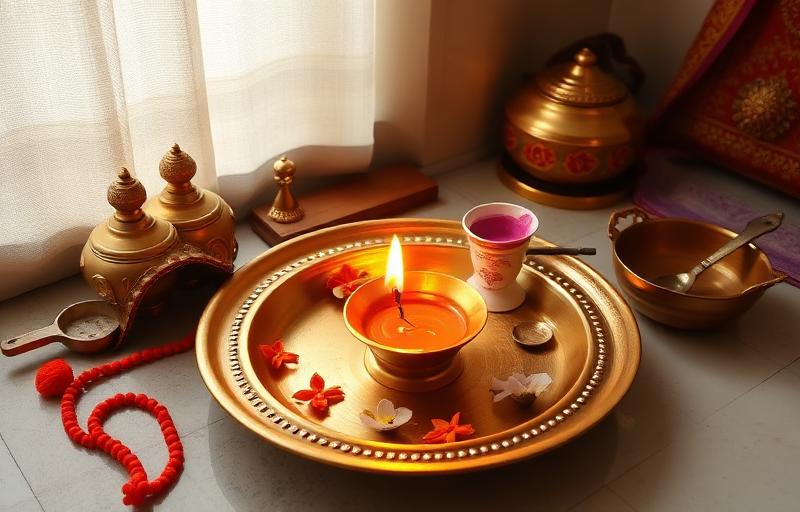
The days between sthapana and visarjan are where many first-timers get genuinely anxious, worrying that missing a single step or an entire day will somehow undo the puja or offend the deity. In practice, a realistic daily routine takes ten to fifteen minutes and can flex comfortably around a working household's actual schedule rather than demanding the household reorganize itself around the idol. A simple version that works well: light the diya and incense once in the morning and once in the evening, offer a fresh flower or two, briefly reoffer durva if available that day, and do a short aarti, even a genuinely one-minute version, before leaving for work or before sitting down to dinner.
What is essential: keeping the space around the idol reasonably clean, never letting the diya burn unattended near flammable material like curtains or paper decorations, and offering fresh water or a token bhog daily so the murti is not left completely unattended for a full twenty-four hours. What is optional, despite what elaborate social media posts might suggest: brand new decorations each day, a full modak-making session every single morning, or inviting guests to every single aarti without exception. Many working professionals manage a full ten-day sthapana successfully with nothing more elaborate than this simplified rhythm, and it is considered entirely valid by tradition, not a lesser or incomplete version of the observance.
If a day is genuinely missed due to travel, illness or a family emergency, the common and widely accepted practice is simply to resume the very next day and offer a slightly longer prayer acknowledging the gap honestly, rather than treating the missed day as a failure requiring some elaborate ritual correction or extra penance.
🪔 Vandnaa sends a daily reminder for aarti timing and today's panchang, so the ten days don't quietly slip past a genuinely busy work schedule.
Realistic Expectations for a Working Household
A common worry among first-timers is whether it is even acceptable to start Ganpati sthapana at all if the household cannot dedicate the whole day, every day, to the puja the way a retired grandparent in a joint family traditionally might have. It is entirely acceptable, and this concern is far more common than most people admit out loud. Devotion is measured by sincerity and consistency within one's actual means, not by how many hours are spent each day standing in front of the idol. Working professionals, students living alone in a rented flat, and even people managing the puja around demanding shift work all do this successfully every single year across the country, quietly and without fanfare.
Another common concern is travel: if a short trip becomes unavoidable during the sthapana period, it is generally fine to ask a trusted family member, close friend or neighbor to look after the basic daily lamp and offering on your behalf, or in some family traditions, to simply reduce that particular day's ritual to a brief prayer performed before leaving the house. What is genuinely discouraged is leaving the idol in a completely unattended, uncleaned state for multiple consecutive days, and this comes more from a basic standard of respect than any strict scriptural rule that must be followed exactly.
First-timers also frequently worry, more than almost anything else, about getting the Sanskrit mantras wrong. Pronunciation matters far less than the sincerity behind it; even a simple Ganpati Bappa Morya said with genuine feeling carries the same devotional weight as a more elaborate Sanskrit invocation recited perfectly by someone still learning the language. The real goal in year one is building a comfortable, sustainable practice, not performing a flawless ritual, since the tradition itself is meant to deepen naturally over many years rather than arrive fully formed on the very first attempt.
Wrapping Up: A Gentle Visarjan for First-Timers
When the chosen duration ends, whether it is one and a half, three, five, or the full ten days, the sthapana closes with visarjan, the ritual immersion of the idol. First-timers often assume this requires access to a river, lake or an organized community event with drummers and processions, but a small clay idol can be respectfully immersed at home in a large bucket or tub of water, with the resulting clay later returned to soil, such as a garden bed or a large plant pot on the balcony, with no loss of ritual meaning whatsoever.
Before visarjan, perform a short farewell aarti and offer a final round of durva and flowers, then carry the idol out with the family, however small the gathering happens to be, even if it is just two or three people. The emotional part of this day is often genuinely understated by first-timers ahead of time; many describe being quietly surprised by how attached they became to the daily ritual over just a few days of consistent practice, and it is completely normal to feel a small, unexpected sense of loss on visarjan day itself. This reaction is, if anything, a clear sign that the practice was meaningful rather than mechanical or merely performed out of obligation.
After visarjan, the puja space is cleaned and put back to its everyday use, and many first-time households find that they already know, without needing to overthink the decision at all, whether they want to do this again next year, and often with slightly more confidence, a slightly longer duration, and noticeably less anxiety than their very first attempt.
Common Questions From Devotees
How many days should a first-timer keep Ganpati at home?+
A Dedh Din (one and a half day) or three-day sthapana is generally the most manageable starting point, with many families extending to longer durations in later years.
Is a priest required for a first home Ganpati sthapana?+
No, a priest is not required. Many families perform the full sthapana and daily aarti themselves using simplified mantras, and this is considered entirely valid.
What if I cannot do the puja twice a day due to work?+
A once-daily routine, or even a brief morning-only ritual with an evening diya, is acceptable. Consistency and sincerity matter more than frequency.
Can I immerse a small Ganpati idol at home instead of going to a water body?+
Yes, home immersion in a bucket or tub is a widely accepted and eco-friendly method, especially for clay idols, with the resulting clay returned to garden soil afterward.
What is the single most important thing for a first-timer to get right?+
Keeping the space clean and the idol attended to daily, even briefly, matters more than mantra pronunciation, decoration or the elaborateness of offerings.
About the author
Dr. Suresh Iyer · Vastu Shastra & Jyotish, 18+ years
Dr. Suresh has practiced traditional Vastu and basic Vedic Jyotish for over 18 years across South India. He contributes the Vastu, direction, and home-puja layout guides on Vandnaa.
Meet the Vandnaa editorial team →Explore on Vandnaa
Related Articles

Ganesh Visarjan 2026: Date, Vidhi and the Rules Devotees Often Get Wrong
7 min read
Organizing a Ganesh Chaturthi Puja in Your Apartment Society
7 min read
Ganesh Chaturthi 2026: Date, Sthapana Muhurat, Puja Vidhi, Visarjan Guide & Modak Bhog
10 min read
Ganesh Chalisa Lyrics & Meaning in Hindi (गणेश चालीसा)
9 min read