
When Is Ganesh Visarjan in 2026
Ganesh Chaturthi sthapana falls on Monday, 14 September 2026, but visarjan itself is not a single fixed date. It depends entirely on how many days a family or pandal chooses to keep Ganpati Bappa at home before immersion. Households following a Dedh Din (one and a half day) tradition immerse the idol on the morning of 15 September. Those observing a three-day, five-day or seven-day cycle move to visarjan on the corresponding date, while the majority of community pandals, along with many homes, keep the full ten-day Ganeshotsav, which ends on Anant Chaturdashi, falling around 23 September 2026.
There is no single correct duration, and this often confuses first-generation observers who assume there is one universal answer. What matters far more than the number of days is that the duration is decided in advance, usually following family or regional tradition, and that visarjan is carried out with the same sincerity as the sthapana itself. Maharashtra's largest public pandals, the kind that draw enormous processions on the final day, almost always run the full ten-day cycle, which is part of why Anant Chaturdashi sees the heaviest crowds and traffic of the entire festival window nationwide.
If your household is unsure which duration to pick this year, the simplest approach is to check what was followed last year and stay consistent, since switching the cycle every year is generally considered less auspicious than maintaining a steady, repeatable family pattern. Newer households starting the tradition for the first time this year should read this alongside a beginner's guide before locking in a date, since the right choice depends as much on daily bandwidth as on devotion.
The Visarjan Vidhi, Step by Step
The visarjan ritual begins with an uttar puja, a short concluding worship performed before the idol leaves the house. This includes a final aarti, offering durva grass, modak and flowers one last time, and lighting incense near the murti. Many families also tie a small amount of akshat (rice) and a coin into a piece of cloth, placed near the idol as a symbolic offering for the journey ahead, a gesture meant to see Bappa off the way one would see off a departing family member.
Once the uttar puja is complete, the idol is lifted carefully, usually by the male members of the family or by whoever performed the original sthapana, and carried out with the household chanting Ganpati Bappa Morya, Purchya Varshi Laukariya (come again, and return early next year). Drummers, dancing and processions are common in neighborhoods and larger pandals, but at home a simple, unhurried walk to the immersion point is equally valid and equally complete in ritual terms; volume and scale have never been the measure of devotion here.
At the water's edge, the idol is lowered gently, never thrown or dropped, and devotees traditionally wait to see it fully submerged before turning back, since walking away too early is considered an incomplete farewell. Some families recite a short closing shloka at this point, thanking Ganesha for the days spent together and asking forgiveness for any unintentional lapse during the puja.
📅 Vandnaa's panchang shows the exact visarjan muhurat for your city and chosen day, so you know the right window to leave the house instead of guessing against a generic national date.
Mistake One: Picking the Wrong Water Body or Method
The single most common visarjan mistake is immersing a Plaster of Paris idol directly into a natural river, lake or the sea. POP does not dissolve the way traditional clay (shadu mitti) does, sometimes taking months or never fully breaking down, and the paints used on most mass-produced idols contain heavy metals and synthetic dyes that harm aquatic life and contaminate water used downstream for drinking or irrigation. Several municipal corporations across India now actively enforce restrictions on immersing non-biodegradable idols in natural water bodies, and offer designated artificial immersion tanks instead, usually set up in parks, stadium grounds or near temples specifically for the festival window.
Before visarjan day, it is worth checking two things: whether your idol is made of clay or POP, and whether your local civic body has published tank locations for the year, since these details change annually and are usually announced through municipal websites or local news a week or two before the festival. Many housing societies and RWAs now arrange a common eco-friendly tank on the premises itself, which removes the need to travel anywhere at all on visarjan day.
For smaller home idols, a genuinely respectful and increasingly common alternative is bucket visarjan, where the idol is immersed in a large tub or bucket of water at home until it fully dissolves over a day or two, and the resulting clay is later placed in a plant pot or garden soil rather than poured into a drain. This is not a shortcut or a lesser option born of convenience; for a clay idol specifically, it is often the most complete and least wasteful way to return the murti to the earth it came from.
Mistake Two: Skipping the Farewell Rituals
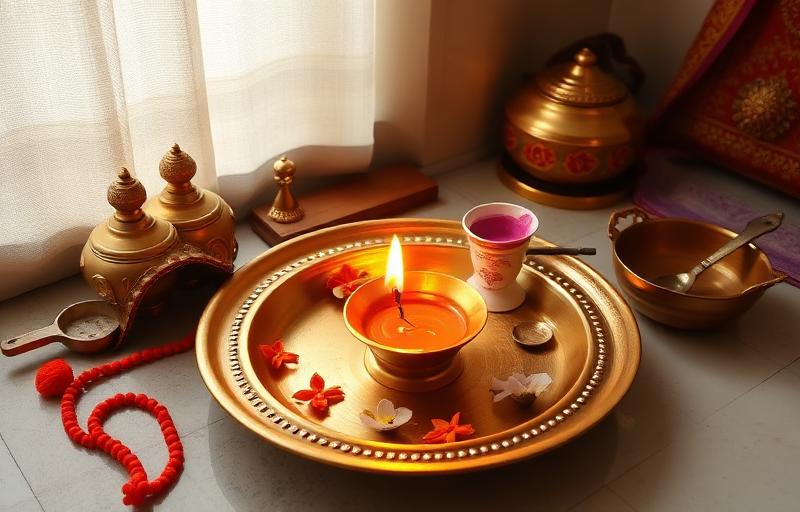
In the rush of festival crowds, traffic and the emotional weight of the day, many families end up treating visarjan as a task to finish quickly rather than a ritual to complete properly. The uttar puja gets skipped entirely, the final aarti is rushed through in thirty seconds while everyone is already halfway out the door, or worse, the idol is simply carried to the car and dropped off at a collection point without any closing prayer at all, treated more like disposal than farewell.
Traditionally, visarjan includes asking Ganpati Bappa for forgiveness for any lapses during the days of worship, whether a missed aarti, a forgotten offering, an argument in the household, or simply the ordinary imperfection of daily life during a busy ten days. It also includes a specific request for him to return the following year, which is the actual meaning behind the Marathi chant sung during the procession rather than just a rhythmic slogan. Skipping these elements does not technically invalidate the visarjan, most priests will say the ritual still counts, but it does quietly turn a meaningful goodbye into a logistical errand, and many families report feeling an odd emptiness afterward without quite knowing why.
Children, in particular, benefit enormously from being included in this closing ritual rather than being rushed past it in the chaos of departure. Letting them help carry flowers, sing the final aarti themselves, or simply stand and watch the idol go under the water gives the festival's ending as much emotional weight as its colorful beginning, and is very often what they remember most fondly about the festival in later years, more than the decorations or the sweets.
Mistake Three: Careless Idol Handling
How the idol is physically handled on visarjan day matters more than most devotees realize, and it is where accidents and disrespect most often happen unintentionally rather than deliberately. The murti should always be carried with both hands, supported firmly from underneath rather than gripped by the crown, trunk or any narrow, breakable part that was never meant to bear weight. It should face forward, toward the direction of movement, rather than being carried backward, sideways, or awkwardly tilted, which is considered disrespectful even when unintentional.
A second common handling mistake is forgetting to remove non-biodegradable decorations before immersion. Thermocol bases, plastic flowers, glued-on ornaments and synthetic garlands are routinely left attached in the rush, and these do not dissolve even when the surrounding clay does, eventually washing up as litter. Taking just two or three minutes to strip these off before the idol reaches the water makes a genuine difference to how eco-friendly the visarjan actually turns out to be, regardless of what the core idol itself is made of.
Families who follow muhurat timings closely should also avoid carrying out visarjan during Rahu Kaal, an inauspicious window that shifts daily and by location; Vandnaa's panchang lists this window for each specific date so it can be avoided without needing to calculate it by hand every year. Finally, once the idol is lowered into the water, resist the urge to push it under forcefully or prod it with a stick to speed things along. Letting it settle and submerge naturally, even if that takes a few extra minutes of standing at the water's edge, is considered the far more respectful way to complete the whole ritual.
What to Do at Home After Visarjan
Once the family returns home, the mandap or chowki where Ganpati Bappa sat is cleaned and cleared, usually the same evening rather than left for the next day, since leaving the empty space untidy is considered a poor way to close out ten days of careful daily worship. Many households keep a small pinch of the akshat, a single durva blade, or a little of the immersion-day soil as a symbolic keepsake, stored away carefully until the following year's sthapana arrives. This is not mandatory by any scriptural rule, but it is a common and genuinely comforting practice for families who find the goodbye emotionally difficult, especially with young children who have visibly bonded with the murti over the preceding days.
A diya is usually lit in the puja space that same evening, even though the idol itself is now gone, as a way of keeping the home's energy steady and warm rather than treating the space as suddenly hollow or abandoned. Prasad, if any remains from the day's offerings, is distributed to neighbors and extended family, and some households make it a specific point to feed a few people or donate food on visarjan day itself, extending the spirit of the festival a little further beyond their own front door and into the community around them.
It helps, in the days that follow, to remember that visarjan is not really the end of devotion but a transition, much like seeing off a beloved guest at the end of a long, happy visit. Ganpati Bappa is considered to return to his own abode, carrying with him the prayers, wishes and small confessions of the household, not disappearing from the devotee's life until next year arrives. Framing it this way, as a farewell rather than a loss, is very often what makes the day feel genuinely complete rather than simply sad.
Common Questions From Devotees
Which day should I do Ganesh Visarjan in 2026 if I keep Bappa for only one and a half days?+
With sthapana on Monday, 14 September 2026, a Dedh Din household would perform visarjan on the morning of Tuesday, 15 September 2026.
Is it necessary to immerse the idol in a river, or can I do it at home?+
Home immersion in a bucket or tub is a fully valid and increasingly recommended method, especially for clay idols and in cities where natural water bodies are restricted or heavily crowded.
What is the correct chant during the visarjan procession?+
The traditional chant is Ganpati Bappa Morya, Purchya Varshi Laukariya, meaning come again, Bappa, and return early next year.
Can Ganesh Visarjan be performed after sunset?+
Yes, evening and night visarjan is common, especially for the tenth day when large processions take place after dark. Families following strict muhurat should still avoid Rahu Kaal for that day.
What if I realize after visarjan that I skipped the farewell aarti?+
It is not considered a serious lapse. A simple prayer at home that evening, acknowledging the oversight and asking for Bappa's blessings, is a widely accepted way to complete the ritual in spirit.
About the author
Pandit Mahesh Trivedi · Festival Traditions & Panchang
Pandit Mahesh leads the festival-date and Panchang content on Vandnaa. He cross-references multiple regional panchangs (Drik, Vaishnava, Bengali, Marathi) for every festival date published on the site.
Meet the Vandnaa editorial team →Explore on Vandnaa
Related Articles
Ganesh Chaturthi at Home for First-Timers: A Beginner's Guide
7 min read
Organizing a Ganesh Chaturthi Puja in Your Apartment Society
7 min read
Ganesh Visarjan: The Tradition and Meaning Behind Bidding Farewell to Ganesha
6 min read
Ganesh Chaturthi 2026: Date, Sthapana Muhurat, Puja Vidhi, Visarjan Guide & Modak Bhog
10 min read