A Son Made Without Shiva
In the version of Ganesha's origin told in the Shiva Purana, Parvati, wanting privacy while bathing and having no one she fully trusted to guard her door against intrusion, including from Shiva's own attendants who did not always respect her wishes for solitude, decided to create a guardian entirely of her own making. She took the turmeric paste, or in some tellings the natural exfoliating substance, she used while bathing, formed it into the shape of a boy, and breathed life into him, making him hers alone, born of no father, with a single clear instruction: let no one enter while she bathed.
The boy took his duty with complete seriousness. When Shiva himself, returning to his own home after a long absence, attempted to enter and was stopped by a child he had never seen before and who had no idea who this stranger claiming authority over the household actually was, the boy refused to move, holding his post exactly as instructed regardless of who stood before him.
A Standoff Neither Side Would Break
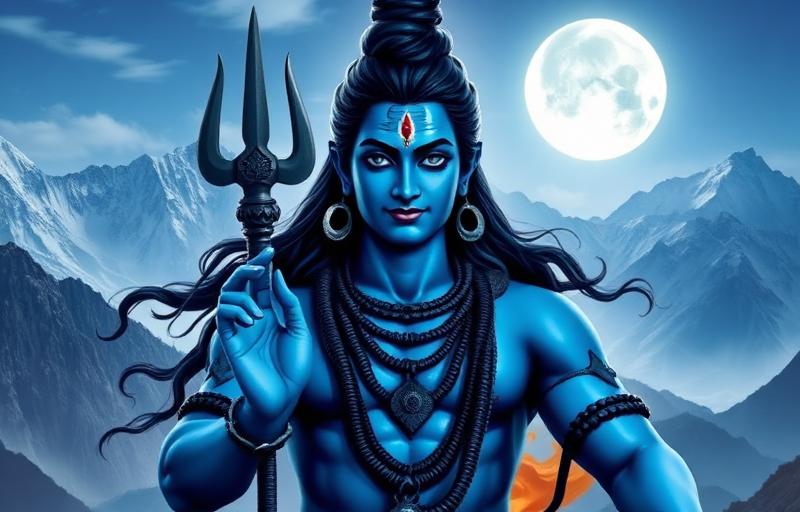
Shiva, unaccustomed to being refused entry to his own home and unaware this child was in any way connected to Parvati, grew angry at what he perceived as an intolerable insolence from a stranger. The confrontation escalated, and in his fury Shiva ultimately severed the boy's head, only for Parvati to emerge and reveal the full truth: that this was her own son, created and instructed by her alone, killed for doing exactly what he had been told to do.
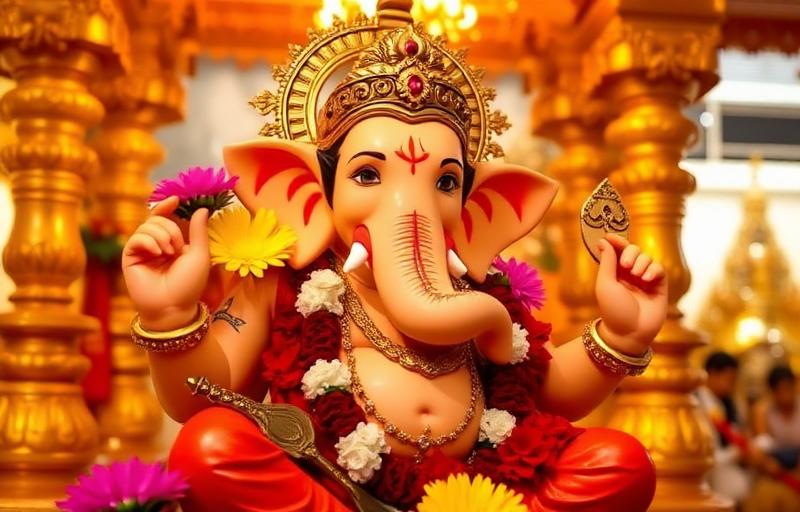
Parvati's grief and rage at what had happened were immense, severe enough that some tellings describe her threatening to destroy the whole of creation unless her son was restored to life. Shiva, faced with both the moral weight of what he had done and the scale of Parvati's anguish, agreed to bring the boy back, but his original head could not be recovered. He sent his attendants out with instructions to bring back the head of the very first creature they encountered facing north, and that creature turned out to be an elephant. The elephant's head was attached to the boy's body, restoring him to life in the form by which he has been known ever since.
A Different Story From the Broken Tusk
It is worth being clear that this story, Ganesha's first birth and his elephant head, is a separate episode from the more widely known story of how his single tusk came to be broken during his encounter with Parashurama, a later episode in his life as an adult deity rather than the story of his origin. The two are often conflated in casual retelling, but the Puranas treat them as distinct events at different points in his story: first the birth and the head, only afterward, much later, the broken tusk.
This birth story remains central to how Ganesha is understood theologically, particularly the detail that he was made by Parvati's power alone, without Shiva's direct involvement in his creation, which several traditions read as an emphasis on Shakti's independent creative capacity rather than treating Ganesha as simply a lesser reflection of his father. The elephant head itself, arrived at almost by circumstance rather than by original design, is nonetheless treated in later theology as entirely appropriate and deliberate in retrospect, tied to Ganesha's wisdom, memory and auspiciousness as an elephant is understood to embody in Indian tradition generally.
Common Questions From Devotees
Is this the same story as Ganesha's broken tusk?+
No, these are two separate episodes. This story explains how Ganesha was born and how he came to have an elephant head at all. The broken tusk is a later, unrelated episode from his encounter with Parashurama as an adult deity.
Why did Shiva behead the boy without knowing who he was?+
The text presents it as a genuine misunderstanding rather than cruelty: Shiva had no way of knowing the child guarding the door was Parvati's own creation, and reacted to what looked like an unfamiliar stranger's refusal to let him into his own home.
Why an elephant's head specifically?+
The story presents this as circumstantial: Shiva instructed his attendants to bring the head of the first creature they encountered facing north, and that happened to be an elephant, though later tradition treats the resulting association with wisdom and auspiciousness as fitting regardless of how it came about.
About the author
Anjali Mehta · Editor, M.A. Religious Studies
Anjali is the managing editor for Vandnaa and oversees the festival and vrat coverage. She holds an M.A. in Religious Studies and reviews every published article for accuracy, accessibility, and tradition-fidelity.
Meet the Vandnaa editorial team →