A Mountain Range as a Person
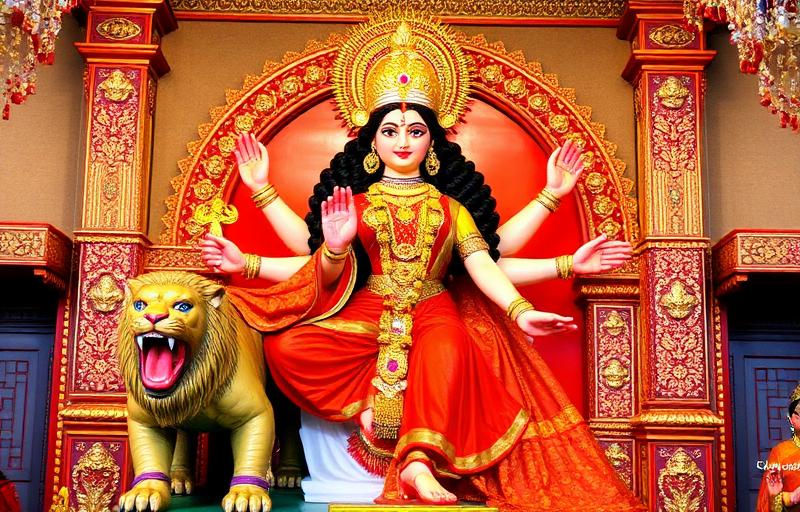
Himavan, personification of the Himalayas themselves, is married to Menaka, an apsara, and together they are parents to several children of major mythological importance, including Ganga, who descends to earth as the sacred river, and Parvati, who is born specifically as the reincarnation of Sati after her self-immolation, destined from birth for eventual union with Shiva. Himavan's identity as a literal mountain range rather than simply a king who happens to rule mountainous territory is treated with real consistency across the Puranas, and his household is described with a scale appropriate to that identity, vast, ancient and central to the geography of the world the other gods and sages move through.
Raising Parvati, Himavan and Menaka watch a daughter marked from the outset for an extraordinary destiny, and much of Himavan's role in the wider cycle of stories involves the anxieties of a father who understands his child's importance without being entirely at ease with the specific path her life is taking.
Watching a Daughter Choose Her Own Husband
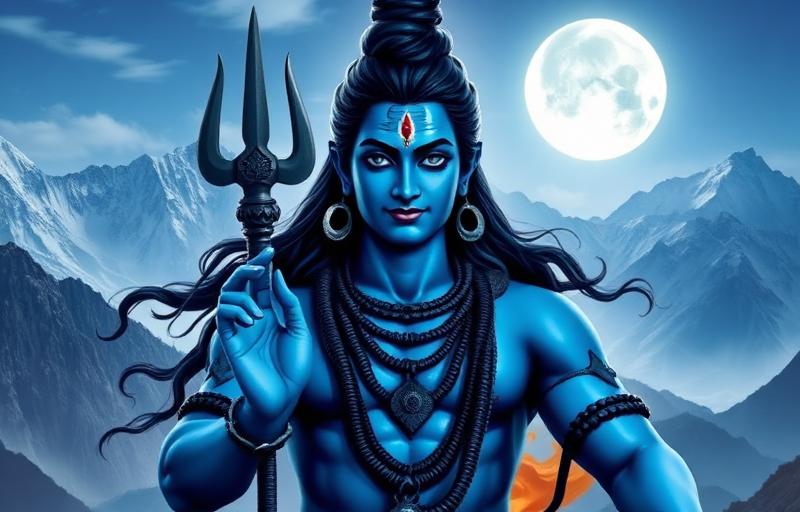
After Kamadeva's failed attempt to disturb Shiva's meditation with romantic desire, Parvati resolves to win Shiva's attention through her own severe tapasya rather than any external intervention, retreating to austere penance in conditions that alarm her parents watching from the household she was raised in. Himavan, watching his daughter subject herself to fasting and exposure in pursuit of an ascetic who had shown no interest in marriage at all, is described across various tellings as genuinely torn, proud of her devotion but uncertain whether this was the future he would have chosen for her.
When Shiva, finally moved by the intensity of her practice, agrees to the marriage and sends the Saptarishi, and later Narada, to formally request Parvati's hand from her parents, Himavan's consent is not treated as a formality. Kalidasa's Kumarasambhavam, the classical Sanskrit poem most closely associated with this courtship, gives real weight to Himavan's deliberation, portraying a father working through genuine concern about his daughter's chosen path before ultimately consenting with full blessing.
A Father Whose Name Sits Behind Every Himalayan Peak
Himavan's identity as the Himalayas themselves means his story is inseparable from the actual geography millions of people encounter directly, and his role as father to both Ganga and Parvati links the mountain range physically and mythologically to two of Hinduism's most central figures at once, the river that carries purification across the plains and the goddess who becomes half of Shiva's own composite form. Several Himalayan shrines and pilgrimage routes carry devotional associations with Himavan directly, treating the mountains not merely as the setting for divine events but as an active participant and parent within the stories themselves.
The anxious, careful father glimpsed in the Kumarasambhavam remains a comparatively underused thread in popular retellings, which tend to focus on Parvati's own tapasya and Shiva's eventual response rather than on Himavan's interior experience of watching it unfold, but it offers a distinct emotional register within the wider Shiva-Parvati story cycle, one told from the household Parvati was raised in rather than from the ascetic's mountain she eventually joined.
Reader Questions Answered
Is Himavan literally the Himalayas, or a king who ruled them?+
Across the Puranas, Himavan is consistently treated as the personification of the Himalayas themselves, not merely a human or divine king ruling mountainous land, and his household and scale are described accordingly.
Are Ganga and Parvati really sisters in this tradition?+
Yes, both are daughters of Himavan and Menaka in this tradition, making Ganga and Parvati sisters, which is part of why Ganga is often depicted residing in Shiva's own matted hair, a detail sometimes read as reflecting this family connection.
What is the Kumarasambhavam?+
It is a classical Sanskrit epic poem by Kalidasa narrating Parvati's tapasya, her marriage to Shiva, and the birth of their son Kartikeya, and it remains one of the most literarily celebrated tellings of this courtship.
About the author
Anjali Mehta · Editor, M.A. Religious Studies
Anjali is the managing editor for Vandnaa and oversees the festival and vrat coverage. She holds an M.A. in Religious Studies and reviews every published article for accuracy, accessibility, and tradition-fidelity.
Meet the Vandnaa editorial team →