The Lord Who Teaches Through His Form
Lord Ganesha is the Vighnaharta - the remover of obstacles - and the deity of wisdom and new beginnings. But beyond worship, his very form is a living lesson. Each feature, from his elephant head to the little mouse at his feet, was given meaning by the sages so that simply remembering Ganesha reminds us how to live. This guide unpacks those lessons one by one for everyday life.
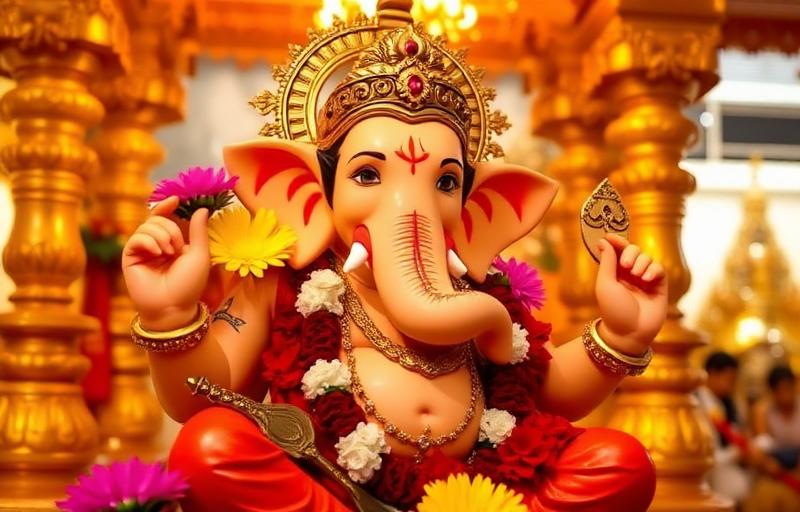
Big Ears, Small Mouth - Listen More, Speak Less
Ganesha's large ears and small mouth are his first lesson. The ears say: listen carefully, patiently and without judgement, taking in more than you give out. The small mouth reminds us to speak less but speak wisely.
Lessons for life:
- Hear people fully before forming an opinion.
- Let your words be few, true and kind.
- Most conflicts shrink when we listen more than we argue.
The Large Head - Think Big and Wise
The elephant head stands for a vast intellect and the courage to think big. The elephant clears its own path through a forest, just as wisdom clears a path through life's difficulties.
Lessons for life:
- Keep your vision large and your mind open.
- Use intelligence, not force, to move past problems.
- A calm, thoughtful head solves what anger never can.
The Broken Tusk - Sacrifice for a Higher Goal

When sage Vyasa needed a scribe to write the Mahabharata without pause, Ganesha broke off his own tusk to use as a pen rather than stop the great work. The broken tusk teaches that great goals demand sacrifice and that we should not let small comforts halt a worthy task.
Lessons for life:
- Be willing to give up something to finish what matters.
- Commit fully once you accept a responsibility.
- Imperfection (a broken tusk) is no barrier to greatness.
The Mouse - Master Your Desires
The tiny mouse (Mooshak) that the mighty Ganesha rides is a symbol of restless desire and the wandering mind - small, quick and able to nibble away everything if left uncontrolled. That Ganesha sits calmly upon it shows that wisdom keeps desire in its place.
Lessons for life:
- Do not let endless wants run your life; ride them, do not be ridden.
- A controlled mind, however small the temptation, is true strength.
- Greatness rests on the mastery of little daily urges.
Remover of Obstacles - Begin With the Right Spirit
Ganesha is worshipped first, before any new venture, as Vighnaharta. The deeper lesson is that obstacles fall not only to prayer but to a clear, humble and well-prepared mind. He removes hurdles for those who begin with sincerity and effort.
Lessons for life:
- Start every task with calm, focus and a clean intention.
- See obstacles as tests that sharpen you, not walls that stop you.
- Honour the beginning, and the path ahead becomes lighter.
A Simple Daily Practice

Begin your day or any new task by quietly chanting 'Om Gam Ganapataye Namah' eleven times, then bow and resolve to listen more, speak kindly and stay humble that day. Light a lamp and offer durva grass or a modak on Wednesdays or Chaturthi. The practice is simple; living the lessons is the real worship.
Frequently Asked Questions
What do Ganesha's big ears and small mouth teach?+
They teach us to listen more and speak less. Big ears mean hearing others carefully and patiently, while the small mouth reminds us to use few, wise and kind words.
Why does Ganesha have a broken tusk?+
He broke his own tusk to use as a pen while writing the Mahabharata for sage Vyasa without pausing. It teaches sacrifice for a higher goal and that imperfection is no barrier to greatness.
What does the mouse symbolise in Ganesha's iconography?+
The mouse represents restless desire and the wandering mind. Ganesha sitting calmly upon it shows that wisdom keeps desire and small daily urges under control.
Why is Ganesha worshipped first before any work?+
As Vighnaharta, the remover of obstacles, Ganesha is invoked first so a new venture begins with clarity, humility and the right spirit. The lesson is to honour every beginning with sincerity.
What does the elephant head of Ganesha represent?+
The large elephant head represents vast intellect, wisdom and the courage to think big. Like an elephant clearing its path, wisdom helps us move calmly through difficulties.
Which mantra is used to invoke Ganesha's blessings?+
'Om Gam Ganapataye Namah' is the popular Ganesha mantra. Chanting it eleven or 108 times before a new task settles the mind and invokes his blessing of wisdom and success.
About the author
Anjali Mehta · Editor, M.A. Religious Studies
Anjali is the managing editor for Vandnaa and oversees the festival and vrat coverage. She holds an M.A. in Religious Studies and reviews every published article for accuracy, accessibility, and tradition-fidelity.
Meet the Vandnaa editorial team →Explore on Vandnaa
Related Articles
Ganesh Aarti Lyrics – Jai Ganesh Deva (गणेश आरती)
8 min read
Ganesh Chalisa Lyrics & Meaning in Hindi (गणेश चालीसा)
9 min read
Lakshmi's Life Lessons - Wealth & Gratitude
10 min read
Saraswati's Life Lessons - Knowledge & Humility
9 min read
Krishna's Life Lessons - Teachings for Modern Life
10 min read
Hanuman Life Lessons - Devotion & Strength
9 min read