Ganesha's Fall and the Moon's Mockery
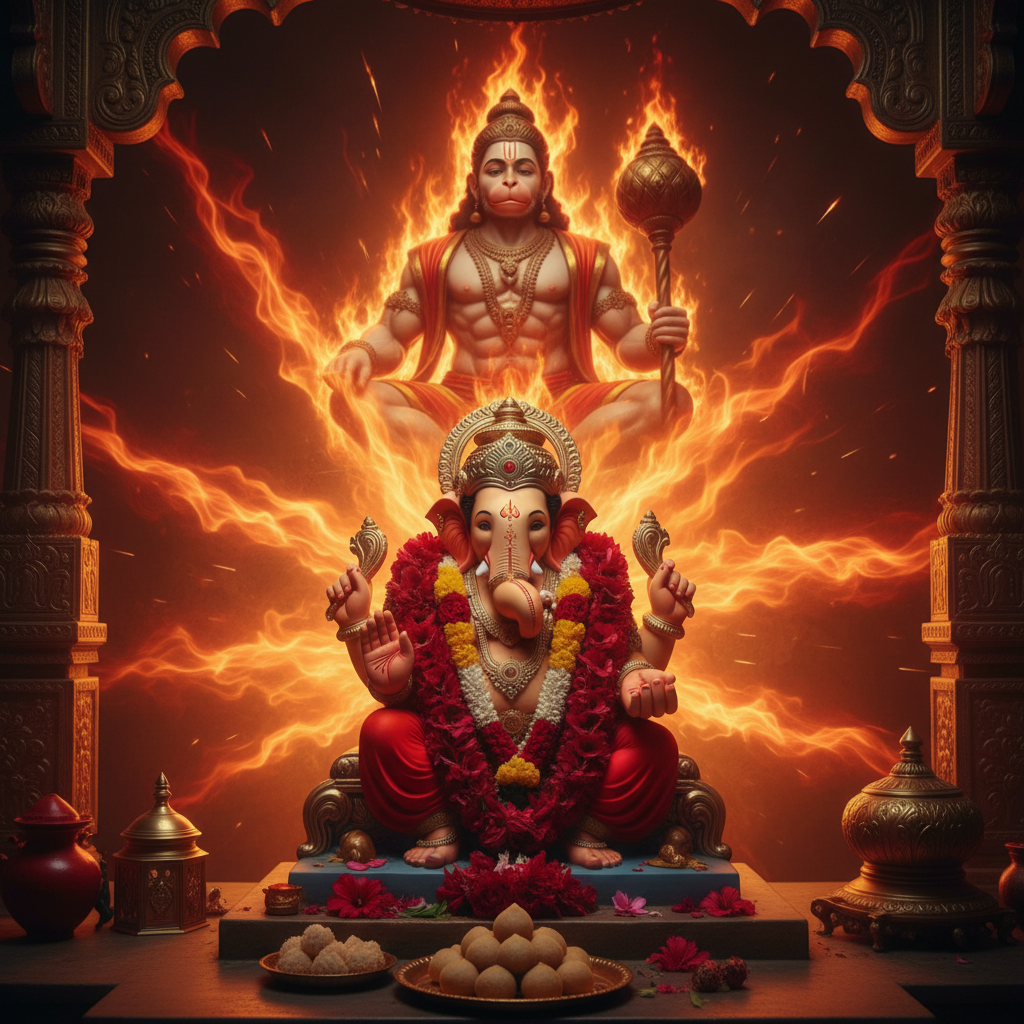
As tradition tells it, Ganesha once feasted generously on modaks offered to him and set off homeward on his small mouse vahana. Along the way, as the story goes, a snake crossed their path and startled the mouse, causing Ganesha to lose balance and tumble to the ground, scattering the modaks around him.
Unbothered by the fall, Ganesha calmly gathered himself and the spilled sweets and continued on his way. But Chandra, the moon, watching from the sky above, could not resist laughing openly at the sight, mocking Ganesha's form and his stumble.
The Curse Ganesha Pronounced
Angered by this ridicule, Ganesha broke off a piece of his own tusk and, as the katha recounts, cursed Chandra that anyone who looked upon the moon on that day, the fourth day (Chaturthi) of the lunar fortnight, would face false blame for a wrong they never committed.
Realising the weight of his mistake, Chandra pleaded for forgiveness. Moved by his repentance, Ganesha softened the curse rather than withdrawing it completely, declaring that its effect would touch only those who saw the moon on Chaturthi specifically, not on every other night.
The Link to the Syamantaka Mani Story
This katha is closely tied to a well loved episode involving Lord Krishna, known as the Syamantaka mani story. In it, Krishna is said to have unknowingly viewed the moon on Ganesh Chaturthi and was soon after falsely accused of stealing a precious jewel, an accusation later proven untrue.
Devotees recall this episode as proof of how even Krishna was not spared the effect of Ganesha's curse, and it remains one of the most retold reasons behind the custom of avoiding Chandra darshan on this day.
How Devotees Observe This Tradition

Many devotees avoid looking directly at the moon on Ganesh Chaturthi, especially in the evening hours, out of respect for this tradition. Should someone see it accidentally, tradition offers a remedy rather than worry, reciting a shloka that recalls the Syamantaka story as a way of setting aside any false blame.
The verse, often shared during this time, reminds listeners that a lion once killed Prasena, and a lion was in turn killed by Jambavan, gently urging that no innocent person, including oneself, should grieve over what they did not do.
A Lesson in Humility
For devotees today, this katha is less about the moon and more about the danger of mockery and pride. Even a celestial being as radiant as Chandra was not spared consequence for laughing at another's misfortune, a reminder to approach others, even in their stumbles, with kindness rather than ridicule.
Remembering this story on Chaturthi is an act of faith and love, not a transaction, a gentle nudge toward humility and toward trusting that truth eventually clears any false blame.
What People Ask Most
Why do devotees avoid looking at the moon on Ganesh Chaturthi?+
According to tradition, this custom comes from Ganesha's curse on Chandra for mocking his fall, which devotees believe can bring false blame to whoever views the moon that day.
What is the Syamantaka mani connection to this katha?+
In this Puranic episode, Krishna is said to have viewed the moon on Chaturthi and was soon falsely accused of theft, an accusation later disproven, which devotees see as proof of the moon's curse.
Is there a remedy if someone accidentally sees the moon that day?+
Tradition offers reciting a shloka that recalls the Syamantaka story as a gentle remedy, rather than treating it as cause for worry.
About the author
Anjali Mehta · Editor, M.A. Religious Studies
Anjali is the managing editor for Vandnaa and oversees the festival and vrat coverage. She holds an M.A. in Religious Studies and reviews every published article for accuracy, accessibility, and tradition-fidelity.
Meet the Vandnaa editorial team →