Two Chaturthis in Every Lunar Month
The Hindu lunar month is divided into two fortnights, Krishna Paksha, the waning moon, and Shukla Paksha, the waxing moon, and each brings its own fourth-day observance dedicated to Ganesha. Sankashti Chaturthi falls during Krishna Paksha, while Vinayaka Chaturthi falls during Shukla Paksha, roughly a fortnight apart.
Both days are held sacred to Ganesha, but devotees observe them with different intensity and mood, reflecting the different character of the waning and waxing lunar half.
Sankashti Chaturthi: Relief from Difficulty
Sankashti means relief from a difficult situation, and this vrat is observed by many devotees with a day-long fast that is broken only after sighting the moon in the evening, with local moonrise times varying by region. Prayers on this day are often focused on seeking Ganesha's grace to ease specific hardships or worries in a devotee's life.
When Sankashti Chaturthi falls on a Tuesday, it is known as Angarki Chaturthi and is regarded by many devotees as especially significant, drawing larger gatherings at Ganesha temples.
Vinayaka Chaturthi: A Gentler Observance
Vinayaka Chaturthi, arriving during the waxing moon, tends to carry a gentler, more celebratory mood, and its observance varies more by region and family custom than Sankashti, without the same fixed requirement of waiting for moonrise to break a fast. Some devotees keep a simple day-long vrat, while others mark the day mainly through puja and offerings.
The most widely known Vinayaka Chaturthi is Ganesh Chaturthi itself, in the month of Bhadrapada, celebrated across India as Ganeshotsav with elaborate community festivities, though it remains, at its root, one of the twelve Vinayaka Chaturthis of the year.
How the Vidhi Differs Between the Two

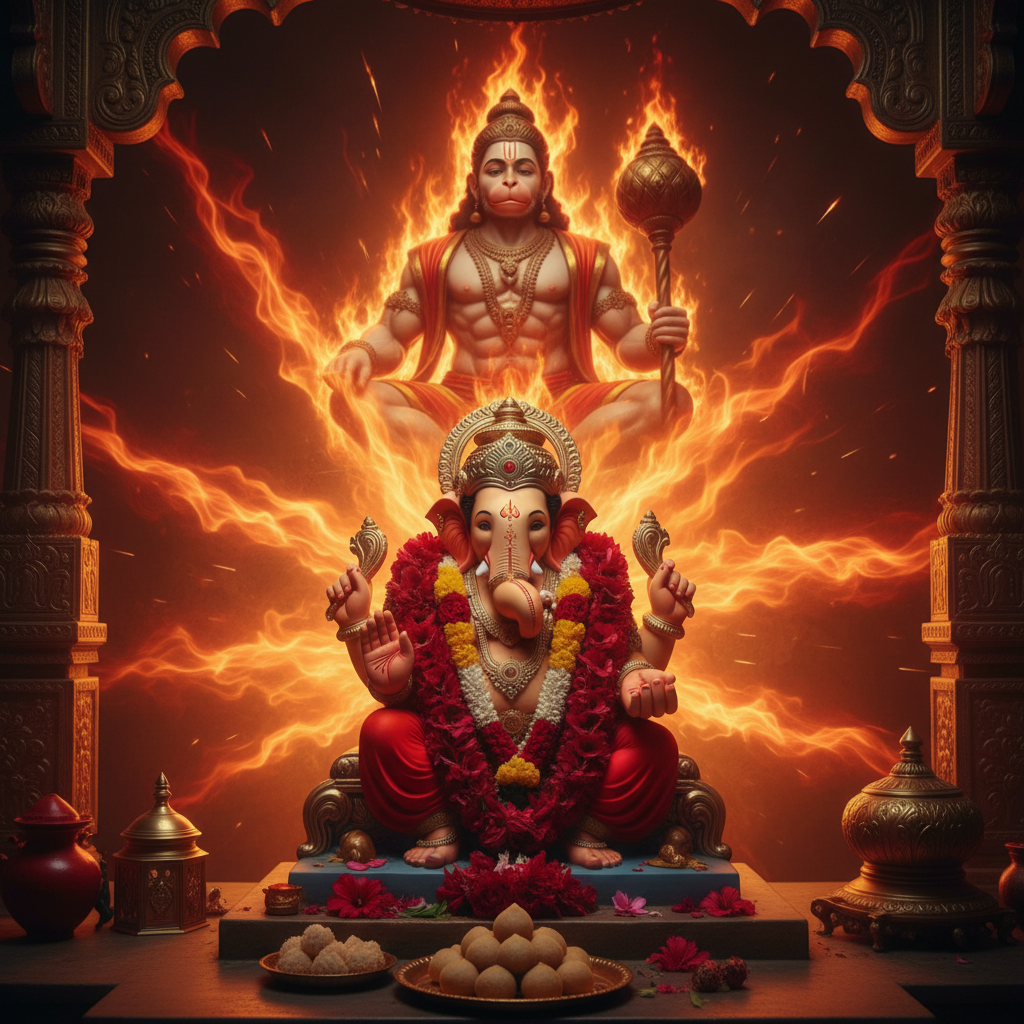
On Sankashti, the day typically involves fasting from sunrise, an evening puja, and breaking the fast only after offering arghya to the risen moon while remembering Ganesha in prayer. On Vinayaka Chaturthi, the rhythm is usually simpler, a morning puja with modak or other sweets offered to Ganesha, and the observance often concluding by evening without a moonrise ritual.
Both days commonly include chanting Ganesha's names, offering durva grass, and seeking his blessings, differing mainly in duration, strictness of fasting and the specific rituals tied to moonrise.
Two Rhythms, One Devotion
For devotees today, having both Sankashti and Vinayaka Chaturthi in the same lunar month is a gentle reminder to turn toward Ganesha regularly, not only in moments of celebration but also in moments of difficulty. The differing rhythms, one more disciplined, one more festive, show that devotion can take many forms and still be equally sincere.
Observing either Chaturthi, in whatever manner one's family tradition allows, is an act of faith and love, not a transaction, a steady thread of remembrance woven through each passing month.
What People Ask Most
How often do Sankashti and Vinayaka Chaturthi occur?+
Each occurs once every lunar month, Sankashti during the waning moon fortnight and Vinayaka during the waxing moon fortnight, together bringing two Ganesha-focused observances roughly a fortnight apart.
What is Angarki Chaturthi?+
It is a Sankashti Chaturthi that falls on a Tuesday, considered especially significant by many devotees and often observed with larger gatherings and prayers at Ganesha temples.
Is Ganesh Chaturthi a Vinayaka Chaturthi?+
Yes, Ganesh Chaturthi in Bhadrapada month is the most widely celebrated Vinayaka Chaturthi of the year, observed with elaborate community festivities as Ganeshotsav.
About the author
Pandit Mahesh Trivedi · Festival Traditions & Panchang
Pandit Mahesh leads the festival-date and Panchang content on Vandnaa. He cross-references multiple regional panchangs (Drik, Vaishnava, Bengali, Marathi) for every festival date published on the site.
Meet the Vandnaa editorial team →