What Is the Gangaur Festival?
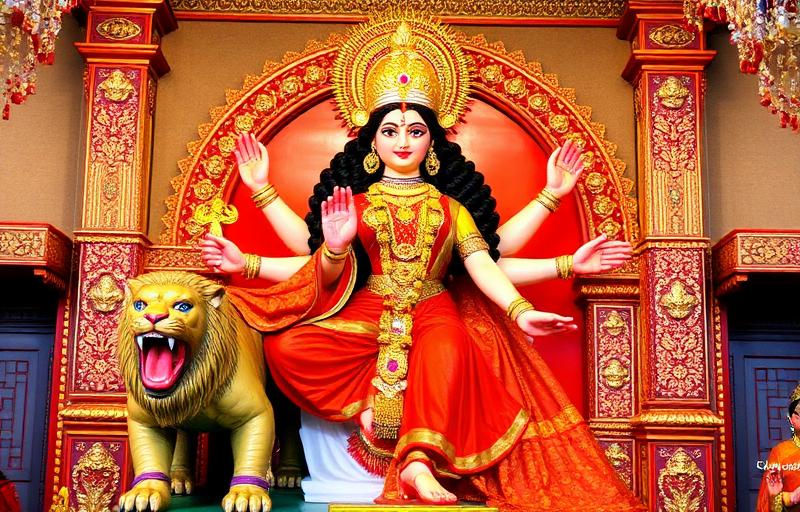
Gangaur is a vibrant festival celebrated mainly in Rajasthan, Gujarat, Madhya Pradesh and parts of North India, honouring Gauri (Goddess Parvati) and her divine husband Isar (Lord Shiva). The name itself comes from Gan (Isar/Shiva) and Gaur (Gauri/Parvati), celebrating their sacred union.
The festival falls in the month of Chaitra, beginning the day after Holi and continuing for around eighteen days, culminating in the grand Gangaur worship. It is above all a women's festival: married women pray for the long life and well-being of their husbands and a happy married life, while unmarried girls pray for a good husband. With beautifully decorated clay images of Isar and Gauri, colourful processions, folk songs and traditional finery, Gangaur celebrates love, devotion and the ideal of a harmonious marriage, honouring Parvati as the model of the devoted wife.
Significance & the Story
The heart of Gangaur is devotion to Goddess Parvati as Gauri, the giver of marital bliss:
- Parvati's devotion honoured: Gangaur celebrates Parvati, who won Lord Shiva as her husband through intense penance and devotion, and is revered as the ideal of loving, faithful married life.
- Blessings of Gauri: It is believed that Gauri, pleased by the women's worship, blesses them with saubhagya - marital happiness, the well-being and long life of their husbands, and harmony in the home.
- A celebration of spring and womanhood: Coming in Chaitra, the festival also welcomes spring, fertility and new life, celebrated with joy, colour and community.
- Return to the parental home: In tradition, Gauri visits her parental home during the festival and departs on the final day for Shiva's abode, symbolised by the immersion of her images - a tender theme echoing every daughter's bond with her family.
Thus Gangaur weaves together devotion to the Divine Mother, the ideal of marriage, and the joy of spring.
Rituals & How It Is Celebrated
Gangaur is observed over many days with beautiful traditional customs:
- Clay images of Isar and Gauri: Women make or bring clay (or wooden) images of Shiva and Parvati, dressing and decorating them lovingly with fine clothes, jewellery and flowers.
- Daily worship and songs: For the days of the festival, women gather to worship Gauri, sing traditional Gangaur folk songs, and offer fresh grass, flowers and sweets.
- Fasting: Many women observe a fast, some taking only one meal a day, praying for their husbands and families.
- Sindoor, mehndi and shringar: Married women apply sindoor and mehndi and dress in their finest, honouring the auspiciousness of marriage.
- Ghudlia and processions: In some regions girls carry decorated pots (ghudlia); on the final days, grand, colourful processions carry the images of Gauri through the streets.
- Immersion (visarjan): On the last day, the images are carried to a well, tank or river and immersed, bidding Gauri farewell as she returns to Shiva.
Observe the festival joyfully according to your family and regional tradition, with devotion at its heart.
Quick Answers
What is the Gangaur festival about?+
Gangaur honours Gauri (Goddess Parvati) and Isar (Lord Shiva), celebrating their sacred union. Mainly celebrated in Rajasthan and North India during Chaitra, it is a women's festival where married women pray for their husbands' well-being and marital happiness, and unmarried girls for a good husband.
When is Gangaur celebrated?+
Gangaur falls in the month of Chaitra, beginning the day after Holi and continuing for around eighteen days, culminating in the grand Gangaur worship and the immersion of the images of Gauri. Coming in spring, it also welcomes the season of new life and fertility.
Why do women immerse the images of Gauri at the end?+
By tradition, Gauri visits her parental home during the festival and departs on the final day for Lord Shiva's abode. The immersion of her clay images in a well, tank or river symbolises this loving farewell as she returns to Shiva, a tender theme echoing every daughter's bond with her family.
About the author
Pandit Mahesh Trivedi · Festival Traditions & Panchang
Pandit Mahesh leads the festival-date and Panchang content on Vandnaa. He cross-references multiple regional panchangs (Drik, Vaishnava, Bengali, Marathi) for every festival date published on the site.
Meet the Vandnaa editorial team →