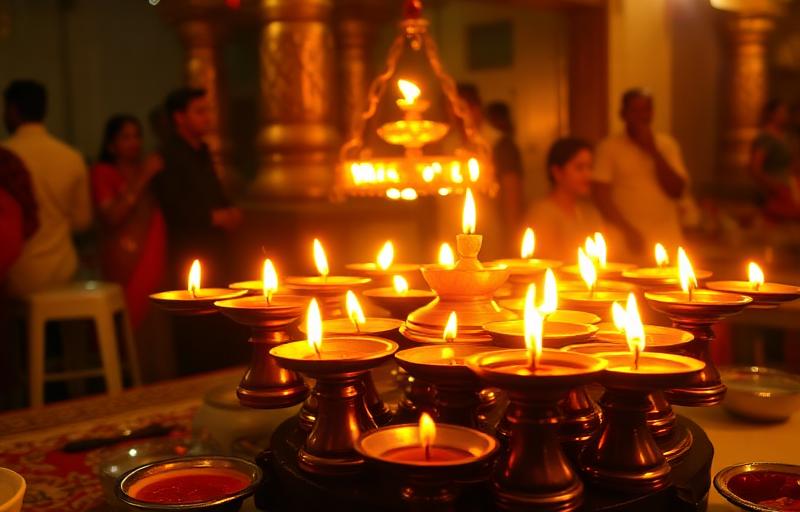
A Shared Story Behind Goa's Great Temples
Visit almost any of Goa's major Hindu temples today and you will hear a version of the same story: the deity was not always here. From the sixteenth century onward, as Portuguese colonial rule tightened its hold along the Goan coast, many temples in areas like Old Goa faced destruction under religious persecution.
Rather than let their faith be extinguished, devotee families carried their deities inland, beyond colonial reach at the time, into what are now Ponda, Bicholim, Sanguem and Quepem talukas. This single act of collective courage, repeated across countless communities, is why so many of Goa's most cherished temples stand today not on their original ground, but on ground their ancestors chose for safety.
The Katha: Deities Carried Through Forests and Rivers
Family memory across Goa preserves fragments of these journeys, idols wrapped carefully in cloth and carried under cover of darkness, crossing rivers and forest paths to reach areas under the protection of Hindu rulers of the time. Shantadurga, Mangeshi, Mahalasa, Damodar, Saptakoteshwar and Mahalaxmi are among the many deities whose present temples trace back to journeys of exactly this kind.
Each relocation carried its own hardship and its own quiet heroism, families giving up land and livelihood near the coast to remain near their deity, rebuilding not just a structure but an entire community's spiritual home from nothing. Devotees today regard these journeys as sacred history in their own right, inseparable from the worship offered at the temples that resulted from them.
Why This History Matters to Devotees Today
This shared history is not simply background information, it shapes how devotees understand their own temples and their faith's resilience.
- It explains why Ponda taluka in particular has grown into such a dense cluster of major Hindu temples, often called Goa's temple town by pilgrims
- Devotees see in this history a living lesson that faith, when protected with courage, survives even the harshest circumstances
- The distinctive Goan temple architecture, with its tall deepastambha, domed roofs and sloping tiled structures, developed largely during this period of rebuilding
- Since Goa's liberation, some communities have also worked to restore devotion at original sites, adding a new chapter to this same story of continuity
Experiencing This Heritage Today

Pilgrims wishing to trace this heritage often visit the temple cluster around Ponda taluka in a single circuit, Shantadurga, Mangeshi, Mahalasa Narayani, Nagesh and Ramnathi lie within a short distance of one another, each carrying its own chapter of this shared story.
Many of these temples remain open from early morning until night, with the customary midday closing observed across Goa, and their annual zatra festivals, held according to each temple's traditional calendar, are especially rich occasions to witness this living heritage in full celebration.
How to Reach the Ponda Temple Cluster
Ponda taluka lies in central Goa, easily reached by road from Panaji, Margao and other major towns. Karmali is the nearest railway station, and Goa's airport connects conveniently by road, making a day devoted to this temple heritage circuit accessible to pilgrims from anywhere in the state.
A Simple Prayer and the Takeaway
Devotees reflecting on this shared history often chant Om Namah Shivaya or Om Shantadurgayai Namah, prayers of gratitude for the faith carried forward against such odds.
The story of Goa's temples reminds devotees that a sacred place is made holy not only by the ground it stands on, but by the devotion of those who refuse to let it be lost. Worship at such shrines is an act of faith and love, not a transaction.
Reader Questions Answered
Why were so many Goan temples relocated?+
From the sixteenth century onward, religious persecution under Portuguese colonial rule led many temples in coastal areas to be destroyed, and devotees carried their deities inland to safety.
Which talukas became home to these relocated temples?+
Ponda, Bicholim, Sanguem and Quepem talukas, which lay beyond Portuguese colonial reach at the time, became home to many of Goa's most important relocated temples.
Has any temple returned to its original site since?+
Since Goa's liberation, some communities have worked to restore devotion at original sites, though most of the great relocated temples remain at the locations their ancestors chose for safety.
About the author
Pandit Ravindra Sharma · Vedic Rituals & Bhakti, 22+ years
Pandit Ravindra is the Vandnaa editorial team's resident specialist on aarti, chalisa, and daily devotion. He has performed home and temple pujas across Varanasi and Delhi for over two decades and contributes the bhakti-focused articles on this site.
Meet the Vandnaa editorial team →