Who Gogaji Is
Gogaji, addressed as Jaharveer Goga and simply as Goga ji or Gugga, is a folk deity worshipped across Rajasthan, Haryana, Punjab, western Uttar Pradesh, Himachal and parts of Madhya Pradesh. He is remembered as a Chauhan warrior of the Dadrewa region in present day Churu district, and he is worshipped above all as the deity who protects against snakebite.
His image is instantly recognisable in the villages of the region:
- A rider on a blue horse, spear in hand
- A snake shown beside him or coiled near his feet
- A small medi, a domed shrine, rather than a large temple
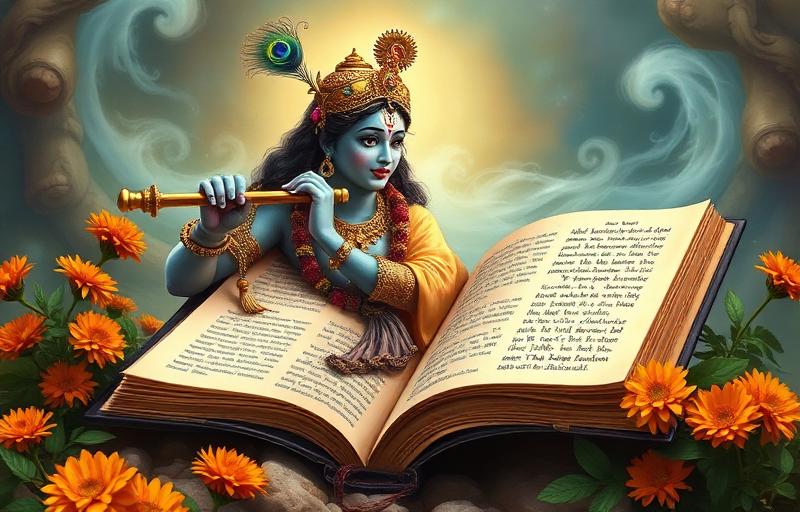
- A chhari, a bamboo staff topped with peacock feathers, carried by his devotees in procession
He belongs to the group of Rajasthani folk deities that includes Tejaji, Pabuji, Ramdev ji and Devnarayan, warriors whose lives ended in sacrifice and who came to be worshipped afterwards. Among them, Gogaji is the one most closely associated with snakes and with the protection of cattle and children in the fields.
The Katha of Gogaji
The katha, sung by folk singers across the region in long night performances, has a fixed shape.
The boon. Bachhal Devi, queen of Dadrewa, was childless. Guru Gorakhnath, whose Nath tradition was strong across this region, gave her a blessed offering and a son was born. That son was Goga. His association with the Nath sampradaya remains part of his worship, and many Goga shrines still keep a connection with Nath sadhus.
The conflict. Goga grew into a warrior and ruler. The katha describes a bitter conflict with his cousins, Arjan and Surjan, over the kingdom, which ended in battle and in the death of the cousins at his hand, an outcome the katha treats as tragic rather than triumphant.
The end. Facing his mother's anger and the weight of what had happened, Goga sought the earth itself. Tradition says the ground opened and took him in, along with his horse, at the place now known as Gogamedi. Some versions describe his transformation at that moment into the serpent form in which he protects his devotees.
What devotees draw from the katha is not conquest but the closing image: a warrior absorbed into the earth, from where snakes come and where he now guards those who work the land.
Gogamedi and the Goga Navami Mela
Gogamedi, in the Nohar area of Hanumangarh district in Rajasthan, is the principal shrine. It is where tradition places his samadhi, and the structure, with its dome and arches, reflects the mixed architectural vocabulary of the medieval Rajasthan frontier. Devotees of several communities visit it, and the shrine has long been described in the region as a place where that shared reverence is visible.
The second important site is Dadrewa in Churu district, his birthplace, where the Shish Medi and the associated shrines are visited through the year.
The main festival is Goga Navami, on the navami of Krishna Paksha in Bhadrapada, close to Nag Panchami and Raksha Bandhan in the calendar. What happens then:
- A large mela runs at Gogamedi for several days, drawing devotees from Rajasthan, Haryana, Punjab and beyond
- Chhari processions arrive from villages, with devotees carrying the peacock feather staff and singing Goga's katha
- Devotees called bhagats perform traditional dance and drumming as the chhari moves
- Families complete vows made during the year, offering churma, kheer, coconut and cloth
In the villages, the same day is kept locally at the neighbourhood Goga medi, and in many places a Goga thread is tied on children's wrists for protection.
Why He Is the Deity Against Snakebite
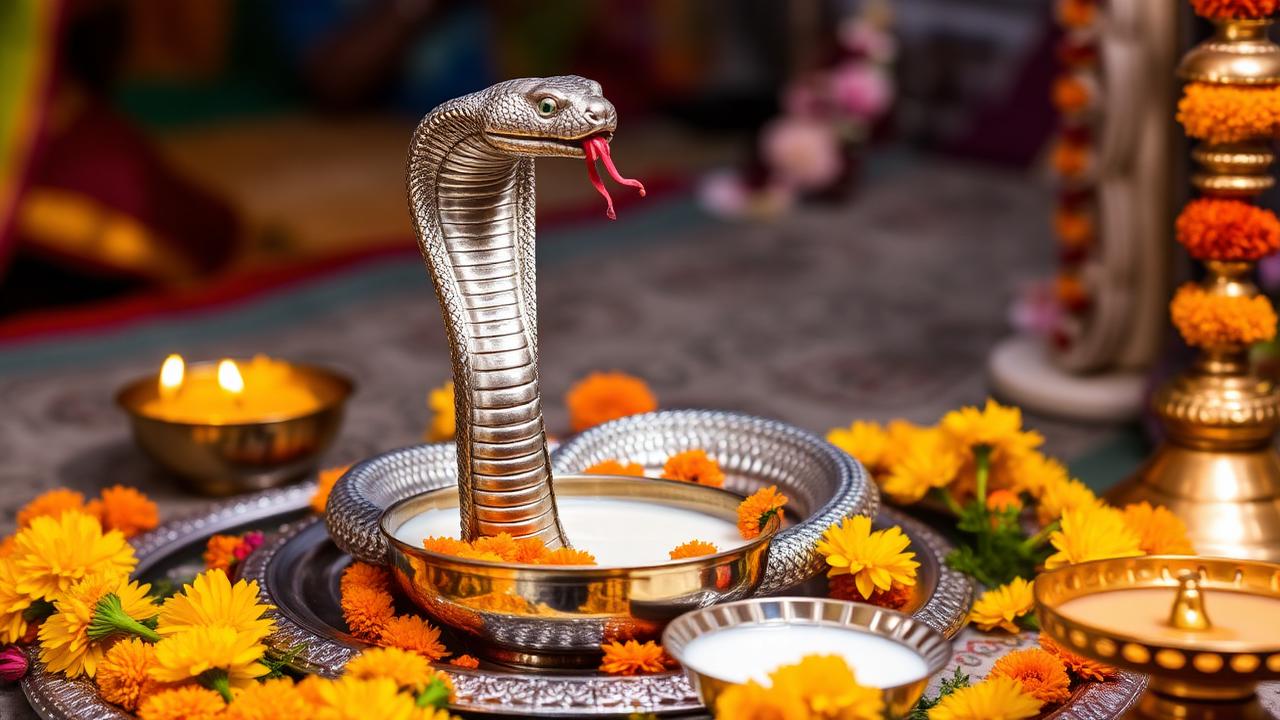
The link between Gogaji and snakes is the practical core of his worship, and it makes sense in the geography where he is worshipped.
These are farming regions where people work barefoot in fields, sleep on charpais in courtyards and store grain at home. Snakebite was, and in rural areas still is, a real risk during the monsoon months, which is exactly when Goga Navami falls.
How the devotion works in practice:
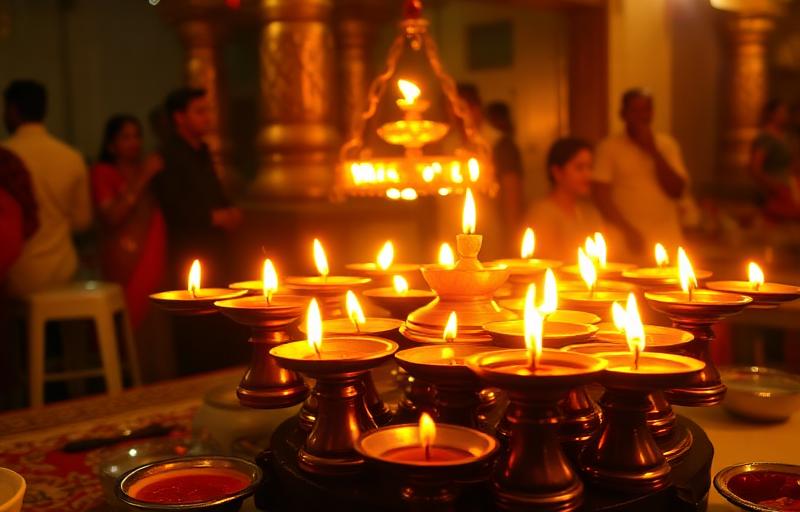
- A Goga medi is kept at the field boundary or the village edge, and a lamp is lit there during the monsoon
- Rakhis and threads blessed at the shrine are tied on children before the rains
- Families vow churma, kheer or a bhandara at Goga Navami if the household and cattle pass the season safely
- Snakes seen near the home are, by tradition, not killed but respectfully driven away, since they are associated with the deity
One clarification worth making plainly for readers today: devotion and medical care are not alternatives. Village elders themselves say the vow is for protection, not a substitute for treatment. In a snakebite emergency the person must be taken to a hospital immediately, kept still and calm on the way, and the traditional offering can be completed afterwards.
How Gogaji Is Worshipped
Worship is simple, and most of it happens at home or at a village medi rather than through elaborate ritual.
- The medi is cleaned and whitewashed before Goga Navami, and a fresh flag is raised
- Offerings are churma, kheer, gud, batasha, coconut and seasonal grain. Many families also offer a blue cloth, matching the colour of his horse.
- The chhari is kept in the village by a designated family, brought out for processions and touched by devotees for blessing
- Bhajans and the katha are sung through the night before the festival day, often accompanied by dhol and the traditional dance of the bhagats
- Vows commonly involve walking to Gogamedi, offering a bhandara, or bringing a child to the shrine for the first time
At home, devotees who keep Gogaji as a kul devta light a lamp on the navami of each month or on Sundays, and keep his image or a small silver plaque in the puja place alongside the household deities.
As with several folk deities of the region, older customs at some shrines included animal offerings. Across most of Rajasthan and Haryana the practice at Goga shrines today is vegetarian, centred on churma, kheer and coconut.
Gogaji Among Rajasthan's Folk Deities
Rajasthan's devotional life runs on two tracks that never conflict. There are the great temples, and there are the lok devta, folk deities remembered as historical figures whose sacrifice made them divine.
- Gogaji - protection from snakes, guardian of fields and cattle
- Tejaji - also associated with snakebite, worshipped especially by farming communities, with his own melas in Nagaur and beyond
- Pabuji - protector of cattle, whose katha is sung before painted phad scrolls through the night
- Ramdev ji - worshipped at Ramdevra, known for his teaching against social discrimination
- Devnarayan - worshipped in eastern Rajasthan with his own phad tradition
- Karni Mata, Kaila Devi, Jeen Mata and Shila Devi - the Devi shrines that families keep as kuldevi
What these deities share is closeness. They are not asked for liberation. They are asked to keep the buffalo alive, the child safe and the field free of harm. In Rajasthan's villages, the great temples are visited on pilgrimage while the lok devta is present at the boundary of the field, every day of the year.
Reader Questions Answered
Who is Gogaji?+
Gogaji, also called Jaharveer Goga, is a folk deity of Rajasthan worshipped across north India as the protector against snakebite. He is remembered as a Chauhan warrior of Dadrewa in Churu district, blessed by Guru Gorakhnath.
Where is the main Gogaji temple?+
Gogamedi in the Nohar area of Hanumangarh district, Rajasthan, is the principal shrine, where tradition places his samadhi. Dadrewa in Churu district, his birthplace, is the second major site.
When is Goga Navami celebrated?+
Goga Navami falls on the navami of Krishna Paksha in Bhadrapada, close to Nag Panchami and Raksha Bandhan. A large mela runs at Gogamedi, and villages hold their own observances at the local medi.
Why is Gogaji associated with snakes?+
Tradition says the earth opened and took him in at Gogamedi, and in several versions he took a serpent form at that moment. He is therefore worshipped for protection from snakebite, especially during the monsoon when the risk in farming villages is highest.
What is the Goga chhari?+
The chhari is a bamboo staff topped with peacock feathers, carried in procession by devotees called bhagats. Villages keep it with a designated family and bring it out during Goga Navami, when devotees touch it for blessing.
What is offered to Gogaji?+
Churma, kheer, gud, batasha, coconut, seasonal grain and often a blue cloth matching his horse. Bhandaras and walking to Gogamedi are the most common ways of completing a vow.
About the author
Anjali Mehta · Editor, M.A. Religious Studies
Anjali is the managing editor for Vandnaa and oversees the festival and vrat coverage. She holds an M.A. in Religious Studies and reviews every published article for accuracy, accessibility, and tradition-fidelity.
Meet the Vandnaa editorial team →